
When software comes up, the spotlight usually lands on web and mobile products. Yet inside many businesses, desktop applications are doing the real work. They handle jobs where delays are costly and workarounds are not an option. When speed, stability, and control actually matter, desktop software still earns its keep.
Who builds that software matters more than most teams realize. A strong custom desktop application development company does more than deliver something that runs. It asks the questions others avoid. It challenges unclear ideas. It thinks about the past launch day and plans for what the software will look like years down the line. When that relationship works, the application grows with the business. When it does not, teams end up with half-finished features, constant fixes, and tools people use only when they have no choice.
This guide takes a closer look at what enterprise desktop applications really are, why they still matter, and how working with experienced desktop application development companies can give organizations more control over their technology instead of less.
What Enterprise Desktop Applications Really Are
Enterprise desktop applications are not judged by how sleek they look. Their real value shows up when systems are under pressure. These applications are built to support entire teams, sometimes entire companies, without slowing down when usage spikes. In many organizations, they sit at the center of daily operations, keeping everything moving without drawing attention to themselves.
Unlike consumer software, these tools are rarely optional. They manage sensitive data, enforce internal rules, and support decisions that carry financial or legal consequences. That is why custom desktop application development tends to prioritize reliability and longevity over quick fixes.
Scalability
Enterprise software needs space to grow. A system that handles thousands of records today may need to process millions tomorrow. Desktop applications built by enterprise application development company with scale in mind can handle that growth without constant redesigns or performance issues.
Security
When applications store financial data, client information, or internal reports, security is not a bonus feature. It is part of the foundation. Access controls, encryption, and compliance requirements are expected, not optional.
Performance
One of the often overlooked strengths of desktop software is how efficiently it uses local system resources. This matters when working with large datasets or real-time processing. In many cases, desktop applications outperform browser-based tools simply because they are closer to the machine.
Customization
No two organizations work the same way. A thoughtful desktop application development approach allows software to fit existing workflows instead of forcing teams to change how they operate. This is where custom desktop application development continues to prove its value.
Where Enterprise Desktop Applications Show Up
Enterprise desktop applications power systems for inventory management, accounting, and human resources. They support CRM platforms that track long sales cycles and detailed customer histories. They also play a key role in financial and compliance software, where accuracy and traceability are essential.
Desktop applications differ from web and mobile tools in practical ways. They work offline. They handle demanding tasks locally. They integrate closely with legacy systems that many enterprises still depend on. Web apps are accessible. Mobile apps are convenient. Desktop applications offer control and dependability. For organizations investing in cross platform app development company, that balance often makes the most sense.
Why Enterprises Still Choose Desktop Application Development
Desktop software does not get the attention it once did. Web and mobile tools dominate most conversations. Yet inside many large organizations, desktop applications development remains essential. Not because of habit, but because it works.
Some business tasks are heavy. They run all day. They move large amounts of data. Web tools can struggle under that weight. Desktop applications are built for it. They offer control. They offer consistency. And they do not depend on a browser behaving well at the wrong moment.
For many enterprises, the choice to develop a desktop application with a custom web application development company is simple.
Performance That Holds Up Under Pressure
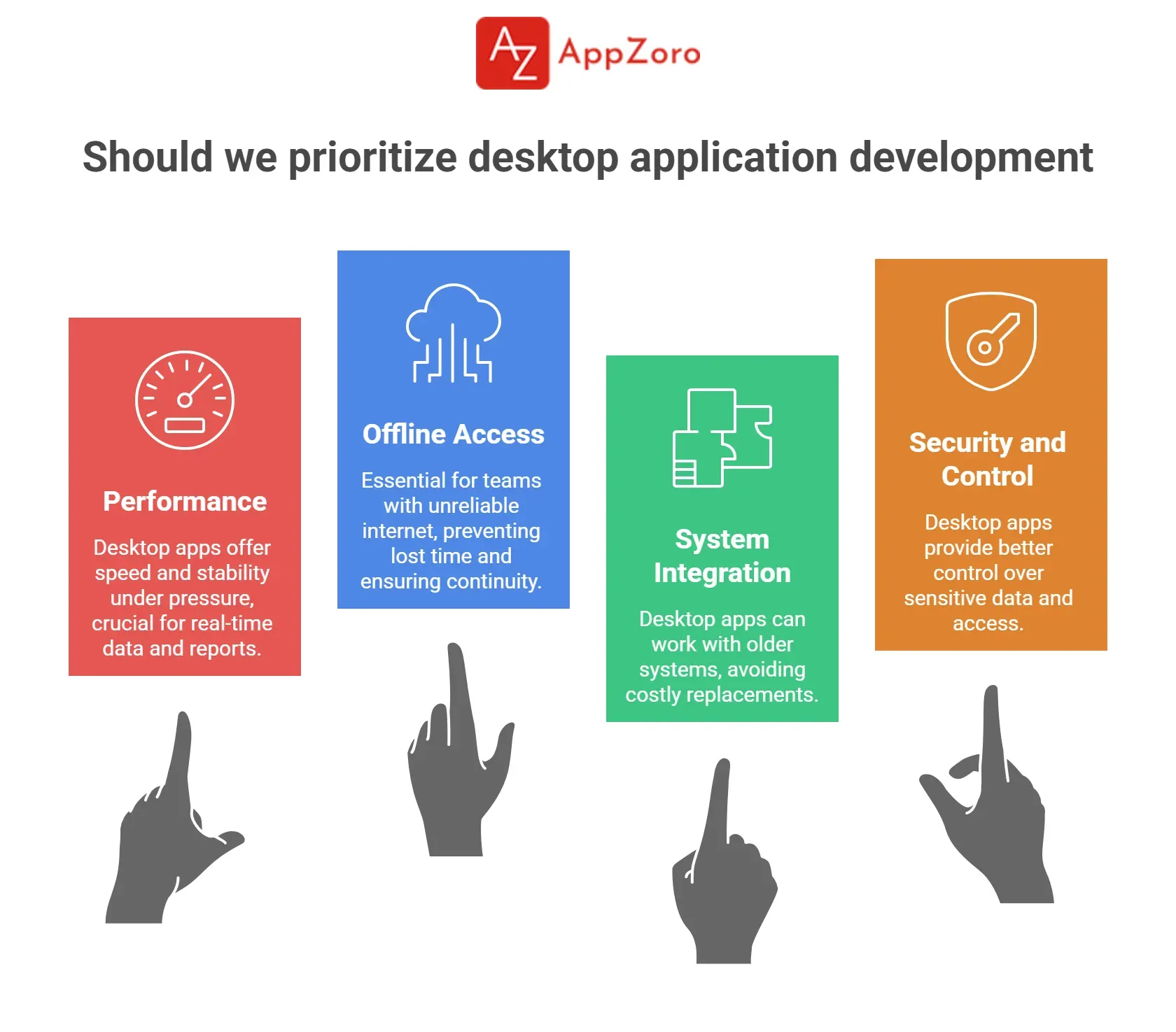
Desktop applications are fast. That is the plain truth. They use the power of the local system instead of waiting on networks or servers.
Think about real-time reports. Think about live production data. Even small delays can cause problems. A slow update can lead to bad decisions. A frozen screen can stop work entirely.
Desktop web application development has its place. But when speed and stability matter every minute, desktop software usually performs better. That is why many companies balance web and desktop application development instead of choosing just one.
Offline Access Still Matters
Not every team works with perfect internet. Field staff, hospitals, factories, and remote offices deal with outages more often than most people admit.
Desktop applications keep working. No signal needed. No waiting for a page to reload. That alone can save hours of lost time.
Offline access is not a bonus feature. In many industries, it is a requirement.
Working With Older Systems, Not Fighting Them
Most enterprises rely on older systems. They may not look modern, but they run critical operations. Replacing them is risky and expensive.
Desktop applications can work alongside these systems. They present it in a clearer way.
Developing cross platform desktop applications helps teams connect old and new tools without breaking what already works. It is a practical approach.
Security and Control Stay in One Place
Enterprise software often handles sensitive data. That means control matters. Desktop application development technologies make it easier to manage access, storage, and permissions. Data does not have to live entirely in the cloud. Policies are easier to enforce.
For regulated industries, this level of control by AI & ML development company reduces risk.
Benefits of Desktop Application Development Services
Desktop software remains part of enterprise IT for good reasons. It solves real problems. Not theoretical ones.
Stronger Data Control
Desktop applications let organizations decide how data is stored and who can access it. That clarity is important when dealing with financial, medical, or internal records.
Faster Work, Even Offline
Local software runs fast. It does not wait on internet speed. Teams can keep working during outages or in remote locations. That reliability adds up over time.
Easier Integration With Existing Tools
Most companies cannot replace everything at once. Desktop applications connect with existing ERP, CRM, and internal systems. This allows gradual improvement without disruption.
Built to Grow
Good desktop applications are designed to scale. New users. New features. New locations. The right desktop application development languages support growth without constant rewrites.
Real Savings Through Automation
Desktop software is excellent at handling repetitive tasks. Data entry. Reports. Routine workflows. Automation reduces errors and saves time.
Over time, these savings matter. Developing a desktop application is an important business decision with a custom enterprise software development company.
Most Popular Desktop Application Development Languages in 2026
Choosing a programming language shapes far more than the first version of an application. It affects how the software behaves under load, how painful updates will be a year from now, and how easily new developers can step in. In enterprise work, the smartest choice is usually the one that fits the environment and the team, not the one getting the loudest attention online.
These are the desktop application development languages that continue to hold their ground in real business settings.
C# and .NET for Windows-Focused Teams
For organizations already built around Microsoft tools, C# with .NET often feels like the most sensible option. It fits naturally into Windows environments and works well for desktop application development services that rely on Microsoft infrastructure.
The ecosystem is mature. Security patterns are well understood. Connecting with tools like SQL Server or Office rarely requires workarounds. That is why many businesses still use C# for internal systems such as accounting software, admin tools, and reporting dashboards. It is predictable, stable, and easier to maintain over time. For many desktop application development companies, reliability matters more than novelty.
C++ When Performance Cannot Slip
C++ is usually chosen for one clear reason. Speed. When an application needs to process large volumes of data or react in real time, few languages offer the same level of control.
Trading platforms, simulation software, and industrial systems often depend on C++ because even small delays can cause real problems. Development takes more effort and discipline, but for organizations where performance is non-negotiable, custom desktop application development in C++ remains a practical choice.
Java for Cross-Platform Needs
Java continues to appeal to teams that want their desktop software to run across operating systems without constant rewrites. Applications built in Java can move between Windows, macOS, and Linux with minimal changes.
That flexibility makes Java a solid option for cross platform desktop application development. Many enterprises use it for tools like CRM systems or inventory platforms, where keeping one shared codebase saves time and reduces long-term maintenance work.
Python for Automation and Internal Tools
Python has found its place in desktop development through simplicity. It is easy to read, easy to modify, and quick to build with. That makes it a strong choice for automation, reporting, and internal utilities.
Teams often start with small Python tools to solve specific problems, then expand them as needs grow. While Python may not always power large enterprise systems on its own, it plays an important role in custom mobile app development company for support tools and early-stage solutions.
Industries That Commonly Use Custom Desktop Applications
Desktop software tends to show up where work is complex and mistakes are costly. These are not environments where off-the-shelf tools are enough. Each industry leans on desktop applications for slightly different reasons, but the pattern is the same. Control, stability, and performance usually come first.
Finance and Banking
Finance runs on precision. Trading platforms, risk tools, and reporting systems all need to respond quickly and handle large volumes of data without hesitation.
Desktop applications fit this world well. They connect directly to internal systems and market feeds, which cuts down delays and reduces dependency on network conditions. That level of control is one reason financial teams continue to invest in custom desktop application development rather than relying only on browser-based tools.
Healthcare
Healthcare software has very little room for error. Patient records, scheduling systems, and clinical data must be accurate, secure, and available when needed.
Desktop applications are often used because they can work offline and integrate with existing medical systems and devices. A skilled custom desktop application development company can design software that respects privacy rules while fitting into the daily routines of doctors and staff. When systems are reliable, care improves. It really is that simple.
Manufacturing
Manufacturing floors depend on timing and coordination. Desktop applications are commonly used to track inventory, monitor machines, and manage production schedules.
These systems often talk directly to hardware and internal databases. Desktop software handles those connections with fewer compromises. In environments where delays can stop production or cause waste, that reliability makes a real difference.
Retail and E-Commerce
Retail may look digital on the surface, but many core systems still live on the desktop. Point-of-sale software, inventory tools, and reporting platforms are common examples.
A desktop POS system can keep running during internet outages and sync data once the connection returns. That keeps stores open and customers moving, even during peak hours. For many retailers, that alone justifies the choice.
Education and Research
Educational institutions and research teams often work with large datasets, simulations, or specialized equipment. Desktop applications support these needs more comfortably than many web-based tools.
Lab software, data analysis tools, and simulation platforms benefit from local processing power. That is why many universities and research centers continue to work with desktop application development companies to build software tailored to their exact requirements.
A Practical, Step-by-Step Way to Develop a Custom Desktop Application
Building a custom desktop application is rarely just a technical exercise. It is more about understanding how a business actually works and then shaping software around those realities. The strongest projects follow a clear process, not because it looks good on paper, but because it helps avoid expensive mistakes later.
If the goal is to develop a desktop application that people actually use and rely on, these steps matter.
1. Start With Real Requirements, Not Assumptions
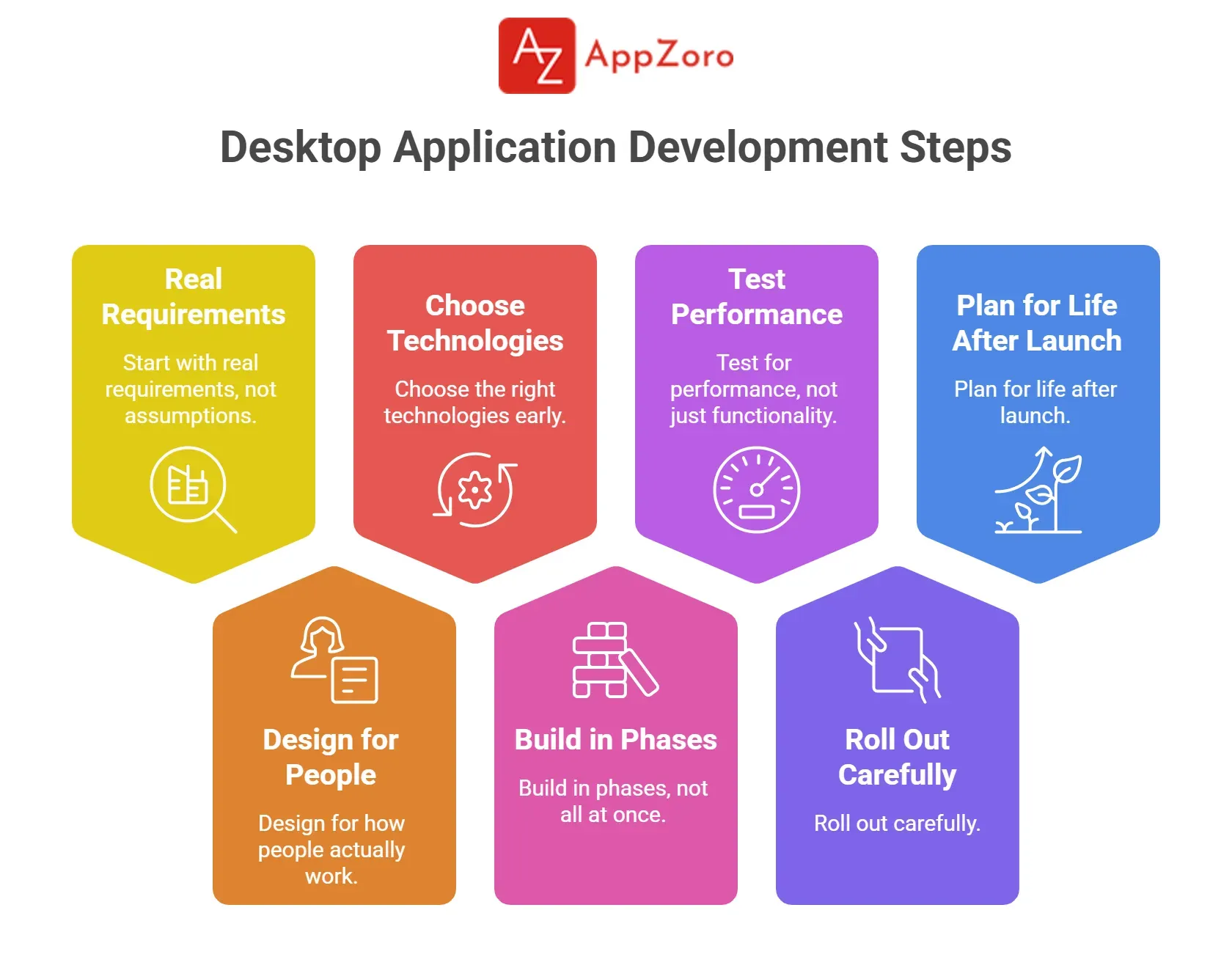
Before any design or coding begins, it is important to slow down and ask the right questions. How do teams work today? Where do things break down? What takes too much time or causes frustration?
A logistics company, for example, may talk about needing better tracking. Dig a little deeper, and the real need might be faster reporting, fewer manual updates, or clearer visibility across warehouses. This is where an experienced enterprise application development company adds value. They help decide whether desktop applications development, desktop web application development, or a mix of both makes sense.
Feasibility matters too. Budget limits, technical constraints, and existing systems all shape what is realistic. Skipping this step usually shows up later as delays or rework.
2. Design for How People Actually Work
Enterprise users do not have time to figure out complicated interfaces. They switch between tools all day and expect software to help, not slow them down.
Good UI and UX design focuses on clarity. Different users often need different views. Managers may want summaries. Analysts may need detailed data. Staff may just want fast data entry. A thoughtful design accounts for all of this.
Many desktop application development companies involve real users early in the design phase. It saves time. It also prevents building features that look good but do not fit daily workflows.
3. Choose the Right Technologies Early
Technology choices have long-term impact. The wrong decision can limit growth or make future updates painful.
Selecting desktop application development languages depends on the environment. Windows-based organizations often lean toward C# and .NET. Teams targeting multiple systems may look at Java or Python. Newer desktop application development technologies like Electron or .NET MAUI can support developing cross platform desktop applications, but they come with trade-offs.
Architecture planning matters just as much. How will the app connect to databases, APIs, or cloud services? How will it scale? These questions are easier to answer now than after the software is live.
4. Build in Phases, Not All at Once
Development works best when it is incremental. Features are built, tested, and reviewed in stages. This approach keeps the project flexible and makes feedback easier to act on.
During this phase, teams handle coding, integrations, and early testing. Whether the project involves web and desktop application development or a desktop-only solution, regular reviews help catch issues early.
Testing is not just about bugs. It is about making sure the application behaves well under real conditions and works smoothly with other systems.
5. Test for Performance, Not Just Functionality
Enterprise software needs to stay fast and stable under pressure. That means testing how it handles large data volumes, heavy usage, and security risks.
A healthcare or finance application, for example, must respond quickly even when working with massive datasets. Performance tuning at this stage prevents slowdowns later and protects user trust.
This step often separates basic software from software that teams rely on every day.
6. Roll Out Carefully
Deployment is not just installation. It involves user access, system configuration, and integration with existing tools.
Many organizations roll out software in stages. This allows teams to gather feedback, adjust workflows, and resolve issues before full adoption. In some cases, desktop web application development supports hybrid setups, where desktop software connects with cloud-based services for specific features.
A careful rollout reduces disruption and improves acceptance.
7. Plan for Life After Launch
Launching the application is not the finish line. Enterprise software changes as the business changes. Regulations evolve. Operating systems update. New needs emerge.
Ongoing support and maintenance keep the application useful and secure. Working with a reliable cross platform app development company or custom web application development company ensures that updates and improvements happen without major downtime.
The most successful desktop applications are treated as long-term assets, not one-time projects. When built and maintained thoughtfully, they continue to deliver value well beyond the initial release.
How to Choose the Right Desktop Application Development Company
Selecting a development partner is one of those decisions that looks simple on the surface but carries long-term weight. The software may take months to build, but the relationship often lasts years. That is why it pays to look past polished websites and bold promises and focus on how a company actually works.
Here are a few practical ways to evaluate desktop application development companies before committing.
1. Look Closely at Past Work and Real Experience
A portfolio should tell a story, not just show screenshots. Pay attention to the types of problems the company has solved and the industries they have worked in. Experience in finance, healthcare, or manufacturing often means the team understands compliance, performance demands, and system complexity.
A custom enterprise software development company should be able to explain why certain decisions were made and what challenges came up along the way. Case studies, client references, and honest conversations are usually more revealing than a long feature list.
2. Understand How They Build Software
Development methodology matters more than many teams realize. Agile and DevOps approaches help keep projects flexible and reduce surprises. Regular feedback loops make it easier to adjust scope without losing momentum.
Ask how the team plans work, handles changes, and validates progress. A cross platform app development company that follows a clear process tends to manage risk better, especially in complex enterprise projects involving custom desktop application development.
3. Pay Attention to Communication and Ownership
Strong communication is often what separates smooth projects from frustrating ones. Look for partners who explain things clearly, set realistic timelines, and stay transparent when issues arise.
Dedicated project managers, regular check-ins, and simple reporting tools go a long way. A company offering desktop application development services should make it easy to understand where the project stands at any point, without needing to chase updates.
4. Think Beyond Launch Day
Enterprise software rarely stays the same for long. New regulations, updated systems, and evolving workflows all require ongoing adjustments.
Choosing a custom desktop application development company that offers long-term support is not just practical, it is necessary. Ask how they handle updates, performance improvements, and urgent fixes. Also consider whether they have experience working alongside an AI & ML development company or a custom mobile app development company if future expansion is part of the plan.

Why Partner With AppZoro for Custom Desktop Application Development
Choosing a development partner is rarely about ticking boxes. It is about trust, judgment, and whether the team truly understands how enterprise software lives and breathes inside an organization. Desktop applications tend to sit at the center of operations, which means mistakes show up fast and successes last a long time.
That is where AppZoro tends to stand out.
Experience That Comes From Real Enterprise Work
Desktop applications development looks very different in theory than it does in practice. AppZoro's experience across finance, healthcare, manufacturing, and retail reflects that reality. These industries bring strict rules, heavy data loads, and workflows that cannot afford downtime.
Instead of forcing generic patterns, the team focuses on how work actually gets done. That practical understanding is often what separates a usable system from one people quietly avoid.
Solutions Built Around the Business
No two enterprises operate the same way. AppZoro approaches custom desktop application development with that in mind. The goal is not to deliver software that looks good in a demo, but software that fits into daily operations without friction.
Whether the need is internal process management, customer-facing tools, or analytics-heavy systems, each application is shaped around business priorities. Scalability is part of the conversation early, not something added later when growth exposes limits.
As a custom desktop application development company, this focus on alignment helps ensure the software continues to deliver value as needs change.
Cross-Platform Thinking Without Unnecessary Complexity
Many enterprises work across different operating systems. Supporting that mix does not have to mean separate applications or duplicated effort. AppZoro's experience in developing cross platform desktop applications allows teams to maintain consistency while keeping performance intact.
Using modern desktop application development services and frameworks, the team balances flexibility with stability. This approach works well for organizations that want reach without sacrificing control.
A Serious Approach to Security and Performance
Enterprise software carries responsibility. Sensitive data, regulated environments, and mission-critical workflows demand careful design. AppZoro treats security and performance as foundations, not add-ons.
Strong access controls, data protection, and performance testing are built into the process. Applications are designed to handle growth, heavier workloads, and future integrations. For enterprises planning long-term systems, this mindset matters.
Results That Show Up in Daily Operations
The value of custom software becomes clear in how it changes everyday work. AppZoro's projects reflect that kind of impact.
-
Financial teams see faster processing and better compliance handling
-
Healthcare organizations gain clearer access to patient records and smoother operations
-
Manufacturing teams reduce downtime and improve maintenance planning
Conclusion
Desktop applications remain essential for organizations that depend on reliability, performance, and control. They support complex workflows, work alongside legacy systems, and continue operating when connectivity is unreliable.
Choosing the right desktop application development company is a strategic decision. The right partner thinks beyond delivery and plans for growth, security, and long-term support. AppZoro's experience across desktop applications development, cross-platform delivery, and enterprise systems positions it well for organizations that need software built to last.
For enterprises exploring an AI & ML development company or a custom mobile app development company, the conversation should start with one question. Will this software truly support how the business works? When that answer matters, choosing the right partner makes all the difference.