
The entertainment application sector is experiencing rapid growth, projected to exceed five trillion dollars by 2032. The growth in platforms like Netflix, TikTok, and Spotify is monumental; there are smaller niche apps that are also making their presence known in the industry. People are spending more and more hours on their mobile devices, watching video content, streaming audio, gaming, or interacting with live content.
Entertainment apps are simply a platform that connects audiences, brands, and creators to one another, while also providing a means to keep the audience coming back for more. This includes streaming platforms; OTT application experiences; music applications; social entertainment apps, interactive games, live streaming, augmented or virtual reality experiences.
Businesses are starting to explore entertainment app development because they offer a tremendous opportunity to monetize. An entertainment application can deepened engagement, drive subscriptions, generate advertising revenue, and provide monetization opportunities for content creators or for other brands.
This blog will outline the types of entertainment applications, the features users expect, and the costs associated with developing these apps, as well as current trends for a successful entertainment app.
Why Entertainment Apps Are in High Demand Today?
Mobile device entertainment is no longer just a luxury, it is expected. Users would like to view entertainment content anytime and anywhere, and in ways that fit their routines. Video streaming is paving the way as well. While long-form content, such as movies and series, is still popular, short-form video is on the rise. More than 60% of users say they are watching under-five-minute clips while they are commuting or waiting in line.
Gaming and social applications have experienced rapid growth as well. Interactive experiences help users connect with friends and communities, engaging them for longer times. Last year, global mobile gaming revenues surpassed $120 billion, while social applications continue to dominate daily smartphone engagement.
Technology is supporting a lot of this growth. Faster networks like 5G make high-quality streaming both smooth and reliable. Smarter algorithms help users discover content they are most likely to enjoy, delivering a personalized experience that creates a habit for users. Research has shown that applications with personalized recommendations have 40% more watch time and 30% more retention.
For businesses, this is an obvious opportunity for engagement. More engagement leads to more subscriptions, higher ad revenue and better brand loyalty. Investing in developing an entertainment application now allows companies to capture increased user engagement, extend reach and grow revenue.
Types of Entertainment Apps Trending Right Now
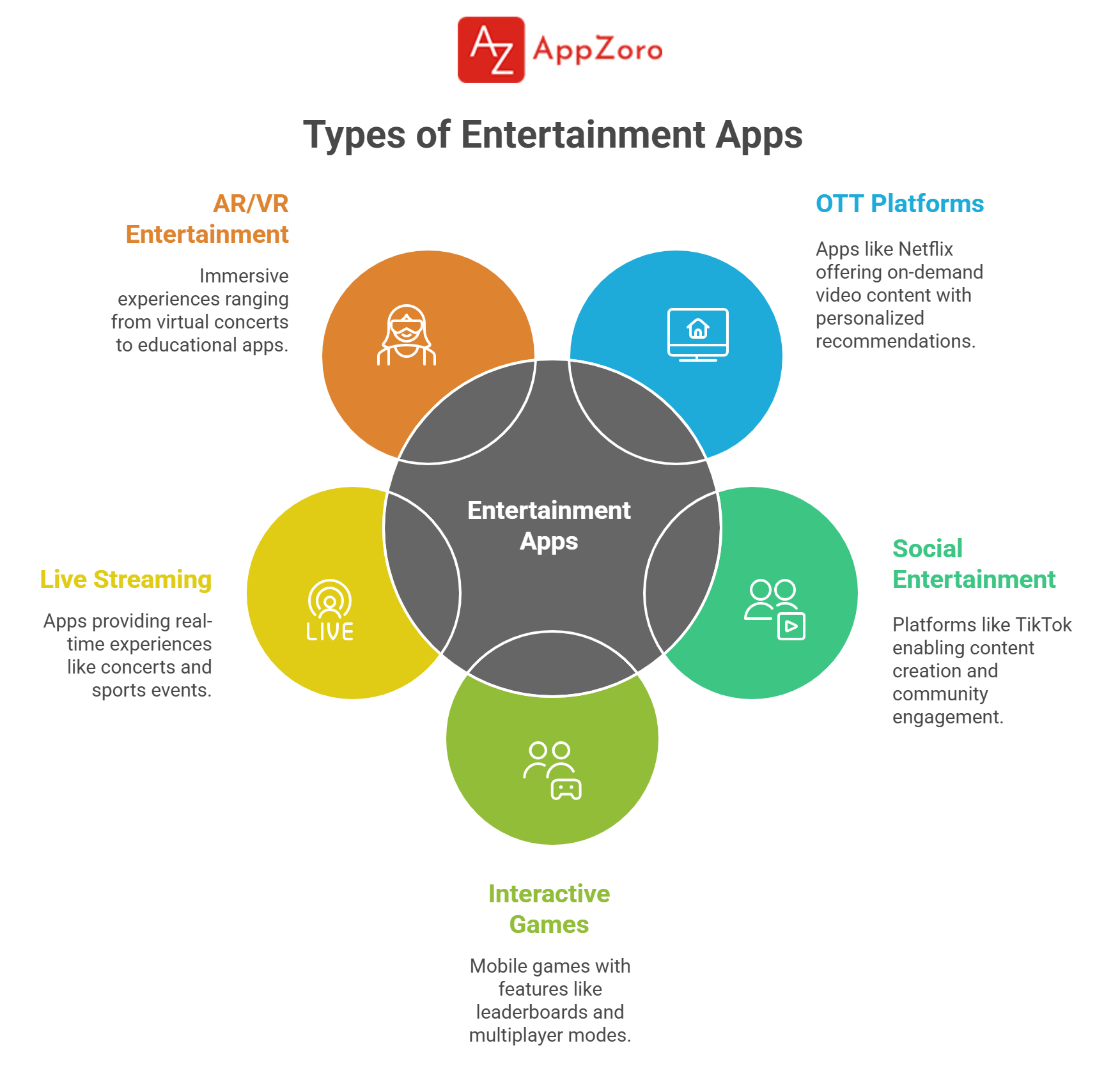
OTT and Video-on-Demand Platforms
Apps like Netflix and Disney Plus make it easy for users to watch video content whenever they want. Key features include subscription management, large content libraries, offline downloads, and personalized recommendations. Smart suggestions keep viewers engaged longer and increase retention, which is why OTT platforms are a popular choice for businesses investing in entertainment app development.
Social Entertainment and Creator Apps
Platforms such as TikTok and Instagram provide users with tools to produce, distribute, and engage with content. These applications utilize advanced editing capabilities, filters, analytics, and community-building functions. Daily active users largely rely on social engagement and interaction, which entail app users engaging consistently and easily, via comment, sharing, or other means.
Games and Interactive Experiences
Mobile games and interactive storytelling applications leverage VIP rewards, challenges, leaderboards, and multiplayer features to attract users. Entertainment application developers rely on turns based on engagement and monetization mechanics while ensuring repeatable experiences to increase the likelihood of users returning to engage with the product.
Live Streaming and Virtual Events
Apps that provide experience corresponding to concerts, webinars, or live sporting events deliver real-time experiences. Features such as the ability to chat, reactions to content, ticketing, polls, or other features make users feel engaged. Technical smoothness and low latency are essential to avoid frustration in streaming performance.
AR and VR Entertainment Apps
Augmented reality and immersive virtual reality experiences within apps are entirely experiential. These experiences can range from attending virtual concerts, interactive games, educational, training, etc. Apps containing AR and VR in nature require specific development skills to understand how to create engaging, intuitive, and entertaining app experiences for users.
Key Features of Modern Entertainment Apps
A successful entertainment app is more than just a platform to stream or play content. The features you include determine how engaging, sticky, and profitable the app becomes. That’s why a custom mobile app development company brings strategic thinking to entertainment app builds, focusing on features that truly matter to users and businesses alike.
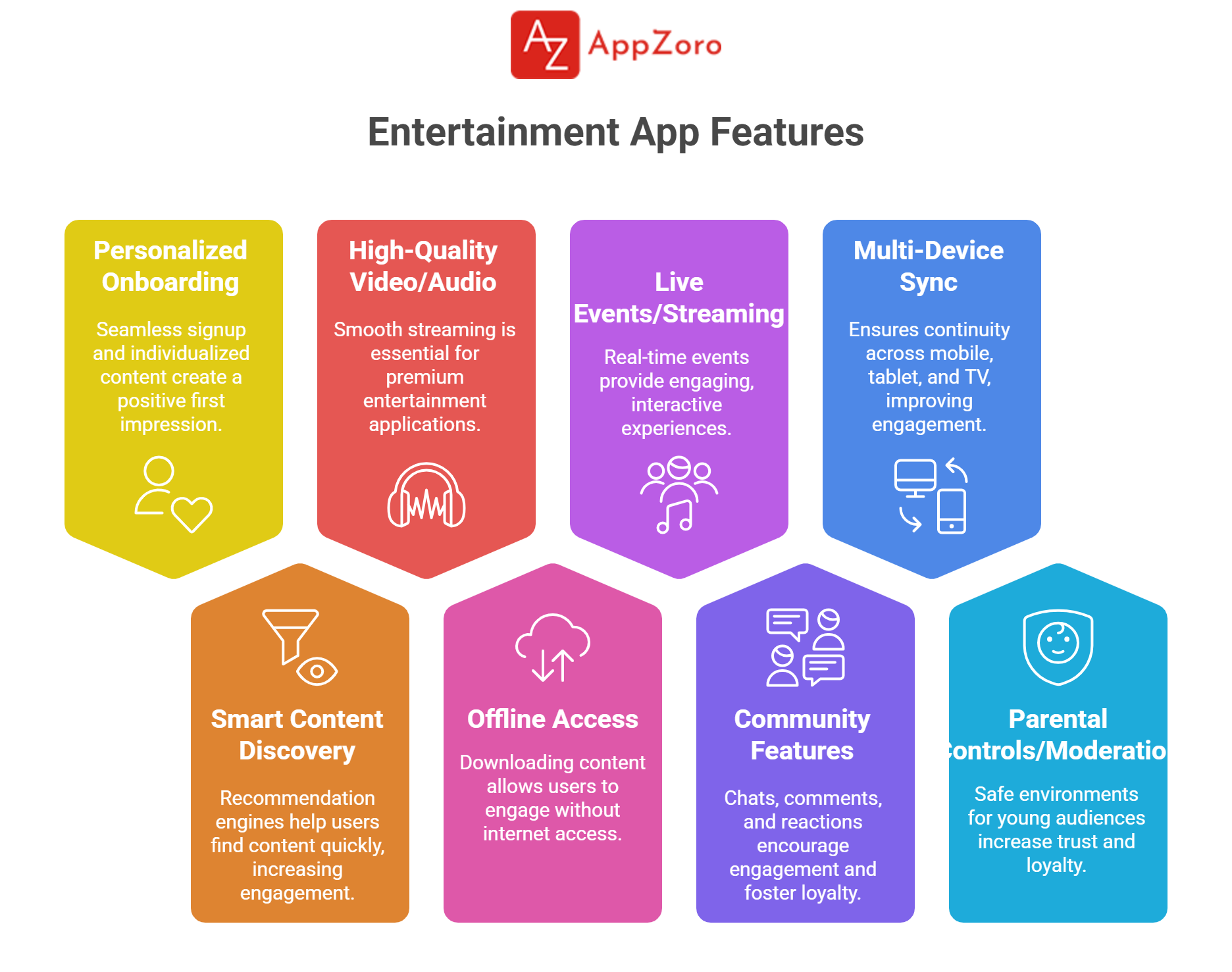
Personalized Onboarding
The importance of first impressions cannot be overstated. A seamless signup, quick tutorials, and individualized content make users feel like the app was created for them, while personalization turns users into regular users and attracts them back.
Smart Content Discovery
Recommendation engines help users find what they want quickly. AI-based recommendations help increase engagement, watch time and retention, which will directly impact revenue.
High-quality video and audio
Users expect video and audio to stream smoothly without disruption. For premium entertainment applications on multiple devices with different network conditions, smooth playback is important.
Offline Access
By allowing users to download content, they can still engage with the application if they do not have Internet access. Offline content increases total time and satisfaction with the application.
Live events and streaming
Real-life events (for example, concerts, webinars and interactive gaming) provide real-time feelings. Live streaming keeps the user engaging for more time.
Community features
Having users engage in chats in application, comments or reaction tools encourages engagement and fosters loyalty. Users will stay longer in an application while engaging socially around content.
Multi-Device Sync
Users switch between mobile, tablet, and TV. Multi-device sync ensures continuity, improving engagement and retention.
Parental Controls and Moderation
Safe environments for young audiences increase trust. Moderation tools and parental control options are essential for long-term user loyalty.
Advanced Technologies Powering Entertainment Apps
Entertainment apps today are powered by technology that goes far beyond basic streaming. Leveraging the right tech stack can make the difference between an app users ignore and one they cannot live without.
AI-Driven Recommendations
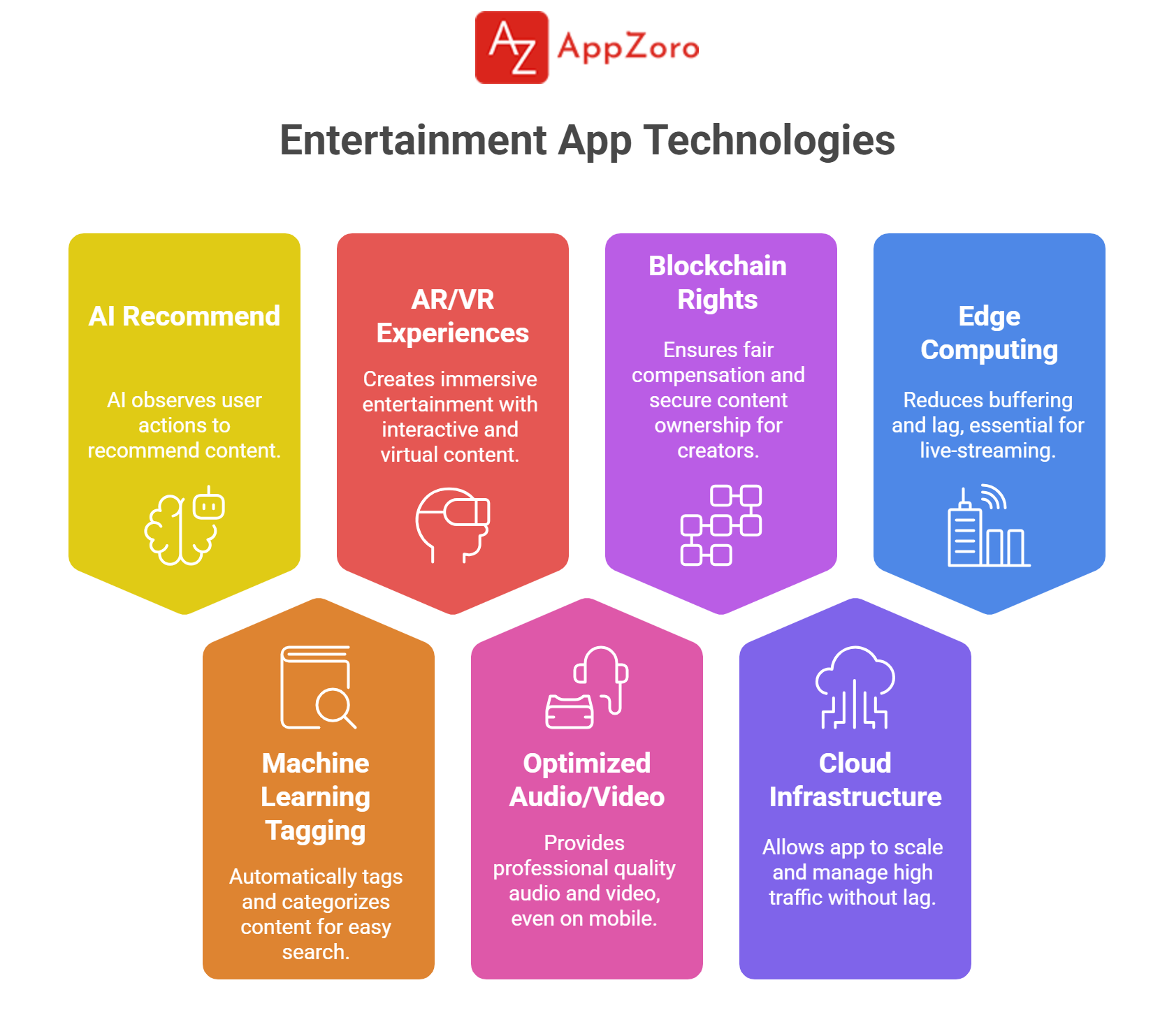
Artificial intelligence mechanisms operate by observing user actions to recommend content users are likely to enjoy, a capability a generative ai app development company leverages to boost watch time, deepen engagement, and keep audiences coming back longer.
Machine Learning for Content Tagging
Automatically tagging a piece of content and categorizing content will make it easier for users to search and discover what they want to consume.
AR and VR Experiences
Augmented and virtual reality creates immersive entertainment experiences ranging from interactive gamified experiences to virtual concerts.
Spatial Audio and Advanced Codecs
Audio and video that are optimized will give the viewer a professional quality listen and viewing experience, even on mobile networks, which increases satisfaction for the viewer.
Blockchain for Digital Rights
Blockchain ensures that creators are compensated fairly and that ownership of content is secure, which is a tremendous trust-builder and adds to the creator ecosystem.
Cloud Infrastructure
Cloud platforms allow an app to scale, manage high traffic volume, and serve numerous users all at once while continuing to deliver streaming content without lag.
Edge Computing
Processing at the edge with low latency reduces buffering and lag in content, which is essential especially in live-streaming and interactive experiences where speed matters.
Entertainment App Development Cost Breakdown
Understanding the cost of an entertainment app is not straightforward. It depends on complexity, features, platform choices, and even the team you work with. Working with experienced entertainment app developers helps you plan budgets realistically and avoid surprises.
Typical Cost Ranges
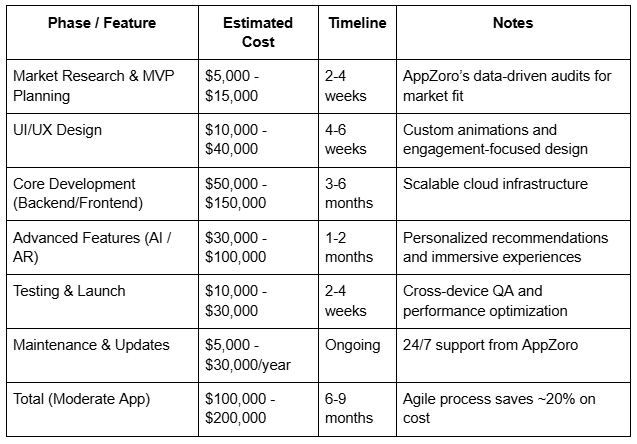
Common Monetization Models for Entertainment Apps
How you make money from your entertainment app is just as important as the features you build. A clear revenue strategy can make the difference between a short-lived app and a platform that grows steadily over time.
Subscription (SVOD)
Users need to pay a subscription fee to view your content library, such as Netflix or Spotify Premium. This revenue model creates predictable revenue and builds engagement over time.
Ad-supported (AVOD):
Provided content for free, while monetizing that experience through ads. YouTube is an active example of how this model can generate incredible revenue while keeping users happy by providing free content.
Hybrid models:
Utilizing both subscriber fees and ads. This model allows for user flexibility while maximizing revenue opportunities.
In-app Products:
Users pay for premium content, features or virtual goods. This model works especially well for gaming, and interactive apps.
Pay-per-View:
Used in live events, or concerts that users agree to pay for on an individual event basis.
Creator monetization:
Enable creators to earn money directly from the app through subscriptions, tips, or merchandise; this monetization method can also add engagement in the application.
Brand partnerships/sponsored content:
Engage to create sponsored experiences, advertising or in-app content for additional revenue streams.
Optimizing Strategies
Utilize a minimum viable product to test the market before scaling your idea. Partnering with a capable entertainment app developer like AppZoro could potentially save you up to 40 percent in development costs while maintaining strong quality.
Real-world example: AppZoro launched a mid-level streaming app for $150,000. Within the first year, it delivered a 40 percent return on investment thanks to smart monetization choices and user engagement features.
Latest Trends Shaping Entertainment App Development Industry
The entertainment app space is evolving faster than ever, and businesses need to stay ahead of trends to remain competitive. Here’s what leading entertainment app developers are seeing:
-
Short-form video dominance: Platforms like TikTok and Instagram Reels have proven that bite-sized content keeps users engaged. Entertainment apps that incorporate short-form video experiences see higher retention and repeat usage.
-
AI-generated content and smart editing tools: AI is helping creators produce more content, faster. From automated video editing to smart filters and recommendations, apps that integrate AI allow users to create and consume content seamlessly.
-
Social-first engagement and micro-communities: Users are looking for more than content—they want interaction. Features like comments, groups, and micro-communities turn passive viewers into active participants, boosting engagement.
-
Gamification of entertainment experiences: Badges, leaderboards, challenges, and rewards are no longer optional. Gamification motivates users to spend more time in your app and increases retention.
-
Multi-device ecosystems: Users now move across mobile phones, tablets, smart TVs, and even wearables. Entertainment apps that sync content and progress across devices create a frictionless experience that keeps users hooked.
-
Interactive live streaming and virtual events: Live shows, Q&A sessions, and virtual concerts provide real-time engagement that recorded content cannot match. Interactive live features are critical for community-building and monetization.
-
Spatial computing and mixed reality experiences: Augmented reality and mixed reality aren’t just for gaming anymore. They’re enhancing music experiences, interactive storytelling, and virtual events, creating immersive entertainment that drives loyalty.
-
Rise of super-app entertainment ecosystems: Apps that combine streaming, gaming, social interaction, and commerce are emerging. Users increasingly prefer a single platform that fulfills multiple entertainment needs, creating opportunities for broader engagement and monetization.
Step-by-Step Guide to Building Your Entertainment App with AppZoro
Developing an entertainment app is not just about writing code. It’s about understanding your audience, designing experiences that keep them engaged, and building a platform that can grow with your business. At AppZoro, we follow a structured process that ensures each step contributes to a product that performs well and delivers value.
Step 1: Ideation and Research
The foundation of any successful app is a clear understanding of its audience and the market. At this stage, we identify your target users, analyze competitors, and uncover gaps or unmet needs. AppZoro conducts workshops and market audits that reveal opportunities for differentiation. By the end of this phase, you will have a clear product roadmap that aligns with both user expectations and business goals.
Step 2: Wireframing and Design
Once we understand the audience, we move into design through ui/ux design and development services that translate insights into interactive wireframes. These visualize the app’s structure and navigation, with every screen, button, and gesture crafted to optimize user retention. Our designers focus on simplicity, readability, and engagement, ensuring users can easily find and interact with content. For entertainment apps, this includes personalized home screens, trending content feeds, and intuitive playback controls.
Step 3: Development
During development, we bring the app to life using technologies like React Native for cross-platform compatibility, Node.js for backend development, and AWS for scalable cloud infrastructure. We integrate essential features like content personalization, social sharing, gamification, and push notifications. Each component is built with performance in mind, ensuring fast loading times and smooth playback, which are critical for entertainment apps.
Step 4: Testing and Iteration
Testing is an ongoing part of our process. We perform extensive quality assurance across devices, screen sizes, and operating systems. Beta testing with a select group of users helps identify usability issues, bugs, or points of friction. Iteration ensures that the app is reliable and user-friendly at launch, which reduces churn and increases retention.
Step 5: Launch and Marketing
Launching an app requires more than putting it on the store. We focus on app store optimization, targeted campaigns, and audience engagement strategies to generate downloads and early traction. For example, AppZoro campaigns have helped new apps achieve tens of thousands of downloads in the first month. Our approach ensures your app reaches the right audience efficiently.
Step 6: Post-Launch Support
After launch, we continue monitoring performance and user behavior. Analytics help identify areas for improvement, and updates are deployed regularly to enhance features and fix issues. This ongoing support allows your app to scale smoothly, maintain user satisfaction, and stay competitive as trends evolve.
Proven Wins: How AppZoro Builds Apps That Engage and Earn
AppZoro has worked with brands across streaming, gaming, and music to create apps that drive engagement and revenue.
Streaming Platform
We built a Netflix-style app with AI-powered content recommendations. Within six months, the platform experienced 300 percent growth in user engagement. Key features like personalized recommendations and high-quality playback helped keep users returning regularly.
Gaming App
We developed an AR multiplayer game with in-app purchases and social sharing features. The app earned $500,000 in its first year while maintaining strong daily active user retention. Gamification elements and multiplayer interactions helped create a loyal user base.
Music Discovery Tool
This platform offered advanced playlist recommendations and personalized music discovery. By partnering with music labels, the app created additional B2B revenue streams while providing users with curated and engaging content.
Key Takeaways
AppZoro manages every stage of app development, from research and design to launch and post-launch support. Our process ensures apps are not only functional and visually appealing but also scalable and capable of driving measurable business results.
Client Feedback
"AppZoro delivered our vision on time and within budget. Their team understood our users and created an app that performs exactly as we hoped."
Conclusion
The entertainment app market is enormous, with global revenues projected to surpass $5 trillion in the coming years. Launching an app is only the first step. To truly succeed, you need a solution that combines thoughtful design, scalable technology, and a deep understanding of how users engage with content. Apps that deliver smooth experiences, personalized recommendations, and reliable performance are the ones that retain users and generate revenue.
Working with AppZoro means you are partnering with a team that has hands-on experience in building apps for streaming, gaming, music, and interactive entertainment platforms. We focus on creating apps that not only function flawlessly but also drive engagement, increase retention, and scale with your business growth.
If you are ready to turn your entertainment app idea into a product that captures attention and delivers measurable results, schedule a consultation with AppZoro’s entertainment app developers. Together, we can craft an app that delights users, strengthens your brand, and meets your business objectives.