
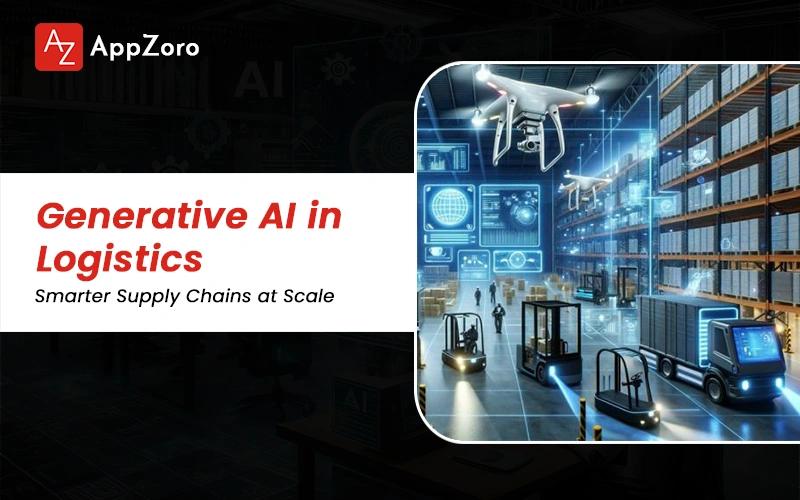
Quick Answer: Generative AI in logistics is applying large language models and AI agents to supply chain operations including document automation, customer service, route planning, demand forecasting and shipment tracking. Real deployments at Maersk, DHL, UPS and FedEx are processing billions in freight transactions annually with AI augmentation across global operations. Top platforms are including project44 AI, FourKites Movement, SAP Joule and Oracle Logistics Cloud across the market. Production use cases are delivering 20 to 40% efficiency gains in target operations across the workflow. Implementation is requiring integration with existing TMS, WMS and ERP systems plus careful attention to data quality across the platform.
Generative AI in logistics shifted from research to production deployment between 2023 and 2025 as major shippers, 3PLs and freight platforms are integrating LLM capabilities into core operations. Supply chain executives, logistics operations leaders, freight technology buyers and 3PL operators evaluating AI investments are all running into the same decisions today. By the end of this guide, where GenAI is fitting across the logistics value chain, the eight top use cases shipping today, real industry examples and what implementation actually requires will be clear, let's take a look.
Generative AI in Logistics Market and Adoption in 2026
The generative ai in logistics market expanded rapidly through 2024 as supply chain disruptions, labour shortages and margin pressure are pushing shippers and carriers toward AI-driven efficiency gains. Knowing the trajectory and adoption patterns is helping logistics leaders contextualise investment decisions and prioritise use case selection across the operation.
Logistics AI Market Size: USD 12.6 billion in 2024 and projected to exceed USD 74 billion by 2030 across the segment.
Top Shipper And 3PL Adoption: 78% of large logistics organisations are having at least one generative AI deployment in production across operations.
Document Automation Adoption: Generative AI document processing is handling 60%+ of customs forms, BOLs and freight quotes at leading 3PLs across the industry.
Operational Cost Impact: Logistics organisations with mature AI deployments are reporting 15 to 30% operational efficiency improvements across the workflow.
Investment Acceleration: Logistics tech VC funding for AI-first startups reached USD 4.7 billion in 2024 across the venture market.
The market signal is clear, logistics is among the fastest-growing verticals for AI adoption because efficiency gains are translating directly to margin protection in a thin-margin industry today. The next sections are covering where AI is fitting across the logistics value chain and the specific use cases that are driving adoption across the market in 2026.
Generative AI Across 6 Stages of the Logistics Value Chain
Logistics operations are splitting into six predictable value chain stages across the industry today. Generative AI is applying differently at each stage of the operation. The breakdown below is showing where AI is fitting and which capabilities are mattering most per stage across the workflow.
1. Sourcing And Procurement
Generative AI is streamlining supplier discovery, contract analysis and procurement decisions across the function. LLMs are reviewing supplier contracts in seconds, extracting key terms, flagging risk clauses and comparing against industry benchmarks across the procurement workflow. Procurement teams are using AI agents to draft RFPs, evaluate vendor responses and recommend selections across the function. The key applications include:
Contract Analysis And Risk Flagging: AI is reviewing supplier contracts and surfacing unusual terms, indemnification gaps and pricing anomalies across the agreement.
Supplier Discovery And Evaluation: AI agents are researching potential suppliers across multiple data sources and scoring against requirements.
2. Inventory And Warehouse Management
Generative AI is augmenting warehouse management systems with natural language interfaces, demand forecasting and exception handling across operations. Warehouse workers are querying inventory through conversational interfaces while managers are using AI to investigate stock anomalies across the floor. Demand forecasting AI is predicting SKU-level inventory needs with greater accuracy than traditional time-series models. The key applications include:
Natural Language Warehouse Queries: Workers are asking AI questions like "where is SKU 12345 located?" instead of navigating WMS menus.
Demand Forecasting With Unstructured Data: AI is incorporating news, social media and weather data into demand predictions across the workflow.
3. Route Planning And Optimisation
Generative AI is accelerating route planning by translating constraints into optimised routes faster than traditional optimisation algorithms across the workflow. Planners are describing constraints conversationally, "optimise for cost while respecting driver hours and customer windows," and AI is generating routing proposals. AI agents are continuously re-optimising as conditions are changing across the day. The key applications include:
Conversational Route Planning: Planners are adjusting optimisation parameters through natural language rather than complex software configurations.
Real-Time Disruption Response: AI is re-planning routes when weather, traffic or shipment changes are occurring across the network.
4. Transportation And Carrier Management
Generative AI is matching freight to carriers, automating carrier communications and handling documentation across the operation. Brokers are using AI agents for cold outreach to carriers while carriers are using AI for load search across the workflow. Both sides are automating booking and confirmation workflows. The transportation segment is having the highest GenAI adoption rate in logistics across the market today. The key applications include:
Automated Carrier Outreach: AI agents are calling or messaging carriers about loads at scale across the brokerage operation.
Documentation Automation: AI is generating BOLs, rate confirmations and other transportation documents across the workflow.
5. Last-Mile Delivery
Generative AI is supporting last-mile operations through customer communication, delivery optimisation and exception handling across the workflow. Customers are interacting with AI for delivery time updates, address changes and issue resolution across the day. Delivery drivers are receiving AI-generated navigation and customer interaction guidance across stops. The key applications include:
Customer Service Automation: AI is handling 70%+ of routine delivery inquiries without human escalation across the operation.
Address Disambiguation: AI is clarifying ambiguous delivery addresses using context and historical data across the route.
6. Returns And Reverse Logistics
Returns processing is benefiting from AI for return authorisation, fraud detection and routing decisions across the operation. AI is assessing return reasons, validating authenticity and routing returns to optimal disposition including resell, repair, recycle or dispose across the workflow. The key applications include:
Automated Return Authorisation: AI is evaluating return requests against policy and approving or escalating automatically across the customer base.
Disposition Optimisation: AI is determining whether returned items should be restocked, refurbished, liquidated or disposed across the workflow.
Generative AI Applications in Logistics - 8 Production Use Cases
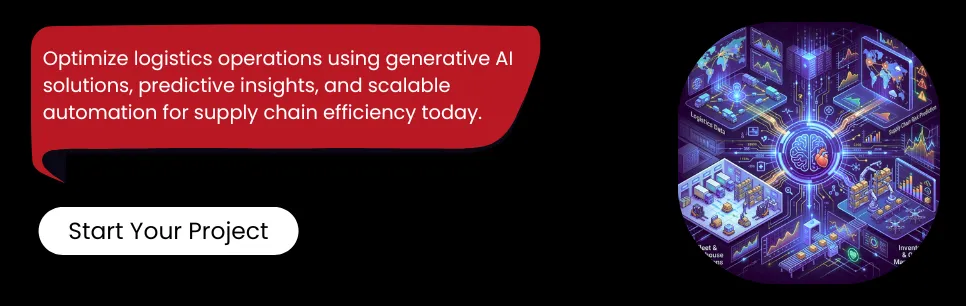
The eight generative ai applications in logistics below are representing the highest-adoption production deployments shipping in 2026 across the industry. Each use case is mapping to measurable operational outcomes across the operation.
1. Freight Document Automation
AI is extracting data from BOLs, customs forms, manifests and freight invoices automatically across the operation. It is eliminating manual data entry for 70%+ of document processing volume across the workflow. Real platforms are including Loop Returns, Vesper and EDI integration tools across the market. The operational benefit is 80%+ reduction in document processing time plus improved data accuracy versus manual entry across the operation.
2. Customer Service AI Agents
AI agents are handling shipment status inquiries, ETA updates, claims processing and general customer questions across the workflow. This is reducing support team burden by 60 to 80% on routine queries across the customer base. Platforms are including Zendesk AI, Intercom Fin and custom builds across the market today. Particularly valuable for 3PLs handling thousands of daily customer inquiries across the operation.
3. Carrier Cold Outreach Automation
AI agents are calling or messaging carriers about available loads at scale across the brokerage. Brokers are reporting 5 to 10x productivity gains versus manual outbound across the operation. Platforms are including Vector AI, Loadsmart Carrier Assistant and custom voice agents on Vapi or Retell AI infrastructure across the market.
4. Demand Forecasting With Multi-Modal Data
AI is incorporating structured demand data alongside unstructured signals including news, social media, weather and economic indicators for more accurate forecasts. Particularly valuable for SKUs with high external-event sensitivity across the supply chain. Real platforms are including o9 Solutions, Blue Yonder Luminate and SAP IBP with AI features across the market.
5. Supply Chain Disruption Detection And Response
AI is monitoring news, social media, weather and operational data for emerging supply chain disruptions across the network. When disruptions are detected, AI is suggesting mitigation actions across the operations team. Platforms are including Everstream Analytics, Resilinc and Interos across the market. Mature deployments are detecting disruptions 24 to 72 hours before they are affecting operations.
6. Internal Operations Copilots
AI assistants are helping logistics operators with system queries, exception handling and routine task automation across the workflow. Generic platforms like Microsoft Copilot and Google Workspace AI are handling administrative work, while specialised platforms like SAP Joule and Oracle's logistics AI are handling operational tasks within those systems across the platform.
7. Driver And Worker Support AI
AI agents are supporting drivers and warehouse workers with navigation, instructions, exception handling and safety guidance across the operation. Voice-based AI is particularly valuable for hands-busy worker contexts across the floor and the road. Real deployments are including Convoy Driver Assistant and warehouse AI platforms from 6 River Systems across the market.
8. Sustainability And Carbon Reporting
AI is calculating Scope 3 emissions across complex supply chains, automating ESG reporting and identifying emissions reduction opportunities across the operation. Increasingly required for regulatory compliance including CSRD in EU and SEC climate rules in US across the market. Real platforms are including Watershed, Persefoni and Sweep with logistics-specific modules across the industry.
Generative AI in Logistics and Supply Chain Management - Real-World Examples
Real production examples of generative ai in logistics and supply chain management are spanning the largest global shippers, 3PLs, freight platforms and supply chain software vendors across the market. The examples below are illustrating the scale and diversity of GenAI deployment in the industry today across categories.
Maersk: Deploying generative AI for customer service automation, document processing and shipment tracking inquiries at global scale across operations.
DHL: Using AI for predictive routing, customer service automation and supply chain risk monitoring across global operations.
UPS: Generative AI integrated into customer-facing chat, internal operations copilots and document workflows across the business.
FedEx: AI-powered customer service combined with predictive maintenance for fleet and aircraft operations across the network.
C.H. Robinson: Navisphere AI platform applying generative AI to freight matching, rate quoting and customer communications across the brokerage.
Flexport: AI-driven freight forwarding with automated document processing and customs filing assistance across global trade lanes.
project44 Movement Platform: Generative AI for shipment tracking insights and exception management across the visibility network.
FourKites Movement: AI-powered visibility insights with natural language querying of supply chain data across customers.
SAP Joule For Logistics: GenAI integrated into SAP Transportation Management and Extended Warehouse Management across the platform.
Oracle Logistics Cloud: Generative AI features for shipment planning, carrier management and customer service across the platform.
The pattern across these examples is consistent across the logistics market today. Leading logistics organisations are not picking single AI use cases, they are deploying GenAI as a portfolio across operations, customer service and decision support simultaneously across the business.
Generative AI in Transportation and Logistics - Industry Adoption Patterns
Generative ai in transportation and logistics adoption is varying significantly by sub-industry across the market. Freight brokers, asset-based carriers, 3PLs, shippers and last-mile delivery companies are having different priorities, integration requirements and budget profiles across procurement. Six adoption patterns are characterising the industry today.
Freight Brokers Lead Adoption: Carrier outreach automation and rate quoting AI are delivering immediate productivity gains, brokers are among the fastest GenAI adopters across the market.
Large Shippers Focus On Document And Forecasting AI: P&G, Walmart and other large shippers are prioritising document processing and demand forecasting across operations.
3PLs Adopt Customer Service AI First: Customer inquiry volume is making customer service AI the highest-ROI starting point for 3PLs across the segment.
Asset-Based Carriers Focus On Operations And Maintenance AI: Fleet operations, predictive maintenance and driver support AI rather than customer-facing applications across the carrier.
Last-Mile Carriers Use AI For Address And Customer Communication: Address disambiguation, ETA accuracy and exception communication are dominating use cases across last-mile.
Customs Brokers And Freight Forwarders Use AI For Documentation: Customs filing, tariff classification and trade compliance are dominating AI adoption across the segment.
Logistics sub-industries are varying in adoption pace however the direction is consistent across the market. Within 2 to 3 years, generative ai in transportation and logistics will be standard infrastructure across all major logistics segments across the industry.
Implementation Challenges in the Logistics Industry
Generative AI deployment in the generative ai in logistics industry is facing specific challenges beyond standard enterprise AI implementation across the market. Six categories of challenges are consistently slowing logistics AI projects across the segment.
Data Silos Across TMS, WMS, And ERP Systems: Logistics data scattered across multiple systems is making AI integration significantly harder than in unified enterprise environments.
Real-Time Performance Requirements: Operational logistics workflows cannot tolerate AI response latency that consumer applications are accepting today.
Legacy System Integration: Many logistics organisations are running decades-old systems that are lacking modern APIs needed for AI integration.
Multi-Party Data Sharing: Supply chain AI is working best across organisations, however data sharing between shippers, carriers and 3PLs is facing commercial and trust barriers.
Regulatory Compliance: Customs, hazmat and trade regulations are requiring precise AI outputs, hallucinations in logistics workflows are having direct legal and financial consequences.
Workforce Adoption Across Distributed Operations: Warehouse workers, drivers and operations staff distributed globally are complicating change management across the operation.
These challenges are surmountable but they are requiring deliberate planning across the program. Logistics organisations succeeding with GenAI are investing equally in change management, data infrastructure and AI technology across the deployment.
The Future of Generative AI in the Logistics Industry
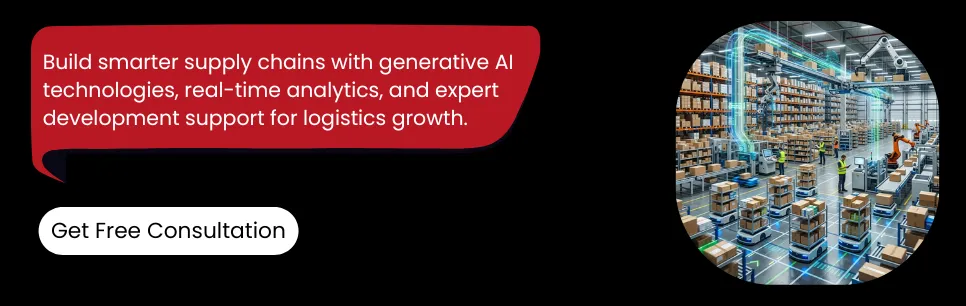
Five trends will be shaping the future of generative AI in the generative ai in logistics industry through 2030 across the market. Each one is representing an extension of current capabilities into more transformative applications across operations, planning and customer experience.
Autonomous Agent Operations: AI agents will be handling end-to-end logistics workflows without human intervention across the operation. Booking, exception handling, customer communication and documentation are all running autonomously for routine shipments by 2027 across major carriers.
Real-Time Supply Chain Twins With AI Reasoning: Digital twin platforms combined with generative AI will enable real-time scenario planning across the network. Operations managers are asking "what happens if Port of LA shuts down for a week?" and receiving instant impact analysis.
Multi-Modal Vision And Language AI For Warehouses: Combined computer vision and language AI will support warehouse workers through voice interaction, visual recognition and contextual guidance simultaneously across the floor.
Carrier Selection AI With Predictive Outcomes: AI agents will select carriers based on predicted on-time performance, damage rates and service quality rather than just price, improving overall supply chain reliability across shippers.
Sustainability-Optimised Logistics AI: AI agents will optimise for cost and emissions simultaneously, driven by regulatory pressure and corporate sustainability commitments. Carbon-aware logistics is becoming standard rather than premium across the market.
Conclusion
Generative ai in logistics has crossed from research curiosity to operational infrastructure across the largest shippers, 3PLs and freight platforms today. The logistics organisations capturing full value are approaching generative AI as a portfolio across the value chain including document automation, customer service, route planning, demand forecasting and sustainability, rather than picking single use cases. For deeper reads, explore our AI solutions for enterprise post, the supply chain AI cluster content and the LLM application development guide across our content library.
Leave a Comment