
In today’s fast-moving world of logistics, efficiency isn’t just important, it's everything. Transportation Management Systems (TMS) have gone from being optional tools to absolute necessities. Companies—big and small—rely on them to streamline operations. Save money. Deliver faster. Keep customers happy.
Now imagine adding Artificial Intelligence (AI) and automation into the mix. That’s a game-changer. AI brings smarter decision-making, predictive analytics, and advanced optimization. Automation takes away human error and speeds things up—drastically. Together, they’re not just improving TMS, they're transforming them.
Transportation software development companies are shifting focus, building smarter, AI-powered systems that truly change the logistics game. From predicting the best routes to automating freight tracking—AI and automation are raising the bar for efficiency and reliability.
Understanding Transportation Management Systems
Transportation Management Systems—or TMS—are the backbone of modern logistics. They’re software solutions designed to manage, optimize, and streamline the movement of goods. Think of them as a command center for transportation handling everything from planning and execution to tracking and reporting.
At their core, TMS is all about helping businesses save time and money. It makes life easier by organizing routes, scheduling shipments, and keeping track of deliveries in real time. No more guessing where things are. No more wasted hours. It also cuts down errors and boosts transparency—giving companies a clear picture of their entire supply chain.
For logistics software development companies, TMS isn’t just software; it’s a critical tool that shapes how goods move across industries, and a strong logistics app development company helps translate these systems into real-time, user-friendly platforms. From freight forwarding to last-mile delivery—the impact is massive.
How AI Transforms Transportation Software Development
Artificial Intelligence isn’t some far-off idea anymore—it’s here, and it’s already changing the way transportation software is built. For logistics companies, AI means smarter, faster, and more accurate decision-making.
Think about it—a system that learns from patterns, predicts delays before they happen, and suggests the best routes instantly. That’s not science fiction. That’s what AI is doing today.
At its core, AI in transportation software development makes route planning sharper, demand forecasting smarter, and operations more efficient. It’s not just automation—it’s systems that think, learn, and improve over time.
Transportation software development companies are shifting gears—integrating AI into TMS to make them more intelligent, adaptive, and ready for the future.
AI-Powered Route Optimization
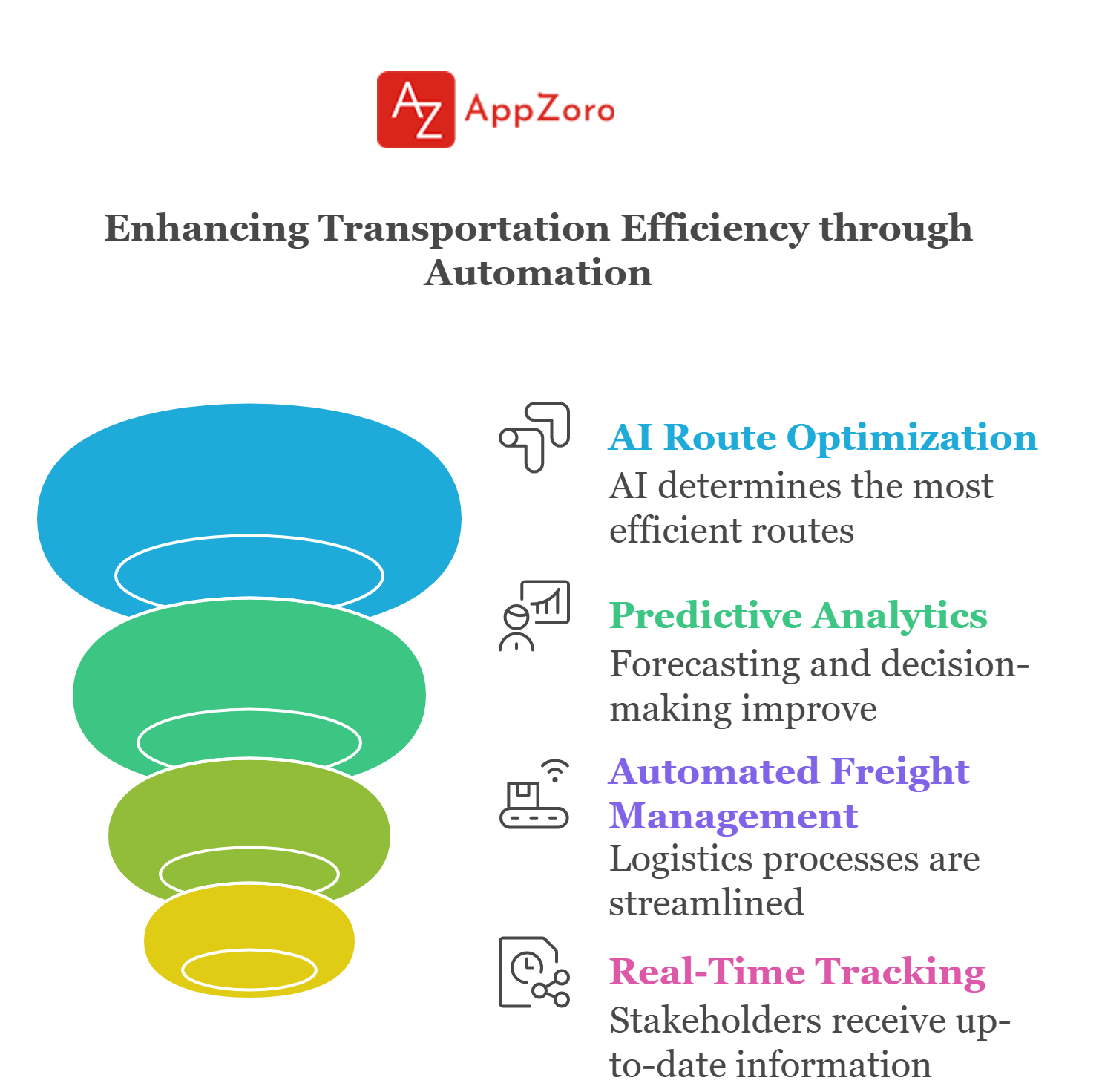
One of the biggest changes AI brings to transportation software development is route optimization. Gone are the days of static routes and manual planning. Now, AI can look at massive amounts of data—traffic patterns, weather conditions, delivery schedules, and more—and figure out the best path for each shipment.
Predictive Analytics in Transportation
Predictive analytics is one of the most exciting changes AI is bringing to transportation software development. Instead of waiting for problems to happen—companies can now foresee them.
By looking at past data and real-time inputs—such as traffic patterns, weather changes, or shipment delays—AI can catch potential disruptions before they happen. That means fewer delays, lower costs, and a much smoother operation.
For transportation software development companies, predictive analytics isn’t just a tool—it’s a smart advantage. It turns raw data into insight, helping businesses make better decisions before issues even arise.
Automation in Transportation Management Systems
Automation is another key driver transforming transportation software development. Instead of relying on manual processes which can be slow and error-prone, automated systems handle repetitive tasks efficiently. From scheduling shipments to managing loads and tracking deliveries, automation ensures things run smoothly with minimal human intervention. It reduces mistakes, saves time and allows teams to focus on more strategic tasks. Transportation software development companies are increasingly integrating automation into TMS to create smarter, faster, and more reliable systems.
Automated Freight and Load Management
You know what’s really shaking things up in transport software lately? Automation. No more babysitting endless spreadsheets or double-checking routes by hand—thank goodness. These days, automation tools basically handle all the boring, repetitive junk, and they do it way faster than any human could.
We’re talking about stuff like figuring out the best routes, sorting out load plans, or keeping tabs on shipments as they crawl across the country. All that behind-the-scenes wizardry means fewer screw-ups, less wasted time, and teams can finally stop putting out tiny fires and focus on actual big-picture stuff.
Honestly, that’s why every software company in the transportation world is racing to automate their TMS. Smarter, speedier, and way less “oh crap, we missed something” moments. Who wouldn’t want that?
Real-Time Tracking and Reporting
Real-time tracking is no longer a luxury; it's a necessity in modern logistics. Automation makes it possible to monitor shipments at every stage of the journey without manual input. With real-time tracking, companies can quickly identify delays, adjust routes, and communicate updates to customers instantly. Automated reporting also provides detailed insights into performance, helping improve efficiency and decision-making.
Benefits of AI and Automation in Logistics
AI and automation are reshaping logistics, and the benefits are clear: businesses enjoy faster operations, reduced costs, and greater accuracy; they can plan smarter, respond faster, and deliver better service every single time.
With AI, logistics companies gain predictive insights that help avoid delays before they happen. Automation handles repetitive tasks, freeing teams to focus on higher-value work, which leads to smoother workflows, fewer errors, and improved customer satisfaction.
Another major advantage is scalability. As businesses grow, AI and automation make it easier to manage increased demand without increasing costs or manual effort proportionally. This is a huge benefit for companies aiming to expand globally.
Real-time visibility is another game-changer: AI and automation give businesses instant updates and transparent reporting, meaning they can react to problems before they impact the supply chain. This level of insight improves planning and builds trust with customers.
For logistics software development companies, these benefits aren't just features; they're essential advantages that set their solutions apart in a competitive market. The combination of AI and automation isn't just about keeping up with change; it's about leading the way in efficiency, accuracy, and innovation.
Future Trends in Transportation Software Development
The future of transportation software development is shaped by AI, automation, and emerging technologies, and the change is already underway. Companies that embrace these innovations will not just keep up but lead the way in logistics efficiency, accuracy, and customer satisfaction.
One major trend is the integration of the Internet of Things (IoT): connected devices on trucks, containers, and warehouses provide real-time data, from vehicle location to cargo condition, making transportation smarter, more transparent, and far more responsive to changing conditions.
Another growing trend is the rise of autonomous vehicles. Self-driving trucks and drones could transform delivery speed and safety, reducing the reliance on human drivers for certain routes while optimizing logistics costs.
AI itself will keep evolving, offering deeper predictive analytics, smarter route optimization, and self-learning capabilities that adapt to changing traffic patterns, weather conditions, and demand fluctuations. This will make transportation software not just reactive but truly proactive.
Sustainability is another important trend shaping the future: transportation software development companies are focusing on green logistics by using AI and automation to reduce fuel consumption, lower carbon emissions, and optimize resource use. This aligns not only with efficiency goals but also with global environmental responsibilities.
For transportation software development companies, the future means building systems that are intelligent, flexible, and forward-thinking and able to adapt to shifting demands, evolving regulations, and emerging technology trends. The ultimate goal is clear: smarter, faster, safer, and more sustainable logistics for the next generation.
Choosing the Right Transportation Software Development Company
Choosing the right transportation software development company can make or break your logistics strategy. The right partner not only delivers software but also understands your unique challenges and goals.
Look for a logistics software development company with proven expertise in building AI-powered and automated TMS solutions. They should understand both the technical side—including integration, scalability, and data security—and the practical side of transportation management.
A great partner will also offer flexibility. Transportation needs change constantly, whether it's adapting to new regulations, scaling for seasonal demand, or incorporating emerging technologies. Your software partner should be able to evolve with you.
Cost is important, but value is even more critical. Choose a company that focuses on long-term benefits—efficiency gains, improved customer satisfaction, and sustainable growth—not just the lowest price.
Transportation software development companies that combine technical skill with deep industry insight can transform your logistics operations, turn challenges into opportunities, and help your business stay ahead in a fast-changing landscape.
Conclusion
AI and automation are no longer optional in transportation management; they are essential. Transportation management systems powered by these technologies are transforming the way goods move, making logistics faster, smarter, and more reliable.
Transportation software development companies are leading this change, building systems that combine predictive analytics, route optimization, automation, and real-time tracking. These innovations improve efficiency, reduce costs, and enhance customer satisfaction.
The future of transportation software lies in adaptability: companies that embrace AI, automation, integration, and sustainability will have a competitive edge. For businesses, the choice is clear: the right transportation software development company can transform challenges into opportunities and drive lasting success.
At Appzoro, we specialize in building advanced custom transportation software solutions that integrate AI and automation to meet the unique needs of businesses. Whether you need a TMS for freight management, route optimization, or real-time tracking, we design scalable, secure, and intelligent solutions that fit your business goals.
Our team works closely with clients to understand their challenges, analyze workflows, and deliver software that not only solves problems but also unlocks new opportunities. Partnering with Appzoro means more than just getting software; it means gaining a strategic technology partner committed to transforming your transportation management into a competitive advantage. Let us help you lead in efficiency, innovation, and growth.
Leave a Comment