
Libraries have always been the backbone of knowledge sharing, but the way they operate has evolved dramatically in the digital era. From manual cataloging and physical checkouts to smart digital systems, libraries are embracing technology to stay relevant and efficient. Traditional methods often lead to misplaced records, time-consuming processes, and limited accessibility—challenges that modern tools now solve seamlessly.
Today, libraries aren't just physical spaces filled with books; they're dynamic, data-driven environments that deliver instant access to information anywhere, anytime. This transformation has been made possible through innovative digital solutions that streamline operations, enhance accessibility, and improve user satisfaction. If you're wondering about the foundational aspects, you might find our general guide on library management system software helpful.
How Library Management System Software Solves Key Challenges
A library management system software simplifies every aspect of managing a modern library—from cataloging and circulation to data reporting and user engagement. It automates manual processes, reduces errors, and offers a centralized platform to manage both physical and digital collections.
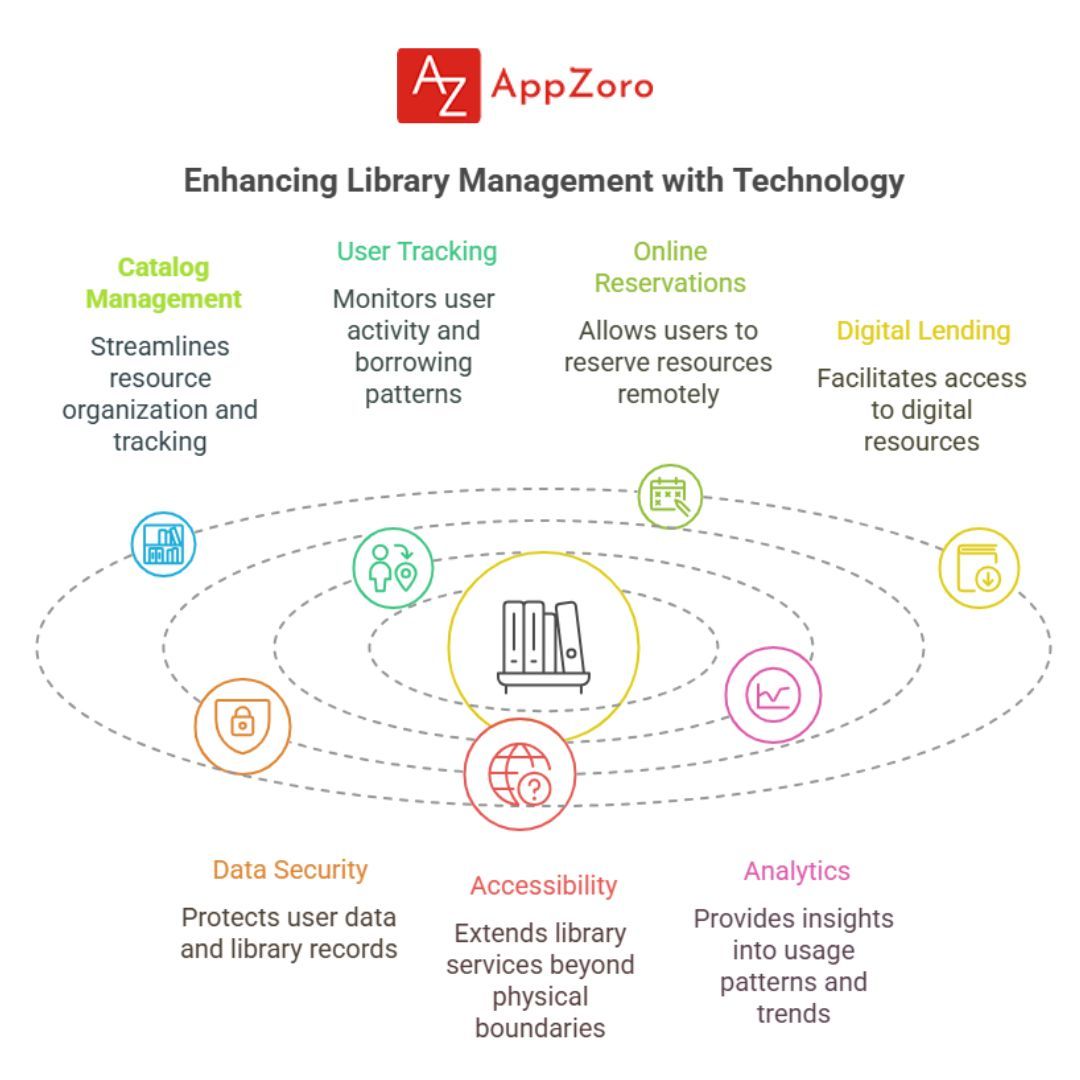
This software eliminates the complexities of traditional library systems by integrating essential features such as catalog management, user tracking, online reservations, and digital lending. Supported by ui/ux design and development services, it enables librarians to focus on improving user experience instead of spending time on repetitive administrative tasks, while ensuring the system remains intuitive and easy to use.
One of the biggest advantages is accuracy. Manual tracking of books, borrower records, and due dates often results in misplaced resources or incorrect records. With a modern system, all data is digitized and updated in real-time, eliminating human errors.
Furthermore, a robust library management system software improves operational efficiency by streamlining workflows. Tasks like issuing books, renewing memberships, and generating reports become automated processes, saving significant time and reducing administrative workload. This efficiency is a core benefit, much like what is seen in custom enterprise software development company.
Another major benefit is accessibility. Libraries can now offer online catalogs where users can search for books, check availability, and even reserve resources remotely. This extends library access beyond physical walls and working hours, making information available anytime, anywhere.
Advanced analytics is another game-changer. The software can track usage patterns, popular books, and borrowing trends, allowing libraries to make informed decisions about acquisitions, inventory, and resource allocation, which not only improves service quality but also aligns library operations with user needs. This data-driven approach is increasingly vital across industries, as highlighted in our discussions on AI & ML development.
Security is also a priority. Modern library management software employs encryption, secure authentication, and backup systems to protect sensitive user data and library records, which ensures that both physical and digital resources are protected against unauthorized access.
Ultimately, a library management system software transforms library management into a streamlined, secure, and user-friendly process, paving the way for smarter, more connected libraries of the future. For a deeper dive into the specific features and advantages, refer to our post on why every modern library needs library management system software in 2025.
How a Library Management System App Enhances User Experience
A library management system app brings the power of library services directly to users' fingertips, offering unmatched convenience and accessibility. Today's library-goers expect instant access to resources, and a mobile app bridges the gap between physical spaces and digital accessibility.
Through the app, members can browse and search catalogs with advanced filters, check real-time availability of books, reserve titles instantly, and receive push notifications for due dates or new arrivals, eliminating the need for time-consuming visits or phone inquiries, significantly enhancing user satisfaction. This focus on mobile convenience mirrors the broader trends in custom mobile app development company.
For librarians, the app is equally transformative: it allows efficient management of user accounts, quick updates to borrowing histories, and automated reminders for overdue books. The system can even generate reports on user activity, helping libraries tailor services to member needs.
Moreover, mobile integration supports features such as QR code scanning for checkouts, digital membership cards, and remote access to e-books or research material. This creates a unified and modern library ecosystem where information is accessible anywhere, anytime.
By bringing library services directly to a user's device, a library management system app not only improves operational efficiency but also fosters a culture of engagement and continuous learning, making libraries a more vital resource in the digital age.
Challenge 1 – Streamlining Cataloging and Inventory Management
One of the biggest challenges libraries face is managing vast collections efficiently. Traditional manual cataloging processes are time-consuming, error-prone, and often lead to misplaced or lost records. This inefficiency affects both librarians and users, creating delays in accessing resources and reducing overall satisfaction.
Modern library management system software addresses this challenge by automating cataloging and inventory management. Books and resources can be tagged with unique identifiers and entered into a centralized database, making them easy to track and manage. With intuitive search and filter functions, both staff and users can quickly locate materials without manually sifting through physical records. This automation is a key aspect of effective custom software development solutions.
Automation also streamlines inventory updates: When books are issued, returned, or reserved, the system automatically adjusts records in real-time, eliminating manual entry errors, improving accuracy, and ensuring that the data remains current and reliable.
Beyond efficiency, automated cataloging offers scalability. Whether a library has thousands or millions of resources, modern systems can handle large volumes without compromising speed or accuracy. This empowers libraries to focus on delivering quality services rather than getting bogged down in administrative work.
By reducing the burden of manual cataloging and improving inventory accuracy, a library management system software transforms the backbone of library operations, making them faster, more reliable, and ready for the demands of today's digital world.
Challenge 2 – Improving Data Security and Privacy
In the digital age, protecting user data and ensuring privacy has become a critical concern for libraries. Traditional systems often lack robust security measures, making them vulnerable to unauthorized access, data breaches, and the loss of valuable records. This can compromise both library operations and user trust.
A modern library management system software addresses these risks with advanced security features. These include secure login authentication, role-based access controls, and encryption of sensitive data. By limiting access to authorized personnel only, libraries can protect member information while maintaining operational efficiency. Security is paramount in all software development, particularly as discussed in enhancing software development through strong password security.
Additionally, cloud-based library systems add another layer of protection: data stored in secure cloud environments is less susceptible to physical damage or loss, and backups ensure records are recoverable in case of emergencies, which safeguards the entire collection and user history of the library.
Privacy compliance is also a priority. Modern systems can be configured to meet regional data protection regulations, ensuring that libraries not only operate securely but also remain compliant with laws such as GDPR or other local privacy standards.
By improving data security and privacy, a library management system software builds trust, protects valuable resources, and empowers libraries to embrace digital transformation confidently without compromising safety.
Challenge 3 – Simplifying Administrative Tasks and Reporting
Library management involves a wide range of repetitive administrative tasks—from issuing and returning books to calculating fines, managing memberships, and generating reports. These processes can be time-consuming and prone to human error when handled manually, leaving librarians with less time to focus on enhancing the library experience.
A library management system software addresses this by automating core administrative functions: book issuance and returns are tracked in real-time, overdue notifications are automatically generated, and fines can be calculated instantly. This significantly reduces workload, improves accuracy, and ensures smoother daily operations. This automation is a core benefit of adopting comprehensive custom software development.
Reporting is another critical area where modern systems shine: they generate detailed reports on resource usage, membership activity, overdue books, and borrowing trends. These insights allow library managers to make informed decisions about acquisitions, resource allocation, and service improvements. This data-driven decision-making is a key advantage, similar to how AI and ML development services empower businesses.
Moreover, automated workflows ensure that important tasks aren't overlooked even during busy periods. Librarians can configure the system to send alerts for low inventory, upcoming renewals, or expiring memberships, keeping the library functioning efficiently without manual oversight.
By streamlining administrative tasks and enhancing reporting capabilities, a library management system software transforms library operations, freeing valuable staff time while improving the overall efficiency and quality of services offered to users.
Challenge 4 – Integrating Digital Learning and Library Systems
As education and research shift towards digital platforms, libraries must integrate with learning tools, academic databases, and other digital resources to remain relevant. Traditional systems often lack the flexibility to connect with these external platforms, creating barriers for students, researchers, and library staff.
A modern library management system software offers seamless integration capabilities that allow libraries to connect with learning portals, digital archives, and research databases. This integration creates a unified ecosystem where users can access physical and digital resources through a single platform. This kind of integration is fundamental to many modern web app development projects.
Such interoperability also enables libraries to support remote learning more effectively: students and members can access e-books, research materials, and course-related content directly through the system without switching between multiple platforms, which reduces friction and improves the overall learning experience.
Integration simplifies management for librarians by centralizing resources and workflows. APIs and cloud-based connectivity ensure that data flows securely and efficiently between systems, keeping records updated and consistent across all platforms.
By integrating with digital learning tools, a library management system software empowers libraries to extend their reach, enhance accessibility, and stay aligned with the evolving needs of education and research in the digital era. For those interested in developing such integrated solutions, our guide on how to develop effective public library management software offers valuable insights.
The Future of Smarter, Connected Libraries
The library of the future is not just a place to store books; it is a dynamic hub of knowledge that blends physical and digital resources to offer seamless access to information. Modern solutions like a library management system app and software are making this vision a reality by solving critical challenges faced by libraries today.
These systems are enabling libraries to operate more efficiently, improve user experiences, enhance security, and integrate with a growing number of digital learning platforms. By automating cataloging, borrowing, reporting, and member management, they free librarians to focus on fostering learning, innovation, and community engagement.
Looking ahead, the adoption of artificial intelligence, machine learning, and advanced analytics will further transform library services: predictive recommendations, voice-assisted search, and personalized learning experiences will become the norm, making libraries smarter and more responsive to user needs. These advancements are part of a broader trend, often explored in the context of AI & ML development services.
For institutions ready to embrace this transformation, partnering with the right technology provider is essential. AppZoro, a trusted mobile app development company in the US, specializes in creating tailored library management solutions that combine functionality, scalability, and user-friendly design. Their expertise ensures libraries are equipped for the demands of today and the possibilities of tomorrow.
Leave a Comment