
Are you looking for an open – a source API management platform for your business? A successful microservices structure is greatly enhanced by selecting the right API gateway. API’s first business is primarily based on a wide range of services to build API and offers value to its clients. However, numerous technologies are used to make APIs. You can create APIs consistent with your users by leveraging the platform’s tools.
Business API endpoints can be streamlined, verified, and used quickly with open-source API gateways. As APIs become omnipresent in the software and application development world, every [web apps development company](https://appzoro.com/services/web-app-development) relies on them to power everything from private and public service apps to partner integrations. APIs help developers build applications that cater to diverse customer needs, and due to their significant benefits, organizations are actively exploring the best API management platforms to deliver advanced user experiences.
## What is API management?
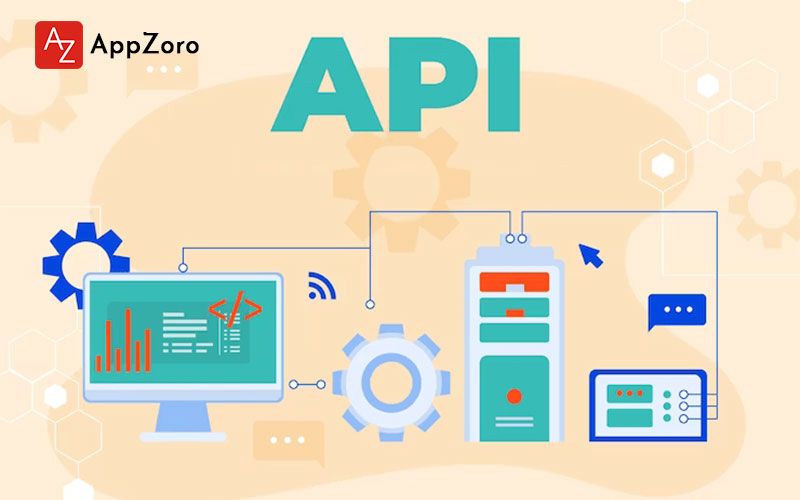
It is a software program that depends on the capabilities and functionality of computer programs which define an interface with the computer. Usually, the API acts as a messenger that translates and shares your request through a server requesting the request and resents your reply. For instance, an online food app will take your order, and the kitchen will prepare the order. Similarly, API management tools offer organizations a platform for streamlining API.
## Top Open-Source API Management Platforms
Here is a list of the best API management platforms that you should check:
### 1. Goku API Gateway
Goku API platform is an open-source microservice gateway with a cloud-native structure created using Go. It works like the API gateway of the microservice framework as a portal for unified verification, security protection, and flow management as an open API development portal and a unified portal for third-party APIs. Also, it supports cluster deployment and active service registration, API health monitoring, backend load management, and API disconnect and reconnect features.
Goku has an in-built dashboard, which makes configuration more accessible, a robust plug-in system to enhance its functionality, and a CLI for starting/stopping/reloading Goku with its command line.
### 2. Kraken
Kraken is a stateless, open-source, easy-to-use, and pluggable API gateway. Also, it was created in Go with performance in mind. However, it is portable and does not require any database to function. It is easy to configure and supports infinite backends and endpoints. Some of the features like monitoring, rate limits, user quotas, simultaneous calls, circuit breakers, afforestation, filtration, transformation, and decryption are all included in KrakenD. Moreover, it offers features like SSL, security regulations, and proxy services like protocol conversion, Oauth, and load balancing.
Using KrakenDesigners allows you to create an API graphically or continue with your current API. You can set the API gateway behavior either manually or automatically. Furthermore, with its enhanced structure, extra functionality, plugins, connected scripts, and middleware is added without changing the program source code.
### 3. MuleSoft API Management Platform
Mulesoft aims to create a security API-based management tool for its users as a more enhanced portfolio. OAuth, SAML implementation, and Runtime Cutsom regulations offer unprecedented control over proxy-based applications.
Also, its structure is relatively agnostic about how the system will perform.
The portal provides safe and secure access to data and services through open and pluggable designs, which allows seamless connectivity to existing systems and cloud services. Also, it is built on open standards, which enable enterprises to interact with other applications.
### 4. Dream Factory
It is a unique product and does not provide a new transformation to existing APIs as a selling point. Instead, it provides a customizable and automatic API generation system from multiple data sources in different types of. After its creation, DreamFactory offers a few fundamentals management software. However, the main selling is automated generated output and the potential for users to monitor the outcome precisely.
### 5. Kong Gateway (OSS)
Kong Gateway is an open-source, cloud-native, advanced API platform for universal deployment. It can be run on any portal. It is written in Lua programming language, which supports hybrid and multi-cloud structures, and then it is optimized for nano services and distributed structures. At its core, Kong is created for high performance, portability, and extensibility.
Moreover, the Kong is lightweight, quick, and scalable. It supports declarative configurations without a database, using in-memory storage and native Kubernative CRDs.
Extended features include load balancing, rate limiting, live evaluation, service discovery, recovery clustering, caching, failure detection and recovery, and many others. Kong offers support for the clustering of nodes and serverless functions. It supports the configuration of proxies for services and serves them over SSL or uses Web Sockets. It can load balance traffic through replicas of upstream services, evaluate the availability of services, and adjust its load balancing accordingly.
### 6. Fusio
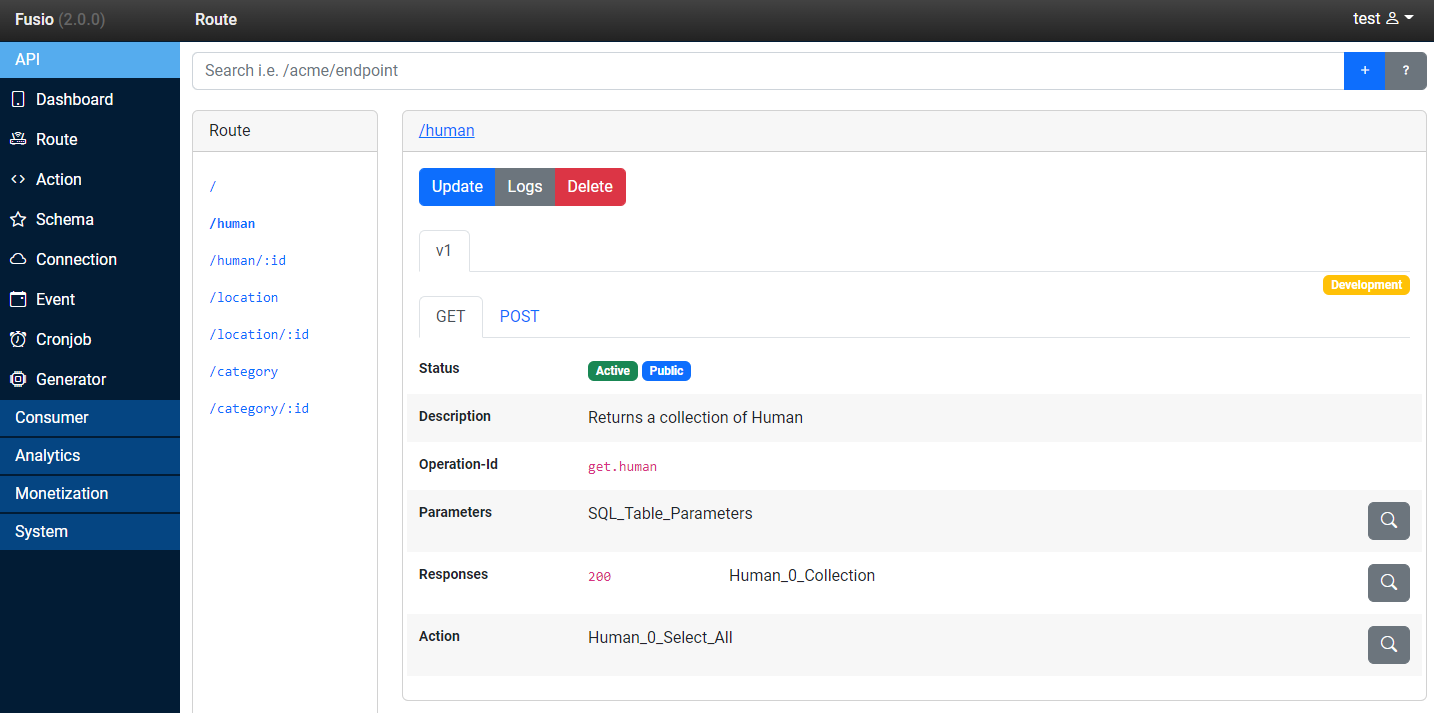
Fusio is an open-source, PHP-based API management solution to create and streamline REST API. It is an API management portal that enables you to build API endpoints that will extract valuable data from databases and change them. It provides all the tools needed to create an API from multiple data sources and produce unique replies.
Moreover, it has other potentials like rate limiting, RPC support, validation analysis, authorization, and user management, which expose Javascript applications, business functionality, microservices, and mobile applications.
Fusio features a subscription layer that helps build pub/sub-fort API and a simple payment system to charge for specific routes.
### 7. Azure API Management
Azure application API manager includes numerous functions that are difficult to differentiate between other list features and a single operation. Microsoft Azure is an infrastructure for cloud computing that’s fully functional. The API management solution offered at Azure sites provides a turnkey solution, allowing for a quick time to market and a robust cloud infrastructure.
### 8. Wso2 App Cloud
WSO2 offers the best open-source solutions for API management. It includes complete API lifecycle management features, customizability, policy enforcement, and monetization. However, its customizability element is designed to fit both micro-service and monolithic structures and includes an analytics function to obtain insight into API usage.
### 9. Apigee
Apigee is one of the best API management tools for partners, consumers, cloud apps, IoT, record systems, and employee apps. With this software solution, you can design, evaluate, scale, and evaluate API anywhere. Moreover, this tool enables you to take complete control of APIs and assess how all work appropriately.
### 10. Tyk
This robust, feature-rich, open-source API gateway was created from the ground up using the Go programming languages. Its open – standard-based structure is easily scalable, cloud-native, pluggable, and highly performant. It requires Redis as data storage and is self-contained. It helps users safely post and evaluate various services like GraphQL, REST, and Legacy. However, different authentication techniques, limitations, rate limiting, monitoring, notifications, and events are some of the features of Tyk.
Also, it supports digital endpoints, service discovery, and on-the-fl transforms. It allows the creation of mock APIs before its official launch.
## Conclusion
API management software is the foundation of the digital enterprise. It is responsible for building, publishing, and integrating APIs throughout the cloud to spur innovation and keep businesses ahead of the competition. This highlights its role as both a foundation and catalyst for creation, where a well-structured API stack becomes essential for success. If you are interested in mobile app development, partnering with a [custom mobile app development company](https://appzoro.com/services/mobile-app-development-company-usa) in Atlanta can help you design scalable, API-driven solutions that support long-term growth.
Also Read: [**Best Android Libraries to Use in 2023**](https://appzoro.com/blog/best-android-libraries-to-use-in-2023)