

Custom Legal Software Development Company
- AI-Powered Contract Review & Drafting
- Matter, Case & Docket Management
- E-Discovery & Document Automation
- Secure Client Portals & Billing
Share Your Project's Vision
We are Trusted by



Technology & Cloud Partners


Rated & Reviewed Globally
-
 4.7
-
 4.5
-
 4.8
Awarded Development Firm
-
Clutch profile (opens in a new tab)

Clutch
Rated 4.7 out of 5 across verified client reviews.
-
GoodFirms profile (opens in a new tab)

GoodFirms
Listed among leading custom software development companies in the United States.
-
Crunchbase profile (opens in a new tab)

Crunchbase
Verified Atlanta software company, founded inside Atlanta Tech Village in 2016.
-
DesignRush profile (opens in a new tab)

DesignRush
Ranked among the top app development agencies in the United States.
-
TrueFirms profile (opens in a new tab)

TrueFirms
Listed among verified software development companies in the United States.
Our Legal Software Development Services
-
Matter and Case Management
One record for every matter, with deadlines, documents, parties, notes and time entries linked so nothing lives only in somebody's inbox.

-
Document and Contract Automation
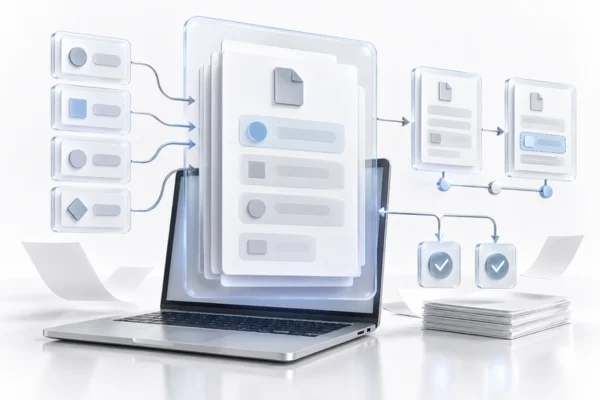
Clause libraries, templated drafting, version control and approval routing, so first drafts take minutes and every change stays traceable.
-
E-Discovery and Review Tools
Ingestion, deduplication, tagging and privilege review built to handle volume without losing the chain of custody the court will ask about.

-
Client and Counsel Portals
Secure spaces where clients upload, sign, pay and track progress, with role based access that keeps each matter sealed from the others.

-
Billing, Trust and Time Capture
Passive time capture, LEDES billing, retainer and trust ledgers, built to the accounting rules your jurisdiction holds you to.

-
Legacy Modernisation and Migration
Move off ageing on premise systems without losing matter history, document links or the audit record that proves what happened when.

Comprehensive Legal Software Solutions for Your Practice
Proven software for legal industry teams of every shape, from a six-partner practice to a multinational legal department running outside counsel across a dozen jurisdictions.
-

Law Firm Practice Management
End to end law firm software solutions covering intake, matters, calendaring, documents, time and billing in one system your whole practice logs into each morning.
-

Corporate Legal Operations
Matter intake, spend control, outside counsel guidelines and reporting for in house departments that have to show the board where the legal budget actually went.
-

Contract Lifecycle Management
Request, draft, negotiate, sign and renew in one tracked flow, with obligation reminders so an auto renewal never surprises your commercial team again.
-

Litigation Support Platforms
Case chronologies, evidence sets, deposition tracking and exhibit management, built so the trial team can find the right document in seconds, not hours.
-

Compliance and Regulatory Tracking
Obligation registers, policy attestation, breach logging and audit ready reporting mapped to the frameworks your regulators actually examine you against.
-

IP and Trademark Management
Portfolio tracking, renewal deadlines, jurisdiction mapping and prosecution history, with alerting tuned so a filing window never closes unnoticed.
-

Court and Government Systems
Filing interfaces, docket integration, case registries and public access portals, built to the accessibility and retention standards public bodies answer for.
-

Legal Billing and Accounting
Trust accounting, split billing, rate cards, write offs and realisation reporting, reconciled against the general ledger your finance team already uses.
-

Client Intake and CRM
Conflict checks, engagement letters, e-signature and onboarding automation, so a new matter opens cleanly instead of through four separate email threads.

Your Practice Demands Custom Legal Software. Off-the-shelf platforms are Not Enough.
With 50+ in house engineers and documented security processes, we build legal systems that fit your matter types, your jurisdictions and your privilege rules exactly.
Get Free ConsultationOur Featured Case Study
A look at the work itself. Different industries, different constraints, different timelines, and the thinking behind each build.
-
Judicial Innovations
A secure web platform designed to let users participate in federal and district court proceedings remotely while supporting complex jurisdiction-specific processes.
- 98%
- Customer Satisfaction
- 95%+
- Process Accuracy
- $800k+
- Revenue Impact
Stack React, Node.js, AWS, Firebase on a serverless architecture.
-
Freedom Rideshare
A complete rideshare rental platform where drivers can find vehicles, book, pay, and manage insurance and registration requirements from one connected experience.
- 96%
- Customer Satisfaction
- 100%
- Payment Accuracy
- 2X
- Faster Operations
Stack React Native, Node.js, AWS, Firebase, and Stripe.
-
Apex Textile
We rebuilt the digital experience around how textile buyers search for products and specifications, helping customers reach relevant information with fewer unnecessary steps.
- 97%
- Customer Satisfaction
- 45%+
- Lead Growth
- 60%
- Conversion Improvement
Stack React, Node.js, AWS, and a responsive web architecture.
-
Convoy Transport
A specialized platform connecting law enforcement agencies with qualified off-duty officers while supporting assignments, reporting, custody workflows, and payments.
- 98%
- Customer Satisfaction
- 95%+
- Process Accuracy
- $400k+
- Revenue Impact
Stack React, React Native, Node.js, AWS, and PostgreSQL.
-
Dreambook & Planner
A cross-platform wellness app translating the brand's paper-planning experience into goal setting, mind mapping, habit tracking, and calendar-connected tools.
- 32%
- Higher Paid Conversions
- 95%+
- Process Accuracy
- 30%+
- Digital Conversion Improvement
Stack React Native, Node.js, Firebase, and Google Calendar API.


What Our Clients Say About Us.
-

Calls and sales are up by at least 20% now that we've launched the site.
Paawan Mathur
President, Apex Textile Company
-

What stands out most is their strong execution and commitment to problem-solving.
Cole Sturdevant
CEO, Freedom RideShare Rentals, LLC
-

They go above and beyond to communicate direction and are responsive to feedback.
Carey Markey
CEO, MEDcraze
-

AppZoro made each project feel like it was their baby, and they seemed to care about nothing else.
Ed Bolian
Founder, VINwiki
-

There's never been a language barrier or an issue with our difference in time zones. Their team has been really great.
Mario Gonzales
VP of Operations, Judicial Innovations
-

They grasped what I wanted to accomplish and helped me get there. I'll never go elsewhere for an IT provider.
Steve Thompson
Founder, Beverage Solutions Group, LLC
-

I've been very impressed with the dedication the AppZoro Technologies, Inc. team has to our project.
Max Hockley
Chief Strategy Officer, Jax Automotive, LLC
-

In addition to superb communication, they built a very smooth app with intuitive navigation and a clean interface.
Thad Joseph
Founder, Turns Financing Services
-

They do great work with integrity.
Karen Houghton
Director, Atlanta Tech Village
-

AppZoro is a young company, and I've seen them grow and get better in the short time we've worked together.
Michael Patterson
CEO, CopyThat Technologies, LLC
-

We haven't seen any weaknesses in their work.
John Cox
Co-Owner, Convoy Judicial Transport LLC
Our AI-Powered Legal Software Solutions We Provide
-

Contract Review and Analysis
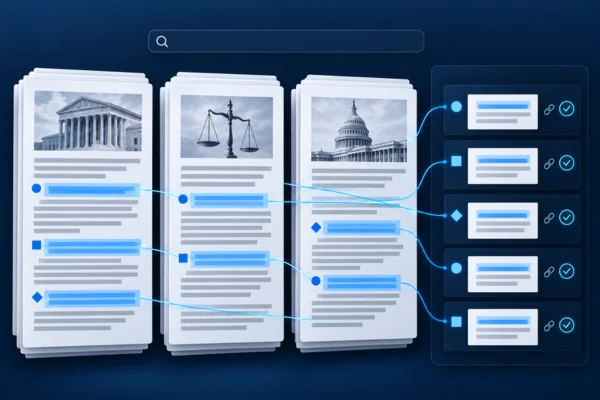
Models trained on your own clause positions flag deviations, missing protections and unusual terms, with every flag linked to the source paragraph for verification.
-
Legal Research Assistants
Retrieval grounded search across your matter history, precedent bank and public sources, returning citations rather than confident summaries with nothing behind them.
-

Document Drafting Copilots
First drafts of pleadings, memos and standard agreements generated from your own templates, so the house style survives instead of being reinvented each time.
-

Intelligent Document Classification
Automatic sorting, tagging and privilege screening across inbound documents, cutting the manual triage that eats the first week of every sizeable discovery set.
-

Deadline and Risk Prediction
Models that read matter patterns to surface slipping deadlines, budget overruns and matters likely to escalate, early enough for someone to actually intervene.
-
Conversational Client Intake
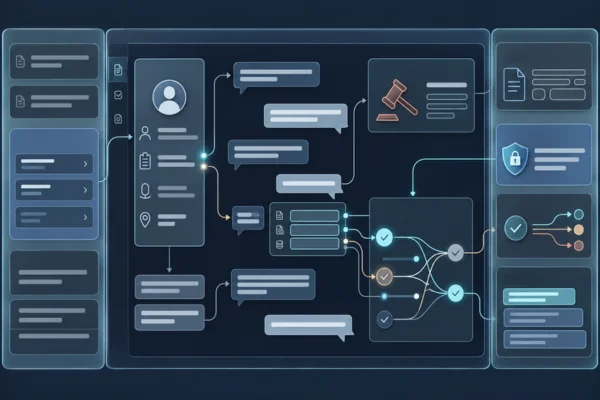
Guided intake that asks the right follow up questions, runs conflict checks and routes the enquiry, with a clear handoff the moment a legal judgement is needed.


Key Features for Your Legal Software Development Project
-
Role Based Access and Ethical Walls
Permissions mapped to real roles, with matter level screens that seal a conflicted team out completely rather than relying on everyone remembering not to look.
-
Full Audit Trail
Every view, edit, export and deletion stamped with user, time and matter, retained in a tamper evident log you can hand to a regulator or an opposing party.
-
Document Version Control
Linked versions, redlines and comparison views, so the question of which draft was sent to the other side on which date has one answer, not three.
-
Advanced Legal Search
Search across matters, documents, emails and notes with filters for party, date, privilege status and matter type, returning results in seconds under real volume.
-
Deadline and Docket Automation
Court rules based date calculation with layered reminders and escalation, built so a missed limitation date is a system failure nobody on your team can cause alone.
-
Time Capture and Billing
Passive capture across documents, calls and email, reviewed and released by the fee earner, with narratives that survive a client billing guidelines audit.


Firms Running Purpose Built Legal Systems Recover More Billable Hours Every Week
Manual time reconstruction, duplicate data entry and document hunting are hours you already worked and never billed. Custom legal software gives that time back.
Talk to Legal Tech Experts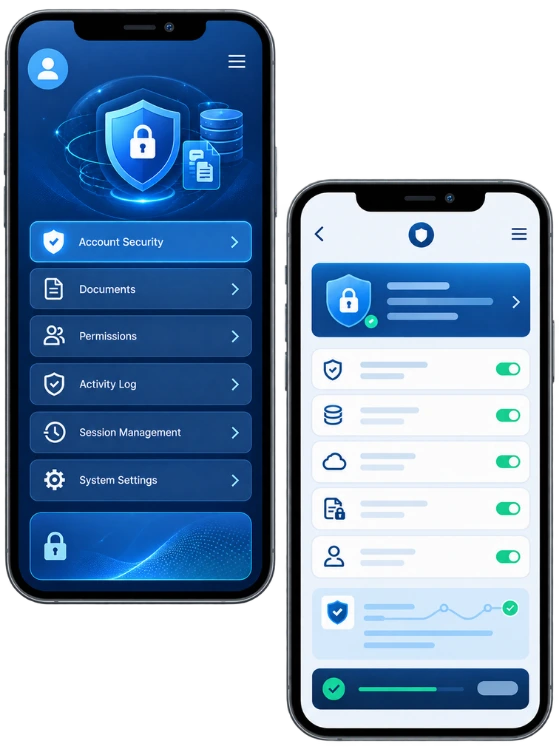
Legal Software Security & Data Protection
Legal data is privileged, discoverable and regulated in more than one jurisdiction at once. Six controls, designed in at the architecture stage rather than hardened on at the end.
-
Encryption and key custody
Encrypted in transit and at rest, with key management held inside your own cloud tenancy wherever your policy or your client's policy requires it.
-
Role, matter and ethical walls
Access is enforced by role, by matter and by screen. A conflicted user cannot reach a sealed file through search, a shared link or a report export.
-
An audit trail you can hand over
Every view, edit, export and deletion stamped with user, time and matter, held in a tamper evident log built to be produced to a regulator or opposing party.
-
Retention that enforces itself
Retention and deletion schedules are configurable per matter type, so your records policy runs inside the system instead of depending on reminder emails.
-
Residency decided up front
We deploy into the regions your matters require, keep privileged content inside them, and document the data flow so your DPIA has something real to point at.
-
AI without exposure
Privileged material never trains a public model. Every custom legal software build uses private deployment, tenant isolation and zero retention terms.
How AI is Influencing Legal Software Development
Review Volume Stopped Being the Constraint

Classification and clustering now handle first pass review at volumes that used to need a contract team, so the cost question moves from headcount to how you verify the output.
Drafting Moved Upstream

First drafts now start from your clause library rather than a blank page, so fee earners spend their time on the negotiated terms instead of assembling the boilerplate around them.
Risk Surfaces Before It Escalates

Pattern models flag matters drifting past budget or deadline while there is still room to act, turning the monthly matter review from a postmortem into an intervention.
Confidentiality Shaped the Architecture

Privileged material cannot train a public model. Private deployment, tenant isolation and zero retention agreements are now the default position for any serious legal build.
Retrieval Replaced Recall

Grounded retrieval against your own document bank returns sourced passages instead of plausible paragraphs, which is the only version of this technology a regulator will accept.
Intake Became Structured Earlier

Conversational intake captures the facts in a usable shape at first contact, which means conflict checks, matter opening and budgeting all start from clean data rather than a phone note.
Explainability Became a Procurement Requirement

Clients and regulators now ask how an output was produced. Systems that cannot show their sources and their approval chain are failing security reviews they would have passed in 2023.
The Human Approval Step Stayed

Nothing in this list removes the lawyer. Every system we build routes AI output to a named person for review, and records who approved it, because accountability has not moved.
How We Work
Our Legal Software Development Process
We have refined this across 250+ products in 30+ industries. It is how we keep legal builds moving at speed without skipping the decisions that get expensive to reverse after go live.
Get Solutions Built with the Latest Technologies
AppZoro combines AI, cloud and modern engineering to build software for legal firms that holds up under real caseloads. Our team's expertise covers the full stack behind a secure, auditable legal platform.
The Future of Legal Practice is Intelligent.
Don't run your practice on software built for somebody else's workflow. Let our legal engineers design a system around your matters, your rules and your clients.
Benefits of Legal Software Development
-

Billable Hours You Stop Losing
Passive time capture and automated narratives recover the entries that reconstruction at month end always misses. For most firms this is the benefit that pays for the build on its own.
-

One Source of Truth
Matters, documents, deadlines and billing in one system means your team stops reconciling four records of the same client. Business legal software earns its place by removing duplicate work, not adding screens.
-

Defensible Compliance
Immutable audit trails, enforced retention and role based access turn compliance from an annual scramble into something your system can evidence on demand, matter by matter.
-

Capacity Without Headcount
Automating intake, review and document assembly lets the same team carry more matters. Growth stops depending on how many people you can hire and train in a given quarter.
Why Choose AppZoro for Legal Software Development?
Choose a legal software development company that understands privilege, deadlines and audit requirements before the first line of code gets written.
-
Engineers, Not an Account Layer
You talk to the people building your system. Our 50+ developers have shipped 250+ products across 30+ industries, and the ones on your project answer your questions directly.
-
Security Built In From Day One
Encryption, role based access, ethical walls and audit logging are architected at the start. We support your penetration test and remediate before go live, not after your client asks.
-
Integration With What You Already Run
Your DMS, practice management platform, accounting system and e-signature tools stay in place. We build around the systems your team trusts rather than demanding a clean slate.
-
Adoption Treated as a Deliverable
Prototypes go in front of fee earners and paralegals before engineering starts. A legal system nobody logs into is a failed project regardless of how well the backend performs.
-
Honest Scoping
If a configured platform would serve you better than a custom build, we will say so in the first conversation. We would rather lose the project than deliver the wrong architecture for it.
-
Support That Stays After Launch
A 4.7 Clutch rating built on clients who kept working with us. Post launch you get monitoring, upgrade handling and a fixed improvement cadence with documentation your team can use.
Turning Your AI and Software Questions Into Confidence
How long has AppZoro been in business, and what is your track record?
AppZoro has been building software since 2016, from the Atlanta Tech Village in Georgia. In that time we have delivered 250+ products across 30+ industries with a team of 50+ developers. Our track record is measured in systems still running years after launch and in clients who came back for a second and third build. Our 4.7 Clutch rating comes from verified interviews with those clients.
What certifications, recognitions and industry awards does AppZoro hold?
We hold AWS Advanced Tier Services Partner status along with Cloud Operations and Security Services competencies, and we have been recognised by Clutch, GoodFirms, ITFirms and DesignRush. Every listing is independently verified by the platform rather than self reported, so you can check each one before you talk to us.
What does legal software development with AppZoro actually cover?
Discovery and compliance mapping, UX, architecture, engineering, security testing, migration, rollout and ongoing support. In practice that means matter and case management, contract lifecycle tools, e-discovery and review platforms, client portals, billing and trust accounting, and the integrations that connect them. You can engage us for the whole platform or for one layer your team cannot resource.
Should we build custom or configure an existing legal platform?
If your practice runs the way most practices in your area of law run, a configured platform is usually cheaper and faster, and we will tell you so. Custom makes sense when your workflow is a competitive advantage, when no platform covers your matter types, or when integration and data ownership requirements rule the licensed options out. We make that call with you during discovery.
How long does a legal software build take?
A focused module such as a client portal or intake system typically runs ten to sixteen weeks. A full practice or matter management platform with integrations and migration usually takes six to nine months. Multi jurisdiction enterprise builds run longer. We give a phased plan at proposal stage with the assumptions written down, so you can see exactly what would move the date.
How involved does our team need to be?
We need one decision maker who can answer product questions quickly, plus access to a few people who do the work daily, usually a fee earner, a paralegal and whoever runs billing. Expect a couple of hours a week during discovery and a sprint review every fortnight. The biggest delays in legal builds come from waiting on approvals, not from writing code.
What happens after launch?
Support covers monitoring, incident response, platform and dependency upgrades, and an agreed improvement cadence. We review adoption and performance against the metrics set during discovery on a fixed schedule. Documentation and training are built so your own team can operate and extend the system, and a number of our clients do exactly that.
What do you need from us to get started?
A conversation about the practice and the workflows, access to someone who can make decisions, and a list of the systems the software must connect to. A formal requirements document helps but is not required. Most engagements begin with a paid discovery that produces the architecture, the compliance map, the plan and the cost range you need to decide.
Partner with a team that has been shipping software from Atlanta since 2016.
Book your free consultation with a technical lead, not a salesperson.