Logistics Software Development Services
for Freight, Fleet and Warehouse Teams
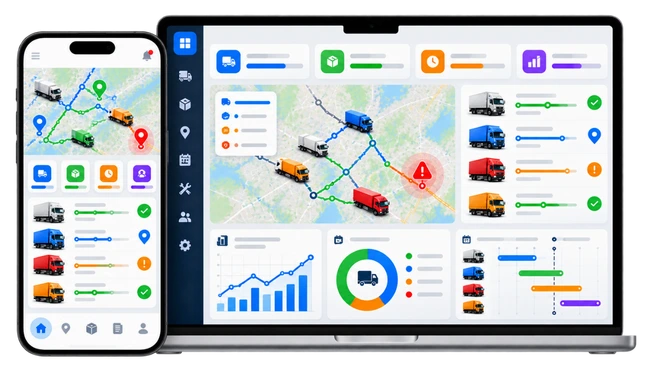
AppZoro delivers logistics software development services that replace manual dispatch with one live view of every load, driver and dock. 250+ products shipped across 30+ industries in 10+ years.
Plan loads, tender to carriers, track freight and settle invoices inside one TMS your dispatchers actually use.
Warehouse Management
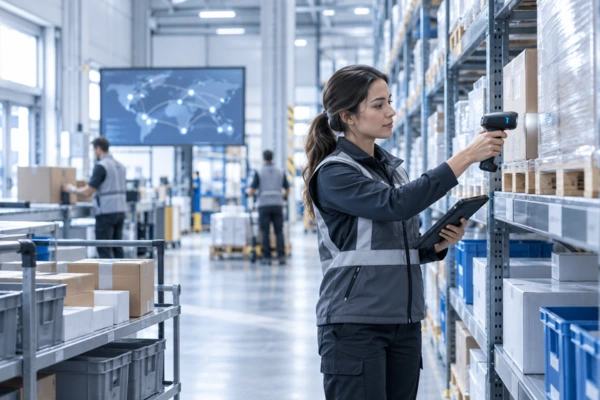
Receiving, putaway, picking, packing and cycle counts on scanners, tied to live inventory across every site you run.
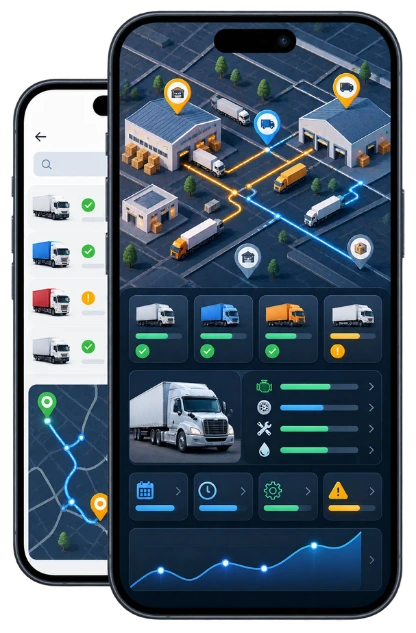
Fleet and Telematics
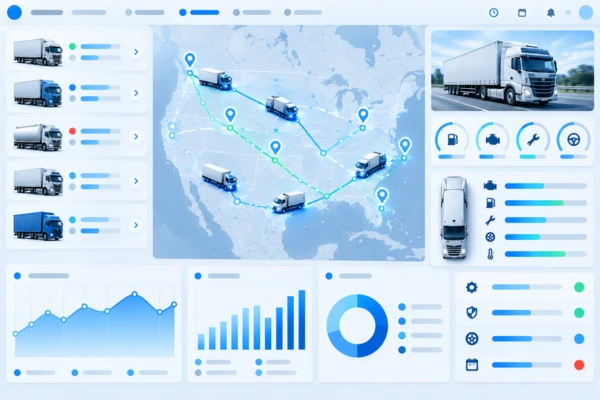
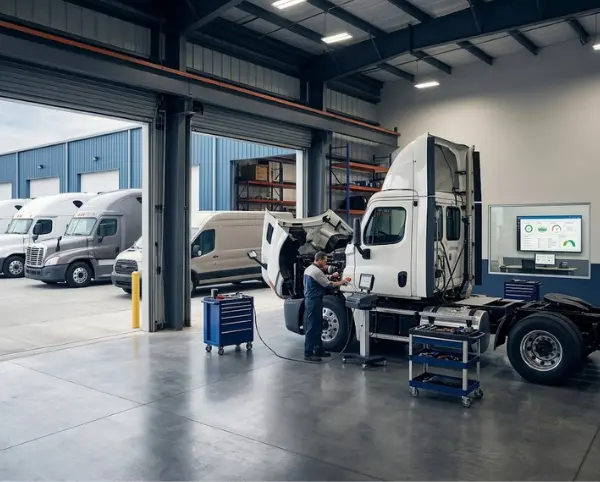
Vehicle health, driver hours, fuel and maintenance in one console, fed by the telematics devices already on your trucks.
Last Mile Delivery
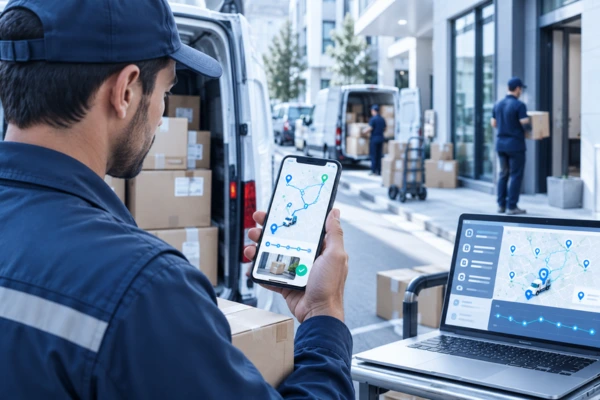
Route sequencing, proof of delivery, live customer tracking and driver apps built for high stop density routes.
Freight Forwarding
Quotes, bookings, customs paperwork and multimodal shipment files handled in one place, from port to final door.
Supply Chain Visibility
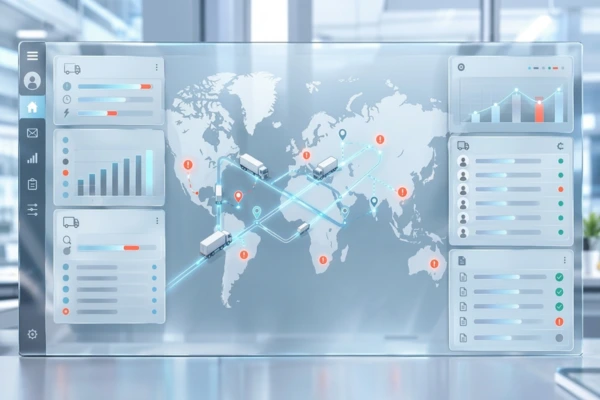
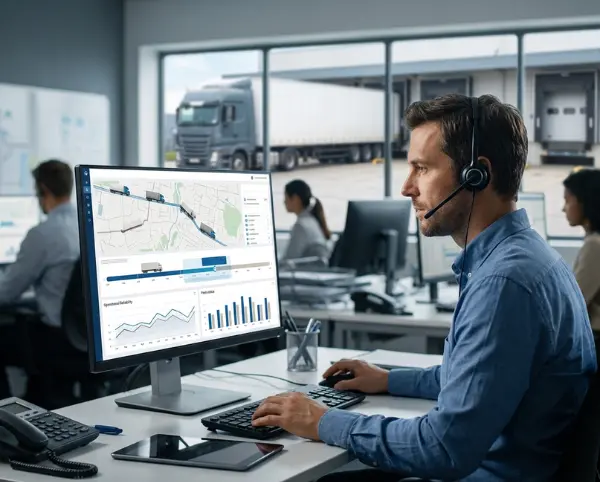
One control tower across carriers, warehouses and ERP, so every exception surfaces before your customer finds it.
Key Features for Your Logistics Software Development Services
Load Planning and Dispatch
Build loads from open orders, match them to the right equipment and driver, and tender to carriers in rank order. Dispatchers stop rebuilding the same board every morning.
Route Optimization
Sequence stops against time windows, vehicle capacity, driver hours and live traffic. Routes rebuild when a stop cancels, so the day does not fall apart at 10am.
Driver Mobile App
One app for the cab: manifest, turn by turn navigation, arrival and departure scans, photo proof of delivery and signature capture, all working offline through dead zones.
Warehouse and Yard Operations
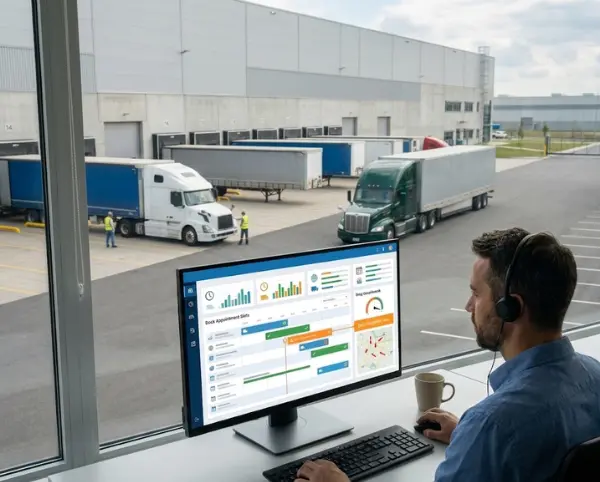
Scanner-driven receiving, directed putaway, wave and batch picking, cycle counts and dock door scheduling, with yard moves logged against the trailer rather than a whiteboard.
Freight Rating and Billing
Rate cards, fuel surcharges, accessorials and contract tiers applied automatically, then matched against carrier invoices so billing disputes are caught before they are paid.
Customer Tracking Portal
A branded portal where your customers book, track, download documents and raise claims themselves, which takes the repeat status calls off your operations team.
AppZoro
The Future of Your Supply Chain is Intelligent
Stop running your network on spreadsheets and phone calls. Our logistics engineers will map your bottlenecks and design logistics custom software development services around how your freight actually moves.
Calls and sales are up by at least 20% now that we've launched the site.
Paawan Mathur
President, Apex Textile Company
What stands out most is their strong execution and commitment to problem-solving.
Cole Sturdevant
CEO, Freedom RideShare Rentals, LLC
They go above and beyond to communicate direction and are responsive to feedback.
Carey Markey
CEO, MEDcraze
AppZoro made each project feel like it was their baby, and they seemed to care about nothing else.
Ed Bolian
Founder, VINwiki
There's never been a language barrier or an issue with our difference in time zones. Their team has been really great.
Mario Gonzales
VP of Operations, Judicial Innovations
They grasped what I wanted to accomplish and helped me get there. I'll never go elsewhere for an IT provider.
Steve Thompson
Founder, Beverage Solutions Group, LLC
I've been very impressed with the dedication the AppZoro Technologies, Inc. team has to our project.
Max Hockley
Chief Strategy Officer, Jax Automotive, LLC
In addition to superb communication, they built a very smooth app with intuitive navigation and a clean interface.
Thad Joseph
Founder, Turns Financing Services
They do great work with integrity.
Karen Houghton
Director, Atlanta Tech Village
AppZoro is a young company, and I've seen them grow and get better in the short time we've worked together.
Michael Patterson
CEO, CopyThat Technologies, LLC
We haven't seen any weaknesses in their work.
John Cox
Co-Owner, Convoy Judicial Transport LLC
Our Case Studies
A secure web platform designed to let users participate in federal and district court proceedings remotely while supporting complex jurisdiction-specific processes.
A complete rideshare rental platform where drivers can find vehicles, book, pay, and manage insurance and registration requirements from one connected experience.
We rebuilt the digital experience around how textile buyers search for products and specifications, helping customers reach relevant information with fewer unnecessary steps.
A specialized platform connecting law enforcement agencies with qualified off-duty officers while supporting assignments, reporting, custody workflows, and payments.
A cross-platform wellness app translating the brand's paper-planning experience into goal setting, mind mapping, habit tracking, and calendar-connected tools.
Two way sync with SAP, Oracle, NetSuite and Dynamics
Order, invoice and master data mapped field by field
Reconciliation jobs that flag mismatches instead of hiding them
Carrier and Rate Networks
Carrier APIs and EDI 204, 214, 990 and 210 transactions
Rate shopping across parcel, LTL, FTL and ocean
Live tracking events normalized into one status model
Warehouse Hardware
Zebra and Honeywell scanners, label printers and mobile carts
Conveyor, sorter and AS/RS controller integrations
IoT sensors for temperature, humidity and door state
Finance and Compliance
Billing, settlement and payment gateway connections
Customs filing, HS codes and trade document workflows
ELD, hours of service and DOT audit trail exports
AI That Earns Its Place in Your Operation
01
Demand and Volume Forecasting
Forecast lane volume, seasonal peaks and warehouse throughput from your own order history, so staffing and capacity are booked before the surge instead of during it.
02
Dynamic Route Optimization
Routes recalculate against live traffic, cancellations and new pickups. Planners approve the change instead of rebuilding a sequence by hand every time the day shifts.
03
ETA Prediction
Arrival times learned from your historical dwell, traffic and dock behaviour, not a straight line distance estimate. Customers get a promise date the operation can actually hold.
04
Dock and Yard Scheduling
Appointment slots assigned against door capacity, labour and trailer position, which cuts detention charges and stops the yard filling with trailers nobody has scheduled.
05
Exception Detection
Models watch for the shipment that stopped moving, the temperature that drifted and the scan that never happened, and raise it to a person before the customer calls.
06
Document Intelligence
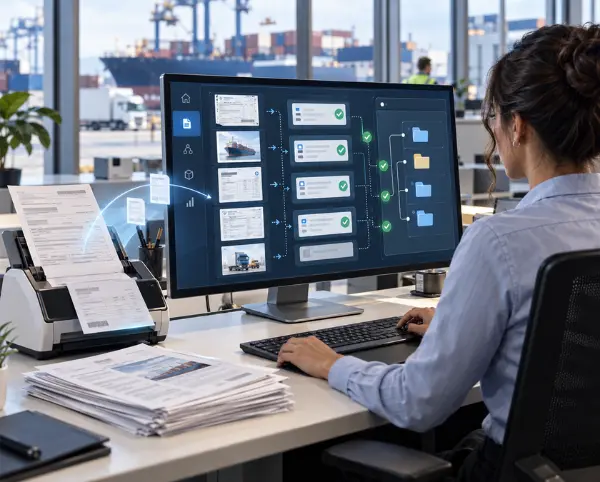
Bills of lading, proofs of delivery, customs forms and carrier invoices read automatically, with fields extracted, matched against the shipment file and flagged when they disagree.
07
Freight Rate Intelligence
Quoted rates compared against contract terms, market movement and your own historical spend, so pricing decisions are made with evidence rather than the last number remembered.
08
Predictive Maintenance
Telematics and fault code patterns surface the vehicle heading for a breakdown, which moves repairs into planned downtime instead of a roadside call mid route.
09
Conversational Ops Assistant
Dispatchers and customer teams ask questions in plain language and get answers pulled from live shipment data, with every response linked back to the record it came from.
40%Reduction in operational costs through intelligent automation.
5XFaster processing of routine tasks and workflows.
99%Improvement in data accuracy and response consistency.
Where AI Changes the Day, Not Just the Demo
Fewer Empty Miles
Better load matching and backhaul planning fill trucks that would otherwise run empty, which moves cost per mile without adding a single vehicle.
Faster Dispatch Decisions
lanners see the recommended assignment with the reasoning attached, so the choice takes seconds and does not depend on who is on shift.
Cleaner Paperwork
Automated logistics software development removes the rekeying step where billing disputes and customs delays begin, because documents are read, matched and filed as they arrive.
Reliable Promise Dates
ETAs built on your own performance history hold up, and a promise your operation can keep is worth more than an optimistic one.
Lower Detention and Demurrage
Smarter appointment scheduling and earlier exception alerts keep trailers moving, which is where accessorial charges quietly accumulate across a year.
Higher Fleet Uptime
Maintenance moves from reactive to planned, so vehicles come off the road on your schedule rather than on the shoulder of a highway.
Key Features We Build into Logistics Platforms
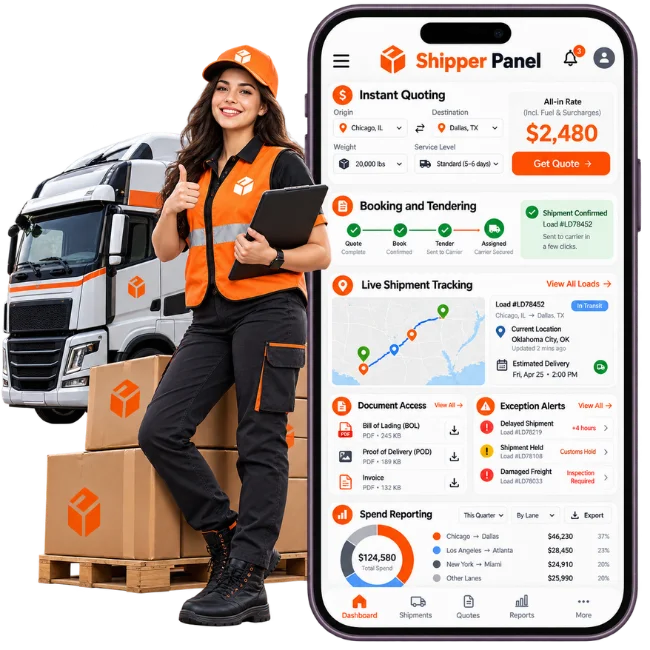
Shipper Panel
Instant Quoting
Enter lane, weight and service level, and get a rate back with surcharges already applied.
Booking and Tendering
Confirm a shipment in a few clicks and send it straight to the assigned carrier.
Live Shipment Tracking
Follow every load on one map with milestone updates and current ETA.
Document Access
Download bills of lading, proofs of delivery and invoices without emailing anyone.
Exception Alerts
Get notified when a shipment is delayed, damaged or held, before the customer asks.
Spend Reporting
See freight spend by lane, carrier and period, exportable for finance every month.
Dispatcher Panel
Load Board
All open, assigned and in transit loads on one screen with live status colour coding.
Driver and Asset Assignment
Match loads to available drivers and equipment with hours and capacity checked automatically.
Route Planning
Build and resequence multi stop routes against time windows and vehicle constraints.
Carrier Tendering
Push loads to carriers in rank order with automatic fallback when one declines.
Live Communication
Message drivers in the app with the full thread kept against the load record.
Exception Queue
Work a prioritized list of stalled, late and failed stops instead of hunting for them.
Driver Panel
Daily Manifest
Today's stops in sequence with addresses, contacts and delivery notes on one screen.
Turn by Turn Navigation
Truck aware routing that respects height, weight and hazmat restrictions on the route.
Arrival and Departure Scans
Geostamped status capture at every stop, working offline and syncing when signal returns.
Proof of Delivery
Photo, barcode scan and signature capture attached to the stop within seconds.
Hours and Breaks
Available driving hours visible in the cab with break reminders before a violation.
Expense and Fuel Logging
Receipts captured at the pump and pushed straight to settlement.
Admin Panel
User and Role Management
Granular permissions by role, site and region, with full access audit history.
Rate and Contract Setup
Maintain rate cards, accessorials and customer contracts without a developer ticket.
Operational Dashboards
On time rate, cost per load, dwell and utilization across the whole network.
Billing and Settlement
Generate customer invoices and carrier settlements from the same shipment record.
Integration Monitoring
See every ERP, EDI and carrier connection with failures surfaced as they happen.
Audit and Compliance Logs
Exportable trails for DOT, customs and internal audit requests on demand.
Tech Stack We Use as a Logistic Software Development Company
Frontend
React
Angular
Next.js
Vue
JavaScript
TypeScript
HTML
CSS
Backend
Node.js
Python
Java
Go
Laravel
Express
PostgreSQL
MongoDB
Microsoft
.NET Core
C#
Azure
SQL Server
Power BI
Mobile
Flutter
React Native
Swift
Kotlin
AI and ML
TensorFlow
PyTorch
LangChain
OpenAI
scikit-learn
OR-Tools
DevOps
AWS
Docker
Kubernetes
Terraform
GitHub Actions
Grafana
A Structured Approach to Building Logistics Platforms
Teams that develop logistics software well do it in stages, with a working system in front of operators early. Most logistics software development companies demo at the end of the project. We put something you can click in front of your dispatchers in week six.
Stage 1: Discovery and Operations Mapping
Every logistics custom software development project starts on the floor. We walk the dispatch board, the dock, the driver's phone and the spreadsheets holding the gaps together.
Operations and workflow audit
Integration and data mapping
Product roadmap and scope
Stage 2: Product Design and Prototyping
Interfaces designed for people working fast, often outdoors, often on a scanner. Prototypes go to real dispatchers and drivers before a line of production code is written.
User journeys by role
Clickable prototypes
Design system and components
Stage 3: Agile Development and Integrations
Two week sprints, a demo at the end of each one, and integrations built early. Logistic software development fails in month five when connections are left as the last risk on the list.
Sprint delivery and demos
ERP, EDI and carrier APIs
Scalable cloud architecture
Stage 4: Testing and Field Validation
Functional, load and device testing, then a pilot on a live lane or a single site, because a warehouse floor finds problems no test environment will.
QA and regression cycles
Device and offline testing
Pilot site rollout
Stage 5: Launch, Support and Iteration
Phased rollout by site or region, operator training, monitoring from day one, and a support agreement with response times written into it.
Phased go live plan
Team training and documentation
Monitoring, SLAs and iteration
Why Choose AppZoro as a Logistics Software Development Company
We have shipped 250+ products over 10+ years across 30+ industries, with 50+ developers in house and a 4.7 rating on Clutch. Logistics custom software development services are a core practice here, not a vertical we added last quarter.
What is covered in your logistics software development services?
Transport management, warehouse operations, last mile delivery, route optimisation, fleet tracking, driver and picker apps, carrier integration and the reporting layer above all of it. We build the system your operation runs on, including the parts that talk to hardware and to your carriers.
Do you build warehouse, transport and last mile systems or only one?
All three, and the handoffs between them are where most of the value is. An order that loses its status between warehouse pick and carrier pickup creates a support call every time. Building the stages against one data model removes the blind spots between them.
Can you integrate EDI, ERP and carrier APIs?
Yes. EDI transaction sets, ERP systems, carrier and 3PL APIs, rate shopping services and customs or documentation platforms. EDI in particular is still central to how this industry trades, and we build the mapping and validation rather than assuming a modern API exists.
What does automated logistics software development involve?
Removing the manual steps that currently need a person: automatic carrier selection and rate shopping, exception flagging, status updates to customers, document generation and dispatch assignment by rules. We automate the decisions that follow a rule and leave the judgement calls to your team.
Do you build driver and warehouse apps as part of the same system?
Yes. Scanning, pick and pack, proof of delivery, signature and photo capture, and exception reporting, all offline capable. Warehouse and road environments have poor connectivity, so these apps queue locally and sync, otherwise your staff lose work every time the signal drops.
Can you work with our existing WMS or TMS rather than replacing it?
Yes, and that is usually the lower risk route. We integrate with what you run and build only the missing pieces. Ripping out a working warehouse system mid season is how operations lose a quarter. If replacement is genuinely the right answer, we will phase it.
How do you handle real time tracking at scale?
Event driven ingestion with queues, so location and status updates from thousands of vehicles or units do not overwhelm the database. We separate the write path from the read path so tracking screens stay responsive while updates keep landing. Load testing against your peak season volume is part of delivery.
How is a logistics build priced?
By scope. The cost drivers are the number of integrations, whether hardware is in scope, how many user roles need their own app, and the volume the system must handle. We scope first, then give a phased written estimate so you can stage the build across budget cycles.
Partner with a team that has been shipping software from Atlanta since 2016.
Book your free consultation with a technical lead, not a salesperson.