
Real Estate App Development Company Built for Property Teams
We build the property platforms that agents, landlords and buyers actually open twice a day. Our real estate app development services cover MLS and IDX feeds, verified listings, virtual tours, tenant portals and AI matching, shipped as one product your operations team can run without a developer on standby.

Trusted by Brands That Drive Innovation









































What We Build for Real Estate
-
Property Marketplace Apps
Search, filter and shortlist listings with map view, saved alerts and enquiry routing that puts every lead in front of an agent fast.

-
Rental and Tenant Portals
Online applications, lease signing, rent collection and maintenance tickets in one place, so property managers stop chasing email threads.

-
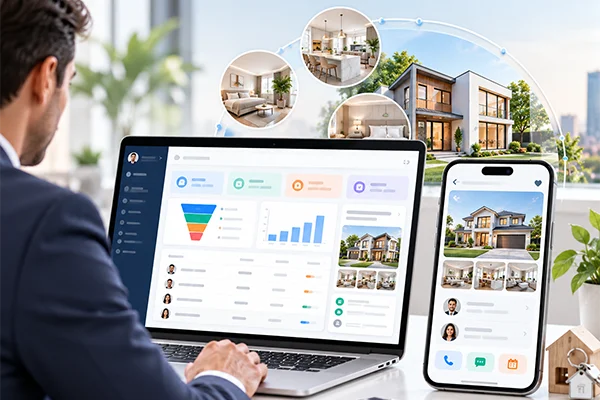
Agent and Broker CRM
Pipeline, showings, commission splits and follow up reminders built around how your brokerage actually closes deals, not a generic sales tool.
-
Virtual Tours and AR
360 walkthroughs, floor plan overlays and AR furniture placement that let buyers shortlist properties before booking a single site visit.

-
MLS and IDX Integration
Listing feeds, RETS and RESO Web API connections that sync inventory, media and status changes without manual reposting or stale records.

-
PropTech Platform Engineering
Valuation engines, investment dashboards and portfolio reporting, the real estate app development solutions that hold up when your listing volume multiplies.

Real Estate App Development Services We Offer
Five delivery tracks, each with its own team shape and release cadence. Pick the one that matches where your product is today, whether you need a real estate app development company for a first build or for a platform that needs rescuing.
-

Custom App Build
A full real estate app development build, designed, engineered and launched from scratch, with your brand, your workflows and no template ceiling.
-

Platform Modernisation
Move an ageing portal off legacy code to a stack that handles current listing volume, mobile traffic and API load.
-
API and MLS Integration
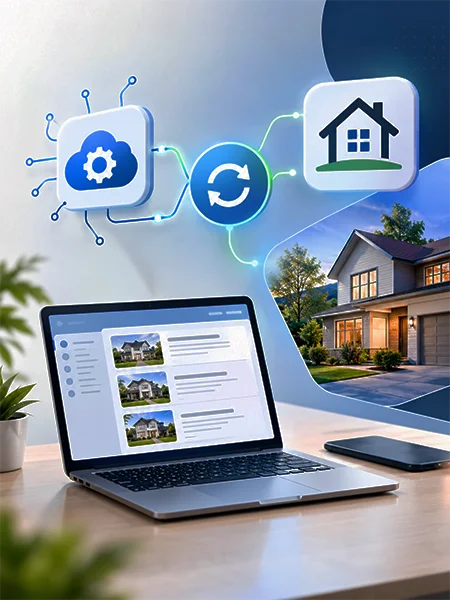
Connect listings, payments, e signature, credit checks and CRM so data moves once and stays correct everywhere.
-

AI Feature Engineering
Add recommendation, pricing and document intelligence to a product that already has users and needs a reason to keep them.
-

Support and Scale
Release management, uptime monitoring and a roadmap owner who stays on after launch, the part of real estate mobile app development services most agencies quietly drop.

Your Market Demands Custom Property Software. Listing Portals Off the Shelf Are Not Enough
With 50+ developers and ISO and HIPAA aligned processes, we work as a real estate mobile app development company that builds hyper scalable property platforms, holding up under real listing volume and delivering outcomes your leadership team can measure.
Get Free ConsultationCase studies
Three projects with genuinely different problems behind them. Court procedure in one, insurance paperwork in another and a manufacturer whose website was quietly costing them orders.
-
Judicial Innovations
A secure web platform designed to let users participate in federal and district court proceedings remotely while supporting complex jurisdiction-specific processes.
- 98%
- Customer Satisfaction
- 95%+
- Process Accuracy
- $800k+
- Revenue Impact
Stack React, Node.js, AWS, Firebase on a serverless architecture.
-
Freedom Rideshare
A complete rideshare rental platform where drivers can find vehicles, book, pay, and manage insurance and registration requirements from one connected experience.
- 96%
- Customer Satisfaction
- 100%
- Payment Accuracy
- 2X
- Faster Operations
Stack React Native, Node.js, AWS, Firebase, and Stripe.
-
Apex Textile
We rebuilt the digital experience around how textile buyers search for products and specifications, helping customers reach relevant information with fewer unnecessary steps.
- 97%
- Customer Satisfaction
- 45%+
- Lead Growth
- 60%
- Conversion Improvement
Stack React, Node.js, AWS, and a responsive web architecture.
-
Convoy Transport
A specialized platform connecting law enforcement agencies with qualified off-duty officers while supporting assignments, reporting, custody workflows, and payments.
- 98%
- Customer Satisfaction
- 95%+
- Process Accuracy
- $400k+
- Revenue Impact
Stack React, React Native, Node.js, AWS, and PostgreSQL.
-
Dreambook & Planner
A cross-platform wellness app translating the brand's paper-planning experience into goal setting, mind mapping, habit tracking, and calendar-connected tools.
- 32%
- Higher Paid Conversions
- 95%+
- Process Accuracy
- 30%+
- Digital Conversion Improvement
Stack React Native, Node.js, Firebase, and Google Calendar API.


Real Estate App Development Solutions We Provide
-
Property Buying and Selling App
Browse verified listings, compare neighbourhoods, book viewings and submit offers, with every enquiry routed to the right agent automatically.
-
Rental and Leasing App
Search rentals, apply online, sign the lease and pay rent from the same app, with reminders that reduce late payments.
-
Property Management Software
Track units, leases, renewals, maintenance and vendor invoices in one console built for portfolios rather than single properties.
-
Real Estate Agent App
Manage leads, schedule showings, share documents and track commission, designed for agents who work from a phone between site visits.
-
Real Estate Marketplace
Multi vendor listings with builder, broker and owner accounts, verification workflows and monetisation through featured placement or subscriptions.
-
Property Investment Platform
Fractional ownership, yield projections, document vaults and investor reporting, backed by KYC and audit ready transaction records.
-
Virtual Tour and AR App
360 tours, measurement tools and AR staging so buyers narrow a shortlist before anyone drives to a property.
-
Home Services and Maintenance
Tenants raise tickets, managers assign vendors, and everyone tracks the job to completion with photos and timestamps attached.
-
Commercial and Coworking App
Space discovery, availability calendars, booking, access control and billing for offices, warehouses and flexible workspace operators.
We Are Proud of Our Customers' Success
-

Calls and sales are up by at least 20% now that we've launched the site.
President, Apex Textile Company Paawan Mathur  Read Paawan Mathur's review on Clutch (opens in a new tab)
-

What stands out most is their strong execution and commitment to problem-solving.
CEO, Freedom RideShare Rentals, LLC Cole Sturdevant Read Cole Sturdevant's review on Clutch (opens in a new tab) 
-

They go above and beyond to communicate direction and are responsive to feedback.
CEO, MEDcraze Carey Markey Read Carey Markey's review on Clutch (opens in a new tab) 
-

AppZoro made each project feel like it was their baby, and they seemed to care about nothing else.
Founder, VINwiki Ed Bolian Read Ed Bolian's review on Clutch (opens in a new tab) 
-

There's never been a language barrier or an issue with our difference in time zones. Their team has been really great.
VP of Operations, Judicial Innovations Mario Gonzales Read Mario Gonzales's review on Clutch (opens in a new tab) 
-

They grasped what I wanted to accomplish and helped me get there. I'll never go elsewhere for an IT provider.
Founder, Beverage Solutions Group, LLC Steve Thompson Read Steve Thompson's review on Clutch (opens in a new tab) 
-

I've been very impressed with the dedication the AppZoro Technologies, Inc. team has to our project.
Chief Strategy Officer, Jax Automotive, LLC Max Hockley Read Max Hockley's review on Clutch (opens in a new tab) 
-

In addition to superb communication, they built a very smooth app with intuitive navigation and a clean interface.
Founder, Turns Financing Services Thad Joseph Read Thad Joseph's review on Clutch (opens in a new tab) 
-

They do great work with integrity.
Director, Atlanta Tech Village Karen Houghton Read Karen Houghton's review on Clutch (opens in a new tab) 
-

AppZoro is a young company, and I've seen them grow and get better in the short time we've worked together.
CEO, CopyThat Technologies, LLC Michael Patterson Read Michael Patterson's review on Clutch (opens in a new tab) 
-

We haven't seen any weaknesses in their work.
Co-Owner, Convoy Judicial Transport LLC John Cox Read John Cox's review on Clutch (opens in a new tab) 
Features We Build Into Every Property App
This is the baseline set every real estate app development project starts from. It covers how a listing gets found, verified, toured, discussed and closed, and these are the features buyers abandon an app for when they are missing.
-

Advanced Property Search
Filter by price, area, amenities, school zone and commute time, with results that stay fast as inventory grows past six figures.
-

Map and Neighbourhood View
Draw a search area on the map and see comparable sales, transport, schools and safety data layered over every pin.
-

Verified Listings
Ownership checks, document upload and duplicate detection keep fake and expired listings out before a buyer ever sees them.
-

Virtual Tours and Media
360 tours, video walkthroughs, floor plans and high resolution galleries that load quickly on a phone with weak signal.
-

In App Chat and Calls
Buyers, agents and owners talk inside the app with masked numbers, so contact details stay private and every thread stays logged.
-

Booking and Site Visits
Shared availability, instant confirmation and reminders that cut no shows, with rescheduling handled by the person who booked.
-

Mortgage and EMI Tools
Affordability calculators, lender comparison and pre approval status, so a buyer sees the real monthly number before enquiring.
-

Secure Payments and Documents
Token payments, rent, deposits and e signed agreements handled through PCI compliant gateways with a tamper evident audit trail.
-

Admin and Analytics Console
Track listings, users, enquiries and revenue in one console, with role based access your operations team controls without a real estate mobile app developer on call.
Have a Property App Idea With No Tech Team Behind It?
Hire real estate app developers who take the idea from strategy and design through to launch, then stay on to run releases while your business keeps selling.
Start Your Project Today
Advanced AI Features and Capabilities
Where mobile app development for real estate stops being a listings feed and starts making decisions.
-

AI Property Recommendations
Ranks listings against what a user actually views, saves and enquires about, so the second session surfaces better matches than the first.
-

Automated Valuation Models
Estimates price from comparable sales, location signals and property attributes, with a confidence range instead of a single number nobody trusts.
-

Document Intelligence
Reads leases, title papers and KYC documents, extracts the fields your team rekeys by hand, and flags anything that looks inconsistent.
-

Conversational Lead Qualification
An assistant answers listing questions day and night, captures budget and timeline, and hands a qualified lead to the right agent.
-

Predictive Rent and Churn
Signals which tenants are likely to leave and which units are priced below market, so renewals get worked before they lapse.
-

Image and Media Intelligence
Tags rooms, detects amenities, filters low quality photos and spots duplicate listings before they reach a buyer's search results.
Key Features We Build by User Role
Buyer and Tenant
-
Easy Sign Up
Register in seconds with email, phone or a social account, then pick up where the last session ended.
-
Saved Search and Alerts
Save filters and get notified the moment a matching property is listed or drops in price.
-
Book a Viewing
Pick a slot from live agent availability, confirm instantly and get reminders before the visit.
-
Compare Properties
Put shortlisted listings side by side on price, size, amenities and commute before making a decision.
-
Secure Payments
Pay tokens, deposits and rent through a protected gateway with receipts stored in the app.
-
Reviews and Ratings
Rate agents, properties and landlords so the next renter walks in with an honest picture.
Agent
-
Lead Inbox
Every enquiry lands in one queue with source, budget and timeline already attached.
-
Listing Manager
Publish, edit and syndicate listings with media, pricing and status updated in one place.
-
Showing Calendar
Manage viewings, avoid double booking and let buyers self schedule against real availability.
-
Client Pipeline
Track each buyer from first enquiry to closing with the next action always visible.
-
Document Sharing
Send agreements, disclosures and ID requests, and see exactly what has been signed.
-
Commission Tracking
See earned, pending and split commission per deal without waiting on a monthly report.
Owner and Landlord
-
Portfolio Dashboard
Occupancy, rent collected and upcoming renewals across every unit on one screen.
-
Tenant Screening
Review applications, background checks and references before approving a lease.
-
Rent Collection
Automated invoices, reminders and reconciliation, with late payments flagged the day they slip.
-
Maintenance Requests
Receive tickets, assign vendors and approve costs with photo evidence at every stage.
-
Lease Management
Store agreements, track expiry dates and trigger renewal workflows well ahead of time.
-
Payout Reports
Download statements per property or per period for accounting and tax filing.
Admin
-
User and Role Control
Create roles, set permissions and suspend accounts without touching the codebase.
-
Listing Moderation
Approve, reject or flag listings, with duplicate and fraud checks running before publication.
-
Revenue and Subscriptions
Manage plans, featured placement, invoices and refunds from a single billing view.
-
Platform Analytics
Track searches, enquiries, conversion and drop off by city, segment and channel.
-
Content and Notifications
Publish banners, push campaigns and policy updates without a release cycle.
-
Audit Logs
Every sensitive action recorded with user, timestamp and change, ready for compliance review.
Advanced PropTech Solutions We Deliver With AI Built In
Smart Property Matching

A matching engine scores buyer intent against live inventory, learns from every enquiry, and pushes the right property before a competing portal does.
Blockchain Property Records

Title history, ownership transfer and fractional shares recorded on a permissioned ledger, giving investors a record that cannot be quietly edited.
Automated Compliance Workflows

KYC, AML, RERA and local disclosure requirements run as steps inside the transaction flow rather than a checklist someone remembers afterwards.
Escrow and Fintech Rails

Token payments, escrow release, rent financing and payout splits handled through regulated partners with reconciliation built into the ledger.
IoT and Smart Building Integration

Access control, meters, sensors and HVAC data feed into the app, so tenants control their unit and managers see consumption in real time.
Digital Twin and 3D Modelling

Under construction inventory is sold from an accurate 3D model, with unit availability, views and finishes visible before the building exists.
Property Data Pipelines

Feeds from MLS, government registries, mapping and pricing sources are normalised into one schema your product and analytics teams both trust.
Portfolio Analytics and Reporting

Yield, occupancy, arrears and maintenance cost tracked per asset, with investor ready reports generated on schedule instead of by hand.
Tech stack
Technology Stack
Built with a modern, scalable technology ecosystem.
-
Native
-
 Swift
Native
Swift
Native
-
 Objective
Native
Objective
Native
-
 Kotlin
Native
Kotlin
Native
-
-
Cross platform
-
 Flutter
Cross platform
Flutter
Cross platform
-
 React Native
Cross platform
React Native
Cross platform
-
-
Frontend
-
 React JS
Frontend
React JS
Frontend
-
 Angular
Frontend
Angular
Frontend
-
 Vue JS
Frontend
Vue JS
Frontend
-
-
Backend
-
 Node JS
Backend
Node JS
Backend
-
 TypeScript
Backend
TypeScript
Backend
-
 .NET
Backend
.NET
Backend
-
 Python
Backend
Python
Backend
-
 Java
Backend
Java
Backend
-
 PHP
Backend
PHP
Backend
-
How We Build It
-

Discovery and Scoping
We map your users, listing sources, compliance needs and revenue model, then agree what ships first and what waits.
-

UX and Design
Wireframes, clickable prototype and a design system, tested with real agents and buyers before a line of code is written.
-

Development
Two week sprints with a working build at the end of each, so you see progress rather than a status report.
-

QA and Security
Manual test cycles across devices, plus penetration testing and data handling review before anything reaches production.
-

Launch and Support
Store submission, monitoring, release management and a roadmap owner who stays with the product after go live.
Why AppZoro Is a Reliable Real Estate App Development Company
We have shipped 250+ products over 10+ years across 30+ industries, and our real estate mobile app development work is backed by 50+ developers in house and a 4.7 rating on Clutch from clients who agreed to be interviewed.
How We Work
Property Domain Depth
We already know what MLS sync, RERA disclosure and tenant screening involve, so discovery is not spent explaining your industry to us.

In House Delivery Team
50+ developers on staff, no subcontracting. The real estate app developers in your kickoff call are the people writing your code.

Production Ready, Not Prototypes
Our mobile app development for real estate ends on the app stores with monitoring, release management and a support plan, not a handover zip and a wish of good luck.

Transparent Engagement
Hire real estate app developers on fixed scope, a dedicated team or staff augmentation, priced clearly, with the IP and the repository yours from day one.
Turning Your AI and Software Questions Into Confidence
What does a real estate app development company actually build?
Listing and search apps, agent and broker tools, tenant and owner portals, property management apps, virtual tour experiences and lead capture systems. Most projects need more than one of those, plus the backend that keeps listing data, documents and messaging consistent across all of them.
Can you integrate MLS, IDX and RETS listing feeds?
Yes. MLS access rules differ by board, and the data agreements usually matter more than the technical work. We handle the sync, normalisation and display rules so listings stay accurate and compliant with the board's display requirements. You will need the feed agreement in place before build starts.
Do you build tenant, agent and owner portals in one system?
Yes, with role based access on one platform. Separate systems for each role is how property firms end up reconciling three versions of the same lease by hand. One platform, three views, one source of truth for documents, payments and maintenance requests.
Can you add virtual tours, maps and neighbourhood data?
Yes. 360 tours, video walkthroughs, floor plans, map based search with polygon drawing, and school, transit or amenity data through third party providers. These features drive time on listing, which is the metric most listing apps are actually competing on.
Do you integrate with CRMs and property management platforms?
Yes. Real estate CRMs, property management systems, accounting platforms, e signature providers and payment processors. Agents will not adopt an app that makes them enter a lead twice, so CRM sync is usually the integration that decides whether the product gets used.
How do you keep listing data accurate across the app?
Scheduled and event based sync, with change detection so updates propagate rather than overwriting everything on a fixed interval. Stale listings are the fastest way to lose a user. We also build an audit view so your team can see what changed, when and from which source.
Can your real estate app developers handle payments, e signature and lease documents?
Yes. Rent and deposit payments, ACH and card, e signature for leases and disclosures, and document storage with retention rules. Payment and document handling carry compliance weight, so those flows get built with audit logging from the start rather than added later.
How long does a real estate app take and how do we start?
A focused listing or portal app reaches first release faster than a multi role platform with MLS and payment integration. We start with a scoping call, map the roles, feeds and integrations, then give a phased estimate. MLS feed approval often sets the timeline, so we start that early.
Partner with a team that has been shipping software from Atlanta since 2016.
Book your free consultation with a technical lead, not a salesperson.