The Mobile App Database Decision That Shapes Your Stack for Years

Last Updated :
A founder I work with forwarded me her Firebase invoice last September with three exclamation points in the subject line. The bill had jumped from $340/month at 8,000 users to $3,840/month at 14,000 users and her unit economics were collapsing faster than her product was growing.
The mobile app database decision her team had made in week one (lean on Firebase’s managed everything because it was the fastest path to shipping) had quietly compounded into a procurement crisis consuming three engineers for the next six weeks while they planned migration to a custom Supabase stack. The conversation that followed was the version of mobile app database procurement most founders never have before they sign their first vendor commitment.
That story is the version of database reality most teams never discuss openly, because vendor pitch decks compare free tiers against free tiers and skip the bill curve at the point the product actually starts working. The teams shipping clean apps in 2026 think about their mobile app database choice as a core part of a custom mobile app development guide compounding across years; the teams losing pick whatever was easiest in week one and rebuild under pressure once the bill surfaces the gap. That story is the version of database reality most teams never discuss openly, because vendor pitch decks compare free tiers against free tiers and skip the bill curve at the point the product actually starts working.
What follows is the conversation an experienced engineering leader would have with a founder over coffee rather than the polished pitch deck a vendor delivers. By the end you will know what mobile app database choices actually shape, where each option breaks at scale and how senior teams pick architecture surviving growth without burning unit economics.
What Mobile App Database Choice Actually Decides in 2026
The mobile app database decision quietly decides far more than where your data lives. It shapes engineering velocity (managed vs self-hosted), hosting cost curves at scale, offline reliability, latency posture during interactive moments and migration pain when growth pushes original architecture past breaking. Most procurement skips these implications because pitch decks frame the choice around features rather than operational realities deciding whether the product survives its second year.
What changed across 2022-2025 was the maturation of alternatives. Supabase grew from a Firebase alternative into a serious open-source option with millions of projects, MongoDB Atlas Device Sync replaced legacy Realm and the local-first movement (Linear, Figma, Notion’s mobile clients) demonstrated offline-first architecture works at scale. The menu in 2026 is richer than the Firebase-or-nothing era many founders imagine.
Here is what your mobile app database choice shapes:
-
Engineering velocity in the first six months versus the next eighteen
-
Cost curves at 10K, 100K and 1M users that differ by 10x or more between architectures
-
Offline reliability and the conflict resolution complexity deciding user experience during network gaps
Why Firebase’s Early Velocity Quietly Costs Later
Firebase’s early velocity costs later because the per-read pricing that subsidises tiny apps becomes punitive at 50,000+ users with active sessions. The founder I mentioned hit this curve and a more detailed mobile app development cost breakdown reveals the pattern repeating across many builds – the bill that was $40/month at launch becomes $400 at 5,000 users and $4,000 at 50,000.
What Local-First Architecture Genuinely Buys You
Local-first (Realm, WatermelonDB, SQLite with custom sync) buys you offline reliability, sub-100ms reads and the privacy posture App Store reviewers favour during privacy manifest reviews. Linear and Figma both ship local-first mobile clients and the responsiveness gap against cloud-dependent competitors shows up directly in App Store reviews.
Why Migration Cost Compounds When Deferred
Migration cost compounds when deferred because every month customer data accumulates is a month of migration complexity later. Teams who postpone the migration conversation until the bill surfaces it spend 3-5x more engineering time navigating common mobile app development challenges than teams who chose the right architecture in week one – the pattern that makes procurement scoping matter.
Cloud Database for Mobile Apps vs Local-First Architecture
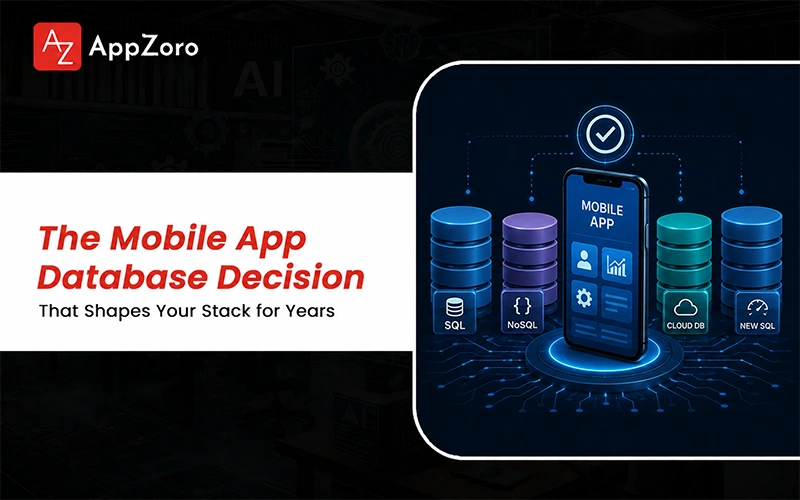
The cloud database for mobile apps versus local-first choice represents the most important architecture decision teams make in 2026. Cloud options (Firebase, Supabase, MongoDB Atlas) offer easy cross-device sync, real-time collaboration and managed scaling at the cost of latency, offline complexity and per-operation pricing. Local-first databases (Realm, WatermelonDB, SQLite) offer sub-100ms reads, offline reliability and privacy-friendly architecture at the cost of harder sync engineering.
The pattern stabilised across 2024-2025: hybrid arrangements win for most product shapes, while pure cloud wins for collaboration-heavy products and pure local-first wins for offline-critical workflows:
-
Cloud storage wins for collaboration-heavy products (Notion, Linear), real-time updates (Discord, Slack) and apps where multi-device sync is core
-
Local-first wins for offline reliability (field tools, travel), privacy-sensitive products (health, finance) and apps where sub-100ms latency matters
-
Hybrid arrangements with local cache plus cloud sync win for most consumer apps where users expect both responsiveness and continuity
When Cloud Storage Genuinely Wins
Cloud storage wins when your product surface is collaboration-heavy, when real-time updates from other users are core to the experience or when multi-device continuity is a competitive feature. Discord, Slack and Notion all ship cloud-first because their products need server-side state shared across users.
Why Local-First Wins for Most Consumer Apps
Local-first wins for most consumer apps because users expect the app to work instantly regardless of network and the mobile application security testing strategies favoring on-device data storage align with modern privacy standards. Apps shipping local-first consistently rate higher on App Store responsiveness reviews than cloud-dependent competitors.
How Hybrid Arrangements Capture Both Advantages
Hybrid arrangements capture both by storing primary data locally for instant reads, then syncing to the cloud asynchronously for backup and continuity. WatermelonDB with custom sync, Realm with MongoDB Atlas and PowerSync with Supabase all enable this pattern.
Best Backend Database for Mobile App: The Honest Tier Breakdown
The best backend database for mobile app procurement conversation splits into three honest tiers depending on team size, product maturity and operational complexity you can sustain. Each tier has its sweet spot and forcing a team into the wrong tier produces either over-engineered platforms burning velocity or under-architected platforms burning money:
-
Tier 1 (Managed BaaS):- Firebase, Supabase, Appwrite: fastest to ship, hardest to escape at scale
-
Tier 2 (Self-hosted/managed Postgres):- Supabase self-hosted, Railway/Fly Postgres, Neon: balance of control and ease
-
Tier 3 (Custom backend):- Postgres on your own infrastructure with custom API: maximum control, highest engineering commitment
When Tier 1 Managed BaaS Genuinely Fits
Tier 1 fits when you are pre-product-market-fit, when engineering capacity is the binding constraint and when you accept you will likely migrate at scale. Firebase and Supabase managed both ship production-ready experiences for the first 10,000-50,000 users.
Why Tier 2 Self-Hosted Postgres Is Where Most Serious Apps Land
Tier 2 (Supabase self-hosted, Neon or RDS-backed custom) is where most serious apps land at 50,000+ users because cost curves flatten while you keep SQL flexibility. The migration from Tier 1 typically takes 4-8 weeks but pays back within six months at meaningful scale.
When Tier 3 Custom Backend Earns Its Complexity
Tier 3 earns its complexity when your product needs scaling patterns Tier 2 cannot support, when you have engineering capacity for serious infrastructure or when regulatory requirements (HIPAA, SOC 2 Type II, FedRAMP) demand architectural depth managed BaaS cannot deliver.
Best Cloud Database for Mobile Apps Across Common Use Cases
The best cloud database for mobile apps depends on your use case rather than any universal answer. The patterns through 2023-2025 track the product surface: real-time collaboration apps gravitate to Firestore or Supabase, content-heavy apps default to Supabase Postgres, AI features lean on vector-capable databases, often as part of learning how to use AI in mobile app development, while B2B apps with complex permissions tend toward custom Postgres with row-level security.
The teams I watched make smart choices follow patterns. They pick Supabase for greenfield needing Postgres flexibility, Firebase Firestore for real-time-heavy products, MongoDB Atlas for document-heavy schemas and custom Postgres when they need control beyond managed services:
-
Supabase wins for greenfield projects needing Postgres flexibility, row-level security and the open-source escape hatch that Firebase does not provide
-
Firebase Firestore wins for real-time collaboration, where the document model and instant sync match the product surface
-
MongoDB Atlas wins for document-heavy schemas (CMS apps, content marketplaces) where flexible structure matters more than relational integrity
Why Supabase Quietly Wins Most Greenfield Projects
Supabase wins most greenfield projects in 2026 because Postgres underneath gives SQL flexibility, row-level security solves multi-tenant authorisation and the open-source codebase means teams can self-host when pricing gets uncomfortable. The migration story from managed to self-hosted Supabase is easier than escaping Firebase.
When Firebase Firestore Still Earns Its Premium
Firebase Firestore still earns its premium when your product needs real-time sync across users (collaborative editing, live updates, social feeds), when your team accepts per-operation pricing and when you value the Google integration depth Firebase provides.
Why MongoDB Atlas Wins Specific Categories
MongoDB Atlas wins where the document model matches the data shape — content management apps, marketplaces with varied product schemas and apps where flexible nesting matters more than relational queries. The Device Sync layer, replacing legacy Realm, provides serious offline capabilities.
What Senior Teams Quietly Get Right About Mobile App Development Database Choices
The strongest teams I watched approach database decisions share disciplines compounding across years of product growth. They win because they treated the architecture choice as a structural discipline, similar to how what is agile methodology prioritizes responding to change through technical excellence rather than just following ceremonies.
Here is what senior teams do differently when they create a mobile app with a database architecture:
-
They scope the decision explicitly during discovery rather than defaulting to whatever the engineering lead used last
-
They project cost curves at 10K, 100K and 1M users before committing rather than discovering the curve mid-growth
-
They prefer architectures with credible escape hatches (open source, Postgres compatibility) over closed managed services
Why Explicit Discovery Compounds Long-Term Value
Explicit discovery compounds value because the team maps real-time requirements, offline expectations and projected cost curves upfront, ships architecture that survives growth. Teams who skip this and inherit Firebase from a tutorial rebuild under pressure at the exact moment they cannot afford engineering time.
How Cost Projection Filters Vendor Choices
Cost projection filters vendor choices because the architecture that is cheapest at the free tier often becomes most expensive at growth. Running Firebase, Supabase and self-hosted Postgres pricing scenarios at projected user counts catches the trap before procurement signs — the discipline senior CTOs use to avoid bill shock.
Why Escape Hatches Matter More Than Founders Expect
Escape hatches matter more than founders expect because vendor lock-in compounds as customer data accumulates and migration cost grows. Architectures built on open-source Postgres, even consumed through managed services, preserve the option to migrate without rebuilding the data layer, as the fintech founder’s team did moving from Firebase to self-hosted Supabase.
If you have a mobile app database decision in your roadmap and want a no-pitch second opinion on how to choose a mobile app development company with the right infrastructure depth, our senior team has lived through multiple migrations and can flag cost curves honestly. Happy to compare notes before you commit.
Final Thoughts
The mobile app database decision in 2026 is more legible than three years ago but only if you bring structured discovery, honest cost projection and architectural escape hatches into procurement. The capabilities of modern databases are useful; the lock-in cost of managed services becomes painful at the moment your product cannot afford the migration distraction.
If the architecture proposals on your desk feel impossible to compare honestly, get a second opinion from someone who has shipped through multiple database migrations. The right advisor walks you through cost curves without flinching, because they have lived inside enough transitions to know where the patterns repeat.
Frequently Asked Questions
What is a mobile app database in plain language?
The storage layer holding your app's structured data on the device (SQLite, CoreData, Room, Realm), in the cloud (Firebase, Supabase, MongoDB Atlas) or in hybrid arrangements.
What is the best cloud database for mobile apps in 2026?
Supabase wins most greenfield projects with Postgres flexibility, Firebase Firestore wins real-time collaboration, MongoDB Atlas wins document-heavy schemas — pick based on product surface.
What is the best backend database for mobile app builds?
It depends on whether Firebase or Supabase is managed for fast MVPs, self-hosted Postgres for serious scale or custom backends when regulatory requirements demand architectural control.
How does cloud storage compare to local-first?
Cloud wins for collaboration and multi-device sync, local-first wins for offline reliability and sub-100ms responsiveness, hybrid arrangements win for most consumer apps.
How should I think about a mobile database decision?
Treat database choice as a structural architecture decision compounding across years - scope it explicitly during discovery with cost projections at scale.
Is Realm still a credible mobile database app in 2026?
Realm rebranded as MongoDB Atlas Device Sync after the 2019 acquisition and remains a credible mobile database app option, particularly for offline-first products with cross-device sync.
How do I create a mobile app with database from scratch?
To create a mobile app with database from scratch, map real-time requirements, offline expectations and projected user growth, then pick an architecture (managed BaaS, self-hosted Postgres, custom backend) matching your tier.