
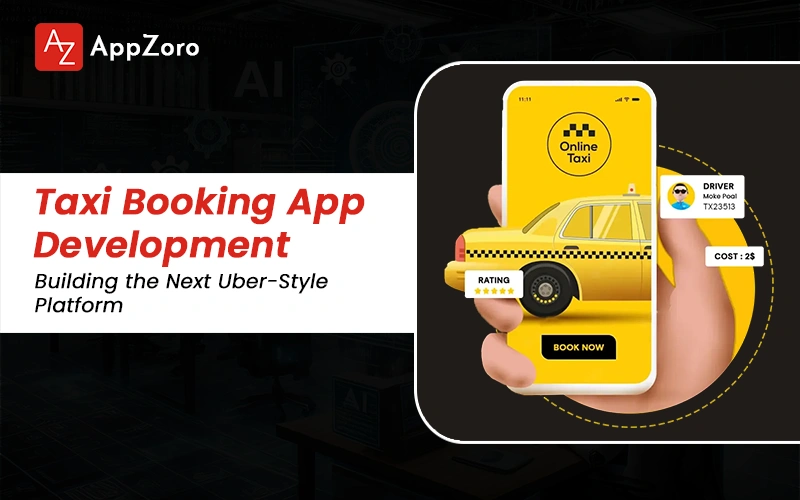
Quick Answer: Taxi booking app development is requiring three coordinated applications including rider app, driver app and admin panel plus real-time infrastructure for GPS tracking, ride matching and payment processing across the platform. Build cost is ranging $30K for basic Uber clone to $300K+ for custom on-demand platforms with surge pricing and advanced features across the market. Tech stack is typically including React Native or native mobile, Node.js or Java backend, Google Maps or Mapbox, Firebase or Socket.IO for real-time plus Stripe for payments across the build. Timeline is running 4 to 12 months for production deployment across the platform.
Taxi booking app development is attracting entrepreneurs because the model is proven by Uber, Lyft and global counterparts generating tens of billions in annual revenue across the market. Competing head-on with established platforms is impossible across consumer markets, however specialised markets are remaining accessible to new entrants. Entrepreneurs evaluating ride-sharing market entry, those seeking transportation software development services and corporate fleet operators building internal solutions are all running into the same decisions today. By the end of this guide, the architecture, build process, tech stack and cost realities will be clear across every dimension, let’s take a look.
Taxi Booking App Market and Why It’s Worth Building in 2026
The taxi booking app development market is continuing to grow despite Uber and Lyft’s dominance in major markets across the world. Learning how to create a rideshare app reveals that specialized verticals, geographic expansion and B2B applications are creating ongoing entry opportunities across the segment today. Five market signals are defining the category in 2026 across the global ride-sharing industry.
-
Global Ride-Sharing Market Size: Projected to exceed $200B by 2030 across all categories according to Allied Market Research analysis of the segment.
-
Uber Annual Revenue 2024: $43B+ in gross bookings demonstrating category profitability at scale according to Uber public filings across the platform.
-
Specialised Categories Growing Fastest: Corporate ride management, accessibility transport and rural ride-sharing are seeing 25 to 40% YoY growth across the market.
-
B2B Fleet Management Demand: Corporate and government fleet digitisation is creating opportunities outside consumer ride-sharing across the segment today.
-
Geographic Underserved Markets: Many tier-2 and tier-3 cities globally are lacking mature ride-sharing options across the world, creating local market opportunities.
The market signal is clear across the ride-sharing industry today. Consumer ride-sharing in major US and EU cities is mature, however specialised verticals, B2B applications and geographic expansion are creating real opportunities across the market.
New entrants should be targeting underserved categories rather than competing head-on with Uber across the segment. The next sections are covering what building requires technically and financially across the project.
Three Components of Taxi Booking App Architecture
Every taxi booking app is comprising three distinct applications coordinated through shared real-time infrastructure across the platform. Understanding each component is clarifying what building actually requires across the project lifecycle.
1. Rider Application
The customer-facing mobile app is what riders are using to book rides, track drivers, pay and rate experiences across the platform. Core features often mirror fleet management app features including account creation, payment management, ride booking, real-time driver tracking with ETA, in-app messaging with driver, fare estimation and surge pricing display, payment processing, ride history plus rating systems across the experience. The rider app must be working flawlessly on iOS and Android with responsive performance under poor network conditions across the user base. The key components include:
-
Mobile App (iOS And Android): Native or cross-platform through React Native or Flutter across the build.
-
Real-Time Driver Location Updates: WebSocket or Firebase Realtime Database connection across the platform.
-
Payment Integration: Stripe, Braintree or local payment processors across the workflow.
-
Push Notifications: For booking confirmations, driver arrival and ride completion across the journey.
2. Driver Application
The driver-side mobile app is what drivers are using to accept rides, navigate to pickups, complete trips and manage earnings across the platform. Core features are including driver onboarding and verification, online and offline status toggle, ride request notifications with acceptance window, navigation to pickup and destination, in-app messaging with riders, fare calculation and earnings tracking, payout management plus driver rating dashboard across the workflow. The driver app must be designed for one-handed use while driving with voice navigation and minimal cognitive load. The key components include:
-
Driver Onboarding Flow: Document upload, background check integration and vehicle verification across the platform.
-
Ride Request Handling: Push notification with accept and decline timer across the workflow.
-
Earnings And Payout Management: Real-time earnings and weekly payout summaries across the operation.
3. Admin Panel And Dispatch Dashboard
The web-based platform is what operators are using to manage drivers, riders, rides, pricing, disputes and analytics across the business. Core features are including driver management covering onboarding approval, performance monitoring and deactivation across the workflow. Rider management is covering account issues and complaint resolution across the operation. Real-time ride monitoring is covering active rides map view across the dispatcher workflow. Surge pricing configuration, promotional campaigns, financial reporting, dispute resolution workflows and operational analytics are all running through the panel. The admin panel is rarely facing customer-facing scrutiny however it is determining operational efficiency and platform health. The key components include:
-
Real-Time Operations Dashboard: Live ride map with active driver and rider status across the dispatcher view.
-
Driver Management Workflows: Approval, training, performance tracking and suspension capabilities across the operation.
-
Financial Operations: Revenue tracking, driver payouts and refund processing across the platform.
Types of Taxi Booking Apps You Can Develop
On-demand taxi booking app development is spanning multiple business models and audience segments across the market today. Six types of taxi booking apps are covering virtually all production deployments across the category. Pick the type before locking architecture because wrong category is creating expensive mid-build pivots across the project.
-
Consumer Ride-Sharing (Uber/Lyft Model): Open marketplace connecting drivers and riders in real time. Most competitive segment with highest scale demands. Corporate Ride Management: As noted in our car fleet management app guide, these are B2B platforms for managing employee rides, business travel and expense reporting across the segment. Examples include Uber for Business and Lyft Business.
-
Corporate Ride Management Platforms: B2B platforms for managing employee rides, business travel and expense reporting across the segment. Examples are including Uber for Business and Lyft Business across the market.
-
Specialised Transport Apps: Wheelchair-accessible transport through UZURV, elderly transport through GoGoGrandparent plus pet transport and medical transport across the segment.
-
Traditional Taxi Booking Apps: Digital apps for existing taxi fleets without true on-demand model across the market. Common in regulated markets where ride-sharing is facing restrictions across jurisdictions.
-
Carpooling And Ride-Sharing: Pre-scheduled shared rides between strangers travelling similar routes across the platform. Examples are including BlaBlaCar and Waze Carpool across the market.
-
Geographic And Vertical-Specific Apps: Airport transfer apps, intercity transport, school transport and hospital transport across the segment with narrower scope than general ride-sharing.
For new on demand taxi booking app development projects in 2026, specialised verticals or geographic niches are consistently outperforming attempts to compete head-on with established consumer ride-sharing leaders across the market today.
How to Develop Taxi Booking App | Step-by-Step Process
The five-step process below is covering what production-grade taxi booking app development requires from initial concept through public launch across the project. Each step is building on previous decisions across the lifecycle.
Step 1: Define Market, Geography, And Business Model
Pick the target market specifically across the procurement decision. Consumer ride-sharing in a specific city, corporate ride management for a specific industry or specialised transport for a defined audience are all viable angles across the market. Define geography precisely because regulations are varying dramatically by jurisdiction across the platform. Lock business model decisions including commission percentage from drivers, subscription model, ride-sharing versus traditional taxi licensing plus surge pricing approach across the build. Anyone planning to develop taxi booking app successfully is starting with sharp positioning rather than vague “Uber for [city]” framing across the project.
Step 2: Map Regulatory Requirements By Jurisdiction
Taxi and ride-sharing regulations are differing dramatically across cities, states and countries today. US ride-sharing is operating under varying TNC (Transportation Network Company) regulations by state and city across the market. International operations are facing entirely different frameworks across jurisdictions. Document driver licensing requirements, vehicle inspection rules, insurance minimums, background check standards and platform compliance obligations across the build. Regulatory non-compliance is shutting down operations rapidly across the platform. Many ride-sharing startups are discovering regulatory issues after launching, requiring expensive course corrections across the lifecycle.
Step 3: Design The Three Applications In Parallel
Storyboard rider app, driver app and admin panel simultaneously rather than sequentially across the design phase. Map cross-app interactions across the workflow because when a rider is booking, what flow is the driver seeing across the platform. When a dispute is arising, what tools is the admin having across the operation. Use Figma to prototype all three experiences before locking architecture across the build. Designs that are working for riders but frustrating drivers are creating marketplace imbalance across the platform. Quality taxi booking apps are investing equally in all three application designs.
Step 4: Build Real-Time Infrastructure And Core Features
Real-time infrastructure is differentiating taxi booking apps from generic mobile apps across the build. Build WebSocket-based driver location streaming, GPS tracking with battery-efficient update intervals typically 5 to 15 seconds, ride matching algorithms that are pairing riders with optimal nearby drivers, surge pricing engines that are adjusting prices based on supply and demand plus notification systems for ride status updates. Choose between custom-built infrastructure through LiveKit and Socket.IO or managed services through Firebase Realtime Database and PubNub across the platform. Integrate Google Maps or Mapbox for navigation across the workflow. Implement Stripe or Braintree for payment processing across the platform. Test real-time features under realistic load conditions because taxi booking apps are failing spectacularly when infrastructure is not tested at scale.
Step 5: Launch, Acquire Drivers And Riders, Iterate
Soft-launch in a single neighborhood or city before broader rollout across the platform. Marketplace launches are facing the cold-start problem across the operation because riders will not book without available drivers while drivers will not drive without rider demand. Solve by oversubscribing one side initially across the marketplace by offering driver guarantees to attract drivers or subsidising first rides to attract riders. Track key metrics from day one including ride completion rates, driver utilisation, rider wait times, ride pricing and cancellation rates across the platform. Iterate aggressively in the first 90 days post-launch as patterns are emerging across the operation.
Online Taxi Booking App Development | Real-Time Architecture Deep Dive
Online taxi booking app development is differing from generic app development because real-time infrastructure is determining success or failure across the platform. Six real-time components are combining into the seamless experience users are seeing across the journey. Getting any of them wrong is creating noticeable performance problems across the platform.
-
WebSocket Connections For Live Location Updates: Persistent connections from driver apps streaming GPS location to backend at 5 to 15 second intervals across the platform.
-
Geospatial Database Queries: PostgreSQL PostGIS, MongoDB geospatial indexes or Redis geospatial commands for finding nearby drivers within radius across the platform.
-
Ride Matching Algorithms: Real-time matching of ride requests to available drivers considering proximity, driver rating, vehicle type and surge pricing across the workflow.
-
Live ETA Calculations: Google Directions API or Mapbox Directions API providing real-time route estimation with current traffic across the platform.
-
Push Notification Infrastructure: Firebase Cloud Messaging or OneSignal for ride status updates, driver arrival and payment receipts across the operation.
-
In-App Real-Time Messaging: Driver-rider communication for pickup coordination through PubNub, Stream or custom Socket.IO implementation across the platform.
The real-time architecture must be handling peak demand across surge events, weather disruptions and large events without degrading performance across the platform. Production taxi booking apps are investing disproportionately in real-time infrastructure optimisation because that is where user experience is being made or broken across the lifecycle.
Tech Stack for Taxi Booking Mobile App Development
Taxi booking mobile app development is requiring specialised infrastructure for real-time, geospatial, payments and notifications across the platform. The default stack below is shipping production-grade taxi booking apps within 6 to 9 months across the market.
|
Layer |
Recommended Tools |
|
Mobile (cross-platform) |
React Native, Flutter |
|
Mobile (native iOS) |
Swift |
|
Mobile (native Android) |
Kotlin |
|
Backend |
Node.js, Java/Spring, Go |
|
Database |
PostgreSQL + PostGIS (geospatial), Redis |
|
Real-time |
Socket.IO, PubNub, Firebase Realtime Database, LiveKit |
|
Maps and routing |
Google Maps Platform, Mapbox |
|
Payments |
Stripe, Braintree, Adyen |
|
Push notifications |
Firebase Cloud Messaging, OneSignal |
|
Background checks |
Checkr, Onfido, Sterling |
|
SMS and voice |
Twilio, Plivo |
|
Cloud infrastructure |
AWS, Google Cloud, Azure |
|
Analytics |
Mixpanel, Amplitude, custom data warehouse |
|
Admin panel framework |
React, Vue with Material UI or Ant Design |
The practical default for most teams approaching taxi booking mobile app development is React Native plus Node.js plus PostgreSQL plus Google Maps plus Stripe plus Firebase across the build. This combination is shipping production apps within 6 to 9 months and is scaling effectively across the marketplace platform today.
Custom vs SaaS-Based Taxi Booking App Development
Saas based taxi booking app development through pre-built platforms like Cab Startup, Jugnoo and TaxiCaller versus custom builds is representing the most important decision in any taxi booking project across the procurement. The comparison below is clarifying which fits which context across the market today.
|
Decision Factor |
SaaS-Based Platform |
Custom Development |
|
Cost |
$5K–$30K setup + monthly fees |
$30K–$300K+ build cost |
|
Timeline |
4–8 weeks to launch |
4–12 months |
|
Customisation |
Limited to platform capabilities |
Full control |
|
Best for |
Local taxi fleets, MVP testing, niche markets |
Scaled businesses, differentiated products |
|
Long-term flexibility |
Limited, vendor controls roadmap |
Complete control over evolution |
|
Scaling economics |
Per-ride or per-driver fees compound |
One-time build, lower ongoing infrastructure cost |
SaaS-based platforms are suiting early-stage testing, local fleets and niche markets where speed is mattering more than differentiation across the procurement. Custom taxi booking app development is suiting businesses with scale ambitions, unique features or specific compliance needs SaaS platforms cannot satisfy across the market. Many successful operators start on SaaS then migrate to custom builds, similar to patterns in our rental fleet management software guide for lifecycle investment.
Taxi Booking App Development Cost and Timeline
The taxi booking app development cost is varying significantly by feature scope, geographic coverage and team location across the project. The numbers below are reflecting typical North American agency pricing for production-grade taxi booking apps across the market.
-
MVP With Basic Features (Single City): $30K to $80K, 4 to 6 months across the build timeline.
-
Full Feature Set (Rider App + Driver App + Admin): $80K to $200K, 6 to 10 months across the project lifecycle.
-
Production-Ready With Real-Time And Surge Pricing: $150K to $300K, 8 to 12 months across the build.
-
Multi-City Or Multi-Country Deployment: $300K to $700K, 12 to 18 months across the program.
-
Enterprise B2B Platform (Corporate Ride Management): $400K to $1M+, 12 to 24 months across the project.
Most of the budget is going to real-time infrastructure, payment integration and the three coordinated applications rather than generic mobile development across the project. Teams that are building taxi booking apps efficiently are starting on SaaS platforms for early validation and migrating to custom development as business proves out across the lifecycle.
Conclusion
Taxi booking app development is remaining attractive because the model is proven at scale across the market, however competing head-on with Uber and Lyft is impossible for new entrants across the segment. Specialised verticals including corporate, accessibility and geographic niches plus B2B applications are creating real opportunities across the market today. Successful builds prioritize key features of fleet management software within their rider, driver and admin architecture for robust performance. For deeper reads, explore our mobile app development pillar, the fintech app cost cluster and the P2P payment app guide across our content library.
Frequently Asked Questions
How Long Does Taxi Booking Mobile App Development Take?
Around 4 to 6 months for MVPs across the project, while 8 to 12 months for production-ready apps with real-time features and surge pricing infrastructure across the build.
What's The Best Approach For On-Demand Taxi Booking App Development?
Three-component architecture covering rider app, driver app and admin panel with real-time infrastructure for matching, tracking and surge pricing across the platform.
Is On Demand Taxi Booking App Development Worth It Today?
Yes for specialised verticals including corporate, accessibility and geographic niches across the market, no for direct competition with Uber and Lyft in major markets.
What's Different About Online Taxi Booking App Development?
Real-time architecture is the technical core across the platform including WebSocket connections, geospatial queries, live ETA and ride matching algorithms differentiating from generic apps.
How Do I Develop Taxi Booking App Cost-Effectively?
Start with SaaS platforms for validation across the early stage, then migrate to custom development after proving market fit across the lifecycle.
What's The Typical Taxi Booking App Development Cost?
$30K for MVP up to $300K+ for production-grade across the market, depending on scope, geographic coverage and team location across the project.
When Should I Choose Custom Taxi Booking App Development?
For scale ambitions, unique features or compliance needs that SaaS platforms cannot satisfy across the business across the procurement decision.
What's SaaS Based Taxi Booking App Development?
Using pre-built platforms like Cab Startup, Jugnoo and TaxiCaller to launch quickly with limited customisation for local fleets or niche markets across the segment.