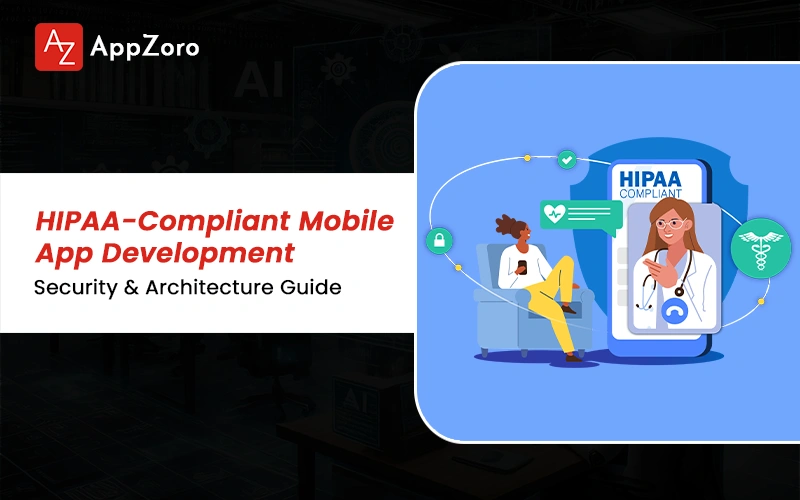
HIPAA-Compliant Mobile App Development: Security & Architecture Guide

Imagine a Friday afternoon, three hours before a procurement deadline and a startup CTO is staring at a security questionnaire with forty-six unanswered questions about her team’s HIPAA practices. The product has been live for nine months, customers love it and her largest hospital prospect is about to walk away because her sales engineer cannot answer a single question on the spreadsheet.
This scene quietly plays out across the healthcare software industry every single week of the year and it is the moment most teams realise that HIPAA-compliant health care app development is not what they thought it was during their early build. The market is full of vendors claiming compliance through marketing copy and serious buyers have learned to ignore that copy and demand architectural evidence instead.
The good news is that real HIPAA work is more predictable than the procurement chaos suggests, once you understand what the rules actually require underneath the surface noise. The bad news is that most published guides on this topic were written by marketing teams who have never sat through a Business Associate Agreement negotiation or a Security Risk Analysis review with their CISO.
What follows is the version of this conversation an experienced healthcare builder would have with a CTO, founder or director who genuinely wants to ship something enterprise buyers will trust. By the end of this guide, you will know what shapes the budget, where teams quietly lose six months and how to walk into your next security review with the right answers prepared.
Why HIPAA-Compliant App Development Looks Completely Different in 2026
If you were building healthcare apps five years ago, the compliance bar was lower in ways that look almost careless from where we sit today. A few encryption flags, a privacy policy, an SSL certificate and most buyers would accept the work as good enough across the early procurement conversation without much pushback.
That permissive era ended quietly somewhere around 2023 and serious healthcare buyers now run security reviews that genuinely test whether your claims hold up under independent scrutiny. The teams who win procurement today bake architectural compliance into the product from day one rather than retrofitting checkboxes before a customer demo arrives.
Here is what has actually shifted across the daily work of building healthcare apps in 2026:
-
Healthcare buyers now run formal security questionnaires covering hundreds of specific architectural and operational questions across the product
-
Penetration testing and independent third-party security audits have become standard requirements rather than premium differentiators across enterprise procurement
-
Compliance now demands real Business Associate Agreement chains across every third-party service that touches protected health information
-
Mobile and edge deployment scenarios have multiplied, which adds whole layers of complexity around device storage, biometrics and sync patterns
Why Marketing Compliance Stopped Working
Marketing compliance stopped working because serious healthcare buyers learned the hard way that vendor claims do not survive a real auditor walkthrough. The procurement teams who got burned in 2021 and 2022 built new vendor review processes that filter out theatre quickly during early conversations and the bar will keep rising across the next few procurement cycles.
What Healthcare Buyers Actually Verify Now
Healthcare buyers now verify Business Associate Agreements, encryption practices, access control models, audit logging, breach notification procedures and the documentation chain backing every claim on your security page. They also check whether your cloud infrastructure runs on HIPAA-eligible services, whether you have run a recent Security Risk Analysis and whether your team has documented incident response procedures ready.
Why the Cost of Non-Compliance Has Risen Sharply
The cost of non-compliance has risen sharply because regulators are issuing larger fines, enterprise buyers are walking away from non-compliant vendors faster and the reputational damage from breaches lasts noticeably longer. Getting compliance right upfront is meaningfully cheaper than discovering gaps during your largest enterprise deal across the year.
What HIPAA Actually Requires (Beyond the Marketing Page)
When founders ask me what HIPAA actually requires, I usually point them at the three categories of safeguards the rule itself defines rather than the vendor checklists floating around online. The Security Rule splits requirements into administrative, physical and technical safeguards and serious compliance work covers all three rather than focusing only on the technical layer.
Most early-stage teams focus on encryption and access control because those feel like engineering problems with clean solutions. The administrative and physical safeguards require operational discipline and documentation engineers often deprioritise during the build, which is exactly where most compliance gaps quietly hide during the first enterprise security review.
A serious approach to developing a HIPAA-compliant app covers the following layers across the engagement:
-
Administrative safeguards including security officer designation, workforce training, access management procedures and the documented incident response process
-
Physical safeguards covering facility access controls, workstation security and the device and media controls protecting any hardware touching protected health information
-
Technical safeguards including access control, audit logging, integrity controls, transmission security and the authentication mechanisms protecting application access
-
Business Associate Agreements with every vendor touching protected health information, including cloud providers, analytics tools, support platforms and any subprocessors
-
A current Security Risk Analysis documenting the threats your product faces and the mitigations your team has implemented across the architecture
-
A breach notification process meeting the specific timelines and content requirements federal regulators expect across both individual and bulk notifications
The Administrative Safeguards Most Engineers Underestimate
The administrative safeguards most engineers underestimate include workforce training, sanctions policies and the documented access management procedures auditors look for during their reviews. These layers feel like paperwork rather than engineering work but they are exactly what enterprise security teams check first when they evaluate a vendor’s overall compliance maturity.
The Technical Safeguards That Actually Hold Up Under Audit
The technical safeguards that actually hold up under audit include strong encryption at rest and in transit, granular role-based access control, comprehensive audit logging and authentication mechanisms supporting multi-factor approaches across user accounts. Each of these layers needs proper architectural attention rather than the surface-level implementations many early builds quietly ship.
Why Business Associate Agreements Are Architectural
Business Associate Agreements are architectural rather than legal because the choice of which vendors will sign one shapes your entire infrastructure stack across the build. Picking a cloud provider, analytics service or support tool without verifying their willingness to sign a BAA can derail your compliance posture months into the project across the team.
The Phases of HIPAA-Compliant App Development That Actually Ship Clean
Building healthcare apps properly is closer to building a regulated SaaS platform than a typical consumer mobile app and the phase structure reflects that reality across every team I have watched ship one successfully. Skipping or compressing any phase tends to save weeks during the build and cost months across the first year of enterprise deployment afterward.
A typical project runs through seven to eight defined phases across six to fifteen months total, depending on the scope and the depth of compliance work required. Each phase has its own deliverables, reviewers and quiet ways of going sideways when nobody is watching the compliance side closely enough during the build.
Here is how a healthy phase breakdown looks for serious healthcare builds in 2026:
-
Discovery and compliance scoping runs three to six weeks covering workflow mapping, data flow diagrams and the real constraints around the regulatory environment
-
Architecture and security planning runs three to four weeks covering data model, encryption strategy, access control design and the third-party vendor compliance review
-
UX and clinical workflow design runs four to eight weeks producing flows that respect access boundaries, audit requirements and the privacy expectations users carry
-
Core development runs sixteen to thirty-two weeks depending on scope, integration list complexity and the regulatory documentation accumulating across phases
-
Integration work runs in parallel across six to twelve weeks covering EHR systems, payment processors, identity providers and any specialty vendors the product touches
-
Security testing, penetration testing and compliance review run six to twelve weeks covering automated scans, manual review and the documentation auditors expect
-
Deployment, training and post-launch operations run indefinitely covering breach monitoring, audit log review, vendor reviews and the ongoing operational maintenance
Discovery: Where Most Compliance Projects Quietly Save the Most Money
Discovery is the cheapest phase to invest in properly and the most expensive phase to skip across every healthcare project I have followed shipping into market. A four-week compliance discovery phase that costs twenty to forty thousand dollars will routinely save four to twelve months of expensive rework once your team encounters the first serious enterprise security review afterward.
Why Data Flow Diagrams Matter More Than Wireframes
Data flow diagrams matter more than wireframes for compliance projects because they expose exactly where protected health information enters, moves through and exits your system across every workflow. Most compliance failures trace back to undocumented data flows that nobody noticed until an auditor traced one and discovered an unencrypted hop across the architecture.
The Phase Most Founders Quietly Underestimate
The phase founders quietly underestimate most often is documentation, because they assume the engineering work itself proves compliance without supporting paperwork. The reality is that enterprise security reviews demand artefacts including policies, procedures, risk analyses and training records that take meaningful time to produce well across the team.
HIPAA-Compliant Mobile App Development: The Mobile-Specific Layer
HIPAA-compliant mobile app development carries extra layers of complexity that web-only healthcare products simply do not face during their build cycle. Mobile devices live outside your infrastructure, store data locally, support biometric authentication and connect through unreliable networks in ways that web applications never genuinely have to handle across their daily operation.
The teams who handle mobile compliance well treat the device as part of their security perimeter rather than as a trusted endpoint sending requests inward. The teams who handle it poorly tend to ship a mobile app that works beautifully in development and quietly leaks protected health information through caches, screenshots or background processes across regular use.
Here is what it takes to develop a HIPAA-compliant mobile app across real builds in 2026:
-
Device-level encryption for any protected health information stored locally on the phone, including database files, cached content and temporary working files
-
Biometric authentication using Face ID, Touch ID or fingerprint sensors with proper fallback mechanisms when biometrics are unavailable or fail during access
-
Screenshot prevention, screen recording detection and the operational disciplines that prevent protected information from leaking through OS-level capture mechanisms
-
Secure offline-online sync patterns handling protected information correctly when the device moves between connected and disconnected states across the workday
-
Mobile device management compatibility and the integration with enterprise MDM platforms healthcare organisations expect from any serious vendor today
Why Local Storage Is the Hardest Mobile Compliance Problem
Local storage is the hardest mobile compliance problem because devices are stolen, lost and shared in ways that simply do not happen with web applications running on managed servers. Solving this properly requires encryption, key management tied to user authentication and the discipline to minimise what the app stores locally across regular use.
The Biometric Authentication Layer That Wins Enterprise Buyers
Biometric authentication is what wins enterprise mobile procurement today because it gives healthcare organisations the access control story they need without forcing clinicians to type long passwords during their shift. Implementing it correctly across iOS and Android requires real engineering attention rather than the casual integration many consumer apps ship with.
The Sync and Offline Patterns Most Teams Get Wrong
Most teams get sync and offline patterns wrong because they design the product assuming connectivity and bolt on offline support late in the build cycle. Doing it right means encrypting local stores, handling conflict resolution carefully and ensuring no protected information leaks through error states or partial sync conditions across the workflow.
Architecture, Encryption and the Real Compliance Stack
The architecture for serious healthcare apps looks fairly boring on paper, which is genuinely the point of compliance work across the industry. Boring infrastructure with predictable failure modes passes audits cleanly, while fashionable stacks with novel components often raise more security questions than they answer during enterprise procurement reviews.
The strongest teams pick proven cloud platforms with HIPAA-eligible services, sign Business Associate Agreements with every vendor that touches protected information and document their architecture in ways auditors can verify in under an hour. The discipline shows up in encryption choices, access control models, audit logging coverage and the operational practices the team protects across years of deployment.
Here is what a serious compliance stack looks like for healthcare builds in 2026:
-
HIPAA-eligible cloud services on AWS, Azure or Google Cloud with Business Associate Agreements in place and compliance documentation buyers can verify quickly
-
Encryption at rest using cloud-native key management services, plus proper key rotation policies the security team can demonstrate during audit conversations
-
Encryption in transit using TLS 1.2 or higher across every connection touching protected health information, including internal service-to-service calls behind the scenes
-
Granular role-based access control with proper separation of duties between clinical, administrative and technical users across the product surface area
-
Audit logging covering every access to protected health information, every administrative action and every security-relevant event across the application and infrastructure
-
Backup and disaster recovery procedures meeting HIPAA’s contingency planning requirements with documented testing across the operational year
Why Boring Cloud Architecture Wins HIPAA Audits
Boring cloud architecture wins HIPAA audits because compliance reviewers favour proven services with mature security stories over fashionable alternatives with shorter track records. Picking AWS, Azure or Google Cloud with HIPAA-eligible services genuinely saves you time during procurement and audit conversations across the next two years of enterprise sales.
The Audit Logging Layer That Quietly Decides Everything
Audit logging is quietly the layer that decides whether your compliance posture survives an actual auditor walkthrough across the year. Every access to protected information needs to leave a tamper-evident trail that the security team can query, export and explain during incident investigations and routine security reviews afterward.
Encryption Key Management Done Right
Encryption key management done right uses cloud-native key management services with proper rotation policies, separation of duties and the documentation auditors expect during their reviews. Storing encryption keys in environment variables or configuration files is a common shortcut that immediately fails any serious security review across the procurement process.
HIPAA-Compliant App Development Examples by Use Case
Looking at real HIPAA-compliant app development examples helps clarify what serious compliance work actually looks like across different healthcare verticals. The architectural patterns share common foundations but the specific implementation choices vary meaningfully depending on whether you are building for patients, clinicians, payers or research teams across the industry.
The teams that study real examples before scoping their own build tend to make better architectural decisions during early planning. The teams that skip this step often ship something that resembles a consumer app with HIPAA paint applied, which auditors and enterprise buyers can spot within the first ten minutes of any serious review.
Here are the most common examples shaping the category in 2026:
-
Telehealth platforms supporting video visits, secure messaging and clinical documentation across patient-clinician encounters happening across distributed teams daily.
-
Patient portals letting users view records, schedule appointments, message providers and pay bills through a digital experience matching modern consumer expectations.
-
Clinical documentation tools supporting note creation, voice transcription and the workflow integration clinicians need to actually use the product across their shift.
-
Remote patient monitoring apps capturing biometric data from connected devices and surfacing it to clinical teams for review across chronic disease management.
-
Behavioural and mental health products supporting therapy, journaling, mood tracking and the clinical workflow integration that builds clinical and patient trust.
-
Population health and analytics platforms aggregating data across patient populations to support quality measurement and value-based care reporting across systems.
Telehealth Architecture Realities
Telehealth platforms face specific compliance pressures around video session recording, secure messaging and the data residency requirements many enterprise health systems demand. The teams who get telehealth right invest in proper session encryption, recording governance and the operational discipline supporting both clinical and audit requirements across deployment.
Patient Portal Compliance Patterns
Patient portals carry interesting compliance complexity because they support multiple user types including patients, family members and authorised representatives across the experience. The teams that handle this well design careful consent flows, granular access controls and the audit logging that tracks which user accessed which records across every session.
Behavioural Health and the Extra Privacy Layer
Behavioural health products carry an extra privacy layer because mental health data is treated more sensitively under both HIPAA and state regulations across most regions. The teams that handle this well respect those expectations through tighter access controls, more careful logging and the operational discipline that builds patient trust across the product surface area.
Cost, Timeline and What Founders Quietly Underestimate
Most founders ask about the cost to develop a HIPAA-compliant mobile app or web product as if there is one clean number that applies across every project shape inside the category and the honest answer disappoints them initially during the conversation. The build cost is roughly twenty-five to thirty-five percent of the real three-year spend across most serious healthcare projects that survive past their first year of enterprise deployment.
The other sixty-five to seventy-five percent shows up as cloud infrastructure, third-party API fees, ongoing compliance audits, security testing, support staffing and the maintenance budget every founder quietly underestimates during their initial fundraising preparation. Planning honestly for the full reality from day one is meaningfully cheaper than discovering it month by month across the operational year afterward.
Here is how realistic healthcare app costs actually break down for serious builds in 2026:
-
A focused MVP covering one platform and a tightly scoped workflow lands between $60,000 and $180,000 for a clean build with proper compliance work included.
-
A full multi-platform product with EHR integration and rich features lands between $200,000 and $600,000 depending on scope and integration list complexity.
-
A full enterprise-grade product with deep clinical integration lands between $500,000 and well over $1,500,000 across the first version shipped to market.
-
Cloud infrastructure with HIPAA-eligible services runs between $500 and $15,000 monthly depending on user volume, data retention and integration traffic patterns.
-
Annual compliance audits, penetration testing and security reviews typically cost $25,000 to $150,000 depending on scope and the certification level required.
Why the Cheapest Quote Is Almost Never the Cheapest Build
The cheapest quote on your shortlist is rarely cheaper because the team writes code more efficiently than the competitors who quoted higher numbers during the proposal process. It is cheaper because they have silently descoped the documentation work, security testing or operational compliance practices that healthcare buyers actually require before signing any procurement contract.
The Hidden Compliance Maintenance Costs
Compliance maintenance carries ongoing costs that most pitch decks quietly skip during early fundraising preparation across the category. Annual security risk analyses, penetration tests, vendor reviews and the ongoing audit log review work all add up to operating expenses worth modelling honestly upfront during planning conversations with your finance team.
Year One Operational Reality Senior Teams Plan For
Year one of healthcare app operation covers bug fixes, security patches, regulatory updates, integration maintenance, breach monitoring and the small feature work that comes from real customer feedback after launch. Budget honestly for this from kickoff or you will quietly pay double during a year when your runway can least afford the surprise across the operating budget.
Custom Build vs Buying a HIPAA-Compliant Platform
The custom build versus platform debate is one of the more consequential conversations founders have during early planning for healthcare products. Platforms are not always cheaper, custom builds are not always better and the right answer depends on your specific situation across several real variables worth examining honestly during planning.
Platforms win when your product is close enough to the platform’s design that customisation costs stay manageable across the deployment. Custom development wins when your differentiation lives in workflows the platforms were never designed to support cleanly across the clinical or operational experience your buyers actually expect.
Here is how the trade-offs actually shake out across real healthcare projects in 2026:
-
HIPAA-eligible backend platforms like Aptible, Datica and TrueVault cost between $1,000 and $10,000 monthly depending on scope and infrastructure choices.
-
Custom development sits between $60,000 and $1,500,000 depending on scope, integration list complexity and the regulatory environment involved in the build.
-
Platforms win for early-stage products needing to ship quickly with a small team and limited compliance expertise available across the engineering organisation.
-
Custom development wins for products with novel workflows, complex integrations or the kind of differentiation no platform was designed to support cleanly.
-
The hybrid path uses a compliant platform foundation with custom application code wrapping the differentiated workflow on top across the user experience.
When Compliant Platforms Genuinely Make Sense
Compliant platforms make genuine sense for early-stage teams that need to ship quickly without hiring deep compliance expertise across the engineering organisation upfront. Aptible, Datica and similar platforms handle the infrastructure compliance work while your team focuses on the application code that differentiates the product across the user experience.
When Custom Development Becomes Necessary
Custom development becomes necessary when your differentiation lives in workflows or integrations no platform was designed to handle cleanly across the surface area. Complex EHR integration scenarios, novel clinical workflows and any product with unique operational requirements all push the calculation toward custom development across the build cycle.
The Hybrid Path That Captures Both Worlds
The hybrid path that captures both worlds uses a compliant platform foundation for the infrastructure layer and custom application code wrapping the workflows that genuinely differentiate the product across the user experience. This approach captures platform compliance benefits while preserving the flexibility custom development provides for the features your business actually competes on.
What Senior Healthcare Software Teams Quietly Get Right
The best healthcare software teams I have watched ship cleanly across many years share a small set of habits that compound quietly across the lifecycle of the product. They are not winning because they picked perfect tools at kickoff or hired the most expensive engineers in their region or country across teams.
They are winning because they treat compliance as a long-running operational discipline rather than a one-time project ending at launch day with a celebration dinner. That posture changes nearly every decision they make across phases and it shows up clearly in their enterprise procurement win rates across the first two years of operation in market.
Here is what the senior healthcare teams I respect quietly do differently across every project:
-
They invest seriously in data flow mapping during discovery, because they know assumptions saved here cost ten times more during build to fix later.
-
They treat documentation as architectural work rather than paperwork added before audits, which saves dramatically during enterprise procurement conversations.
-
They run security reviews internally before any external review arrives, catching issues early when fixing them is meaningfully cheaper across the engineering team.
-
They protect clean architecture ruthlessly across every feature, because compliance debt compounds faster than technical debt across healthcare products over time.
-
They plan their Business Associate Agreement chain carefully from day one because retrofitting BAAs into a finished product is genuinely painful across vendors.
Why Documentation Discipline Compounds Across Years
Documentation discipline compounds across years because every enterprise procurement conversation, every audit and every security review demands documentation that takes meaningful time to produce well. The teams who build documentation alongside the code save dramatically during procurement compared to teams scrambling to produce policies the week before a deadline.
How Senior Teams Handle the Vendor Review Reality
Senior healthcare teams handle the vendor review reality honestly by maintaining a current inventory of every third-party service touching protected information across the stack. They know which vendors have signed BAAs, which have not and which have changed their terms across the year, which prevents the unpleasant surprises that derail enterprise deals.
Why Internal Security Reviews Beat External Surprises
Internal security reviews beat external surprises because catching architectural issues internally is dramatically cheaper than fixing them after a customer’s security team raises them during procurement. The teams who run quarterly internal reviews catch issues when fixing them is a sprint of work rather than a quarter of emergency engineering.
If you are weighing your next healthcare app build and want a no-pitch second opinion on a vendor quote already on your desk, our senior team reviews these proposals for founders and CTOs almost every week. We are happy to flag anything underscoped before you sign the contract.
Final Thoughts
HIPAA-compliant app development in 2026 is harder than it was three years ago but the playbook for shipping something enterprise buyers actually trust is more legible than ever before. The teams who win are not the ones with the biggest budgets or the flashiest technology stacks anywhere on the market today.
They are the ones who treat compliance as architectural rather than cosmetic, who scope documentation work honestly from kickoff and who plan their security operations with the same seriousness as the engineering work underneath. That posture changes the build cost, the timeline and the survival rate across the first critical year of enterprise deployment afterward.
If the proposals on your desk feel impossible to compare honestly, get a third opinion from someone who has actually shipped one to enterprise healthcare buyers before. The right partner walks you through the three-year compliance reality without flinching, because they have lived inside it across many builds shipped to real provider organisations operating in market.
Frequently Asked Questions
What is HIPAA-compliant app development in plain language?
It is the structured process of designing, building and operating an application that handles protected health information in line with HIPAA's administrative, physical and technical safeguards.
How much does HIPAA-compliant mobile app development typically cost?
A focused MVP runs $60,000 to $180,000, while a full multi-platform product with EHR integration and proper compliance work lands between $200,000 and $600,000 typically.
How long does developing a HIPAA-compliant app usually take?
A focused MVP usually ships in five to eight months, while a full enterprise-grade product with deep integrations needs nine to fifteen months minimum.
What are common HIPAA-compliant app development examples in 2026?
Common examples include telehealth platforms, patient portals, clinical documentation tools, remote monitoring apps and behavioural health products serving distributed clinical teams daily.
What does it take to develop a HIPAA-compliant mobile app properly?
It takes encryption at rest and in transit, biometric authentication, secure local storage, audit logging, BAA-backed infrastructure and the documentation auditors verify during reviews.
Is mobile compliance work different from web compliance work?
Mobile carries extra complexity around device storage, biometric authentication, offline-online sync and screenshot prevention that web-only products simply do not have to handle.
Should I buy a compliant platform or build custom?
Buy a platform when you need to ship quickly with limited compliance expertise and build custom when your differentiation lives in workflows no platform was designed to support.
What hidden costs should I plan for in HIPAA work?
Plan for HIPAA-eligible cloud infrastructure, annual security audits, penetration testing, ongoing vendor reviews and maintenance running twenty to thirty percent of build cost annually.