
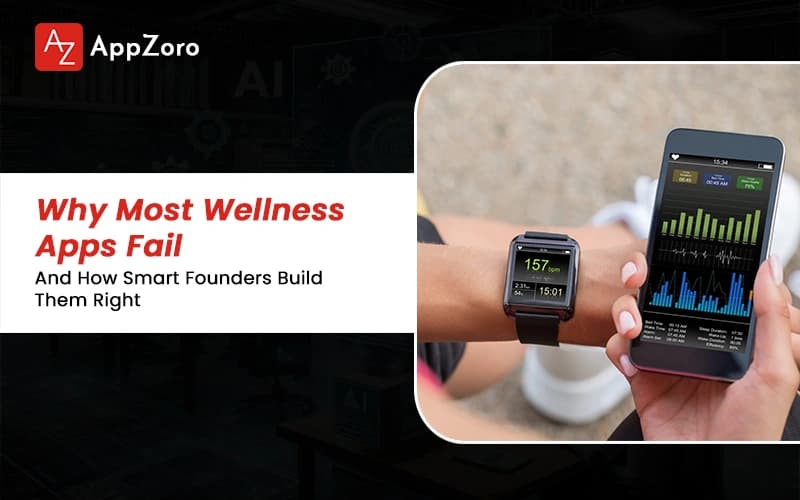
Quick Answer: Wellness app development is the structured process of designing, building, launching and maintaining a digital product that supports mental, physical, emotional or behavioural health through a mobile or cross-platform experience. Strong builds in 2026 cover discovery, wearable integration, content infrastructure, AI personalisation, compliance work and post-launch maintenance treated as serious operational disciplines. Most wellness apps land between $40,000 for a focused MVP and $300,000 for a multi-platform product with rich AI, wearable sync and the kind of clinical guardrails users have started to expect across the category.
A founder named Aanya emailed me at almost eleven at night with a single uncomfortable question: "Why does every agency I talk to give me a completely different number for the same brief?" Attached were four proposals for a mental wellness app she had been planning for almost eighteen months.
The cheapest quote sat at nineteen thousand and the most expensive at almost two hundred and seventy thousand without much explanation of the gap. Aanya is not the first founder to land inside this exact mess and the wellness app development category has quietly become one of the noisiest corners of the wider mobile industry across regions.
The good news is that real wellness app development in 2026 is more predictable than the proposals suggest, once you understand what the moving parts actually are underneath. By the end of this guide, you will know what shapes the budget, where teams quietly lose six months and how to walk into your next vendor call with the right questions ready for the conversation.
Why Wellness App Development Looks Completely Different in 2026
If you were building a wellness app four or five years ago, the scope was almost cute in hindsight. A daily mood check, a meditation library, a streak counter and you had something users would download and quietly forget about within roughly three weeks of installing it.
That world is long gone and pretending otherwise is the fastest way to underprice your build and underwhelm your users on launch day.
Modern wellness app development now sits at the intersection of wearables, AI, clinical content and the kind of behavioural design that genuinely supports long-term habit formation across users.
Here is what has actually shifted across the daily work of building wellness products in 2026:
Users now expect the app to remember them, adapt to their stress patterns and surface the right content at the right moment without prompting
Wearable integrations from Apple Watch, Whoop, Oura and Garmin have moved from premium features into baseline expectations across the category
AI-driven personalisation has become a real horizontal layer touching journaling, meditation, sleep and stress management rather than a marketing gimmick
Clinical accuracy and evidence-based content have become competitive differentiators as users grow sceptical of wellness content that feels invented
What Today's Users Actually Expect From a Wellness App
Today's users open your wellness app expecting it to feel personal within the first thirty seconds, not after a long onboarding survey that interrogates them about goals nobody wants to articulate. They expect the experience to adapt to their mood, respect their attention and surface meaningful insights rather than the same generic content recycled across every user inside the database.
Why the Old Streak-and-Stats Model Stopped Working
The streak-and-stats model that powered the first generation of wellness apps stopped working when users realised those streaks were creating anxiety rather than supporting calm. Today's product needs to support behaviour change without weaponising guilt, which is genuinely a harder design problem than tracking minutes meditated across a clean chart.
The New Bar Set by Premium Content, Wearables and AI
The new bar across well being app development was quietly set by a handful of category leaders who combined premium production values with intelligent personalisation across every screen. Founders launching in 2026 are not competing against simple habit trackers anymore but against polished experiences that learned what their users actually wanted across many years of operation in market.
What Real Health and Wellness App Development Actually Includes
When founders ask me what they are actually paying for during health and wellness app development, I usually grab a notebook and sketch out a stack that nobody puts on agency websites cleanly. The visible product is roughly thirty percent of what a real build covers across the lifecycle of a working wellness product in production.
The other seventy percent is infrastructure, data plumbing, third-party integrations and the operational layer that decides whether your app feels alive or hollow across many months of user activity. Skipping any of those layers does not save money during the build; it just moves the bill into post-launch where fixing it costs noticeably more than getting it right upfront.
A serious well-being app development built in 2026 typically covers the following layers across the engagement:
Discovery and product validation work covering the real user persona, success metrics and the constraints around budget and timeline upfront
Native or cross-platform mobile builds for iOS and Android, plus increasingly a companion web product for coaches, therapists or admin teams
Wearable integrations with Apple Health, Google Fit, Whoop, Oura and Garmin covering sleep, stress, heart rate variability and recovery data
Content infrastructure for meditations, courses, articles, audio guides, video sessions and the editorial cadence that keeps the library fresh
An AI layer for personalisation, mood-based recommendations, conversational support and anomaly detection across emotional and physical patterns
Secure data handling, authentication, payments, push notifications and the boring operational plumbing that nobody mentions until it suddenly breaks
The Visible Product vs the Hidden Infrastructure
The visible product is what users tap every morning and the hidden infrastructure is everything quietly keeping that surface responsive and personalised behind the scenes. Founders who scope only the visible product run out of money halfway through, because they never accounted for the infrastructure their visible product was leaning on every single moment of operation.
Why Health Data Adds an Entire Layer to the Build
Health and wellness app development carries genuine regulatory weight that mobile app projects in lighter categories simply do not face during their planning conversations upfront. The moment your app touches mental health, mood, sleep or any biometric data, you have opened a regulatory door demanding real engineering attention rather than a checkbox at the end of the build.
Where Wellness Apps Differ From Generic Consumer Builds
Generic consumer apps optimise for engagement and conversion metrics that work cleanly across most categories on the app stores worldwide. Wellness app development optimises for sustained behaviour change measured across months rather than minutes, which requires a fundamentally different content strategy, notification cadence and personalisation approach than your favourite consumer template would ever genuinely suggest.
The Phases of Developing a Wellness App That Actually Ships Clean
Developing a wellness app properly is closer to building a SaaS platform than building a typical consumer mobile app and the phase structure reflects that reality across every team I have watched do it well. Skipping or compressing any phase tends to save weeks during the build and cost months across the first critical year after launch arrives publicly.
A typical well being app development project runs through six to seven defined phases across four to nine months total, depending on the scope and complexity of the product surface. Each phase has its own deliverables, its own owners and its own quiet ways of going sideways when nobody is watching closely enough to catch the drift early.
Here is how a healthy phase breakdown looks for serious wellness builds in 2026:
Discovery and validation usually runs two to four weeks covering user research, market positioning and the real constraints around scope and budget
Architecture and tech stack planning runs two to three weeks covering wearable strategy, data model, AI approach and infrastructure choices upfront
UX, UI and design system work runs three to six weeks producing flows, prototypes and the design system the engineering team builds against later
Core mobile development runs twelve to twenty-four weeks depending on platform count, feature scope and the integration list complexity involved
Wearable and content integration work runs in parallel across four to eight weeks covering Apple Health, Google Fit and the content library setup
QA, security testing and compliance review run four to eight weeks covering automated tests, manual review and the launch checklist preparation
Deployment, launch and post-launch maintenance run indefinitely covering bug fixes, content additions and the ongoing iteration cycle afterward
Discovery: Where Most Wellness Apps Quietly Save the Most Money
Discovery is the cheapest phase to invest in properly and the most expensive phase to skip across every project I have ever followed shipping a wellness product into market. A two-week discovery phase costing ten to fifteen thousand dollars will routinely save four to twelve weeks of expensive rework during the build cycle later on across the team.
Why Content Strategy Happens Before Any Engineering
Content strategy needs to be settled before the engineering team writes the first meaningful pull request for the wellness application in earnest. Trying to retrofit a proper meditation library, course structure or content management system into a codebase designed without them is equivalent to adding a basement to a house already standing upright on the lot.
The Phase Most Founders Quietly Underestimate Across Builds
The phase founders quietly underestimate most often is content infrastructure, because they assume their meditations and articles will just live somewhere convenient until launch arrives at the door. A real wellness app needs a proper content management system, a media pipeline and an ongoing operational owner who keeps the library fresh across every quarter of operation afterward.
Corporate Wellness App Development vs Self Wellness App Development: How They Split
Corporate wellness app development and self wellness app development share most of the same backbone underneath but the product surfaces split into meaningfully different shapes once you start designing for each audience seriously. Founders who confuse the two during planning tend to ship a product that pleases neither buyer cleanly across the first year of operation.
The corporate buyer wants reporting, admin dashboards, group challenges and the kind of analytics that prove wellness investment delivers measurable ROI to leadership. The consumer buyer wants something that feels personal, calming and respectful of their attention across the small moments of stress during their actual working day.
Here is how the two paths typically split across real builds in 2026:
Corporate wellness app development requires admin portals, employee analytics, billing for organisations, SSO integration and detailed compliance reporting
Self-wellness app development requires consumer-grade onboarding, payment processing for individuals, social features and content tuned for retention
Corporate budgets typically sit between $80,000 and $250,000 for the first version covering employee app, admin portal and reporting infrastructure
Self wellness budgets sit between $40,000 and $180,000 for a focused consumer product with strong content, personalisation and clean retention loops
The hybrid path serves both audiences through a shared content backend and two distinct front-end products tuned to each buyer specifically
Why Corporate Buyers Want What Consumers Quietly Hate
Corporate buyers want dashboards showing engagement metrics across employee populations, while consumers actively resent feeling tracked or judged by their employer through any wellness product. Building both audiences into one product without thoughtful separation is how founders accidentally create something that signals surveillance to consumers while underperforming for HR teams.
Why Self-Wellness Apps Live or Die on Retention
Self-wellness app development lives or dies on retention measured across months rather than the acquisition metrics consumer marketers usually focus on during launch. Users who churn after week three are not a business; they are an expensive lesson about product market fit mattering more than top-of-funnel growth metrics across this specific category.
When the Hybrid Path Genuinely Makes Sense
The hybrid path makes genuine sense when your business model serves both individual consumers and corporate customers through complementary but distinct product surfaces sharing a common content backend. This approach captures both revenue streams while preserving the design integrity each audience genuinely deserves across their respective experiences inside the product.
Fitness and Wellness Mobile App Development: Tech Stack and Architecture Choices
The tech stack conversation around fitness and wellness mobile app development gets religious quickly, which is unfortunate because the right answer is usually fairly boring and depends mostly on your team. Founders who chase fashionable stacks tend to spend more time fighting their tools than shipping product to users across the first year of operation afterward.
The stack that wins for wellness and fitness app development is rarely the stack that wins on technology Twitter during any given week of debate. It is the stack your engineering team can debug under real pressure at three in the morning when the production database starts behaving strangely under unexpected user load.
Here is roughly how the modern stack shakes out for serious wellness builds in 2026:
Cross-platform mobile through React Native or Flutter wins for ninety percent of wellness apps that do not need extreme native performance work
Native iOS with Swift and Android with Kotlin still earns its place for products depending heavily on hardware sensors or complex real-time animations
Backend choices typically land on Node.js with NestJS, Python with FastAPI or Django or Go for performance-critical services running at meaningful scale
PostgreSQL handles relational data, Redis covers caching and real-time features and a content-friendly CMS handles the article and audio library cleanly
AI workloads typically run through OpenAI, Anthropic or self-hosted models depending on data sensitivity, cost trajectory and latency requirements across the year
Why Cross-Platform Wins for Most Wellness Apps Today
Cross-platform development through React Native or Flutter has matured to the point where ninety-five percent of wellness apps genuinely cannot tell the difference from native code. The thirty to forty percent budget reduction translates directly into more runway, better content production or simply better post-launch maintenance across the critical first year of operation in market.
When Native Development Genuinely Pays for Itself
Native development still earns its premium when your wellness app depends heavily on real-time audio processing, complex haptic feedback, intensive video work or tight wearable integration across the system. Apps doing serious biofeedback work, breath training or real-time meditation guidance usually benefit from going native despite the higher upfront cost involved.
The Backend Layer Nobody Sees But Everyone Feels
The backend layer is invisible to users but quietly decides whether your wellness app feels alive or laggy across every session they ever complete inside the product. Get the data model right, the sync layer reliable and the API contracts clean and the rest of the build runs noticeably smoother across the team for many months afterward without drama.
AI, Wearables and the Modern Wellness Layer
The conversation around AI inside the wellness category is exhausting in 2026 because most of it lands as marketing hype rather than honest reporting on what genuinely works in production environments. Underneath the noise, however, something real has clearly happened across the category that founders should understand before scoping their own product build properly.
AI has moved from a sidebar feature into a horizontal layer touching mood detection, content recommendation, conversational support and personalisation across nearly every screen of a modern wellness app. The interesting question is no longer whether your wellness product should use AI; it is which specific applications of AI earn their seat inside your daily user workflow honestly.
The most important AI and wearable applications worth understanding for serious wellness builds in 2026 break down clearly:
Mood-based content recommendation that surfaces the right meditation, article or session based on the user's current emotional state quietly
Conversational support that lets users describe how they feel in natural language rather than navigating through complex menus and category filters
Sleep and stress pattern detection through wearable integration that surfaces meaningful insights the user could not generate alone across days
Adaptive content paths that adjust course recommendations based on user progress, engagement signals and stated goals across each new week
Voice-based interactions for meditation, journaling and breath training that reduce friction at the moments when users genuinely need the support
Where AI Genuinely Improves the User Experience Today
AI genuinely improves the wellness app experience when it removes friction from common user actions and personalises recommendations in ways static rules cannot easily replicate across users. Content discovery, conversational support and pattern detection from wearable data are the three areas where AI has moved from gimmick to genuine value across the category in 2026.
Where AI Is Still Mostly Marketing Theatre
AI is still mostly marketing theatre when it shows up as a chatbot answering basic FAQs nobody asks or as a generic recommendation engine surfacing the same meditations to every user regardless of mood. Push hard on vendors who claim AI features without explaining specifically what their AI does differently from a sensible rules engine running underneath.
Wearables and the Sleep, Stress and Recovery Layer
Wearables genuinely changed wellness app development by making sleep, stress and recovery data accessible without asking users to log anything manually each day. The teams that handle this well treat wearable data as a first-class signal across personalisation rather than a sidebar feature added late in the build cycle as an afterthought.
Wellness App Development Cost: Real Numbers and Hidden Realities
Most founders ask about wellness app development cost as if there is one clean number that applies across every project shape and the honest answer disappoints them initially during the conversation. The build cost is roughly thirty to forty percent of the real three-year spend across most wellness apps that survive past month nine of operation in market.
The other sixty to seventy percent shows up as cloud infrastructure, third-party API fees, content production, customer support tooling, compliance work and the maintenance budget every founder quietly underestimates during their initial fundraising deck preparation. Planning for the full reality from day one is meaningfully cheaper than discovering it month by month across the operational year afterward.
Here is how a realistic wellness app development cost breakdown actually looks for serious builds in 2026:
A focused MVP covering one platform and three to five core features lands between $40,000 and $80,000 for a clean build with reasonable polish
A full v1 covering both iOS and Android with content infrastructure and wearable sync lands between $90,000 and $200,000 in total budget terms
A premium product with AI personalisation, video sessions and full wearable support lands between $200,000 and $500,000 for the first version
Cloud infrastructure typically runs between $300 and $6,000 monthly depending on user volume, video usage and AI inference frequency across users
Year-one maintenance typically costs between fifteen and twenty-five percent of original build cost annually, more if shortcuts were taken anywhere
Why the Cheapest Quote Is Almost Never the Cheapest Build
The cheapest quote on your shortlist is rarely cheaper because the team writes code more efficiently than the competitors who quoted higher numbers across proposals. It is cheaper because they have silently descoped QA, post-launch maintenance, accessibility work or the wearable integrations that look small until users start complaining within weeks.
The Hidden Costs Most Pitch Decks Quietly Skip
Cloud infrastructure, third-party API fees, app store revenue cuts, customer support tooling, content production and ongoing maintenance all get quietly skipped in most early-stage pitch decks across the wellness category. Adding these line items honestly into your three-year plan prevents the panic that hits most founders somewhere around month six after launch arrives at the door.
Year One Maintenance and Why Senior Teams Plan for It
Year one of maintenance covers bug fixes, security patches, OS upgrade compatibility, wearable platform updates, dependency upgrades and small feature work from real user feedback after launch. Budget honestly for this from kickoff or you will quietly pay double during a year when your runway can least afford the surprise across the operating budget.
Custom Build vs Template: What Path Wins for Your Wellness Product
The custom build versus template debate is one of the most consequential conversations founders have during early planning and most published advice on this question is genuinely terrible. Templates are not always cheaper, custom is not always better and the right answer depends on your specific situation across several real variables worth examining honestly.
Templates win when your product is close enough to the template's original use case that customisation costs stay manageable across the build cycle. Custom development wins when your differentiation lives in features that the template was never designed to support cleanly across the product surface area.
Here is how the trade-offs actually shake out across real wellness projects in 2026:
Templates and white-label solutions cost between five thousand and thirty thousand for a working product launched quickly without much customisation
Custom development sits between forty thousand and three hundred thousand depending on scope, integration list and AI personalisation complexity involved
Templates win for tightly-scoped products like meditation libraries, single-instructor content apps or specific habit trackers with low variation
Custom wins for products with novel features, complex personalisation, premium content or genuine differentiation across the wider competitive landscape
The hybrid path uses a template foundation with custom modules for the features that genuinely differentiate the product across the user experience
Why Templates Make Sense for Tightly-Scoped Wellness Products
Templates make genuine sense when your product is close enough to the template's original use case that customisation work stays minimal across the build. A single-instructor meditation library, a tightly-scoped habit tracker or a focused community product can all ship cleanly on templates without compromising the user experience meaningfully across the year.
When Custom Wellness App Development Becomes Necessary
Custom development becomes the right call the moment your differentiation lives in features no template was ever designed to handle cleanly across the surface area. Adaptive AI coaching, novel wearable integrations, clinical content workflows and any feature genuinely unique to your product all push the calculation toward custom development across the build cycle.
The Hybrid Path Smart Founders Quietly Pick
The hybrid path smart founders quietly pick uses a template foundation for the commodity features and custom development for the differentiation that actually matters to users across the product. This approach captures the speed and cost savings of templates while preserving the flexibility custom development provides for the features your business genuinely competes on quarterly.
What Senior Wellness App Teams Quietly Get Right
The best wellness app teams I have watched ship cleanly across many years share a small set of habits that compound quietly across the lifecycle of the product. They are not winning because they picked perfect tools at kickoff or hired the most expensive engineers in their region or country across teams.
They are winning because they treat the work as a long-running discipline rather than a one-time project ending at launch day with a celebration dinner. That posture changes nearly every decision they make across phases and it shows up clearly in their retention numbers across the first two years of operation in market.
Here is what the senior wellness teams I respect quietly do differently across every project:
They over-invest in discovery and user research, because they know the assumptions they save here cost ten times more during build to fix later
They protect performance budgets ruthlessly across every feature, because slow apps lose wellness users faster than almost any other category online
They scope content strategy seriously from day one rather than treating it as a sidebar concern added later in the development cycle afterward
They treat AI as a layer earning its seat through measurable user benefit rather than a marketing checkbox added to the homepage
They plan compliance and privacy work properly because wellness data touches genuinely sensitive ground regulators are paying closer attention to now
The Habits That Quietly Compound Across Years
The habits compounding across years are unsexy and rarely mentioned in pitch decks but they show up clearly in user retention curves across the first eighteen months of operation. Discipline around discovery, performance, content strategy and compliance adds up to a noticeable competitive edge over teams chasing whatever feature happens to be trending publicly this quarter.
Why Content Discipline Matters Most in Wellness
Content discipline matters more in wellness products than in almost any other consumer category because users open the app at moments where the wrong content actively makes things worse. A poorly-timed pushy notification at six in the morning is the difference between a user who finishes the session calmly and a user who deletes the app entirely from their phone.
How Senior Teams Handle the Compliance Reality Honestly
Senior wellness teams handle the compliance reality honestly by scoping GDPR, HIPAA where applicable and platform privacy requirements from kickoff rather than retrofitting them later. They invest in proper data handling, clear consent flows and the privacy disclosures that earn user trust across the long arc of habit formation across many months of usage.
If you are weighing your next wellness app build and want a no-pitch second opinion on a vendor quote on your desk, our senior team reviews these proposals for founders almost every week. We are happy to flag anything underscoped before you sign the contract this quarter.
Final Thoughts
Well-being app development in 2026 is harder than it was three years ago but the playbook for shipping something users actually love is also more legible than ever before. The teams that win are not the ones with the biggest budgets or the flashiest technology stacks anywhere on the market today.
They are the ones who treat the build as a long-running product rather than a sprint to launch day, who scope content and AI honestly and who plan compliance with the same seriousness as the engineering work underneath. That posture changes the build cost, the timeline and the survival rate of the resulting product across the first critical year.
If you are about to start developing a wellness app and the proposals on your desk feel impossible to compare honestly, get a third opinion from someone who has actually shipped one before. The right partner walks you through the three-year reality without flinching, because they have lived inside it across many builds shipped to real paying users.
Leave a Comment