
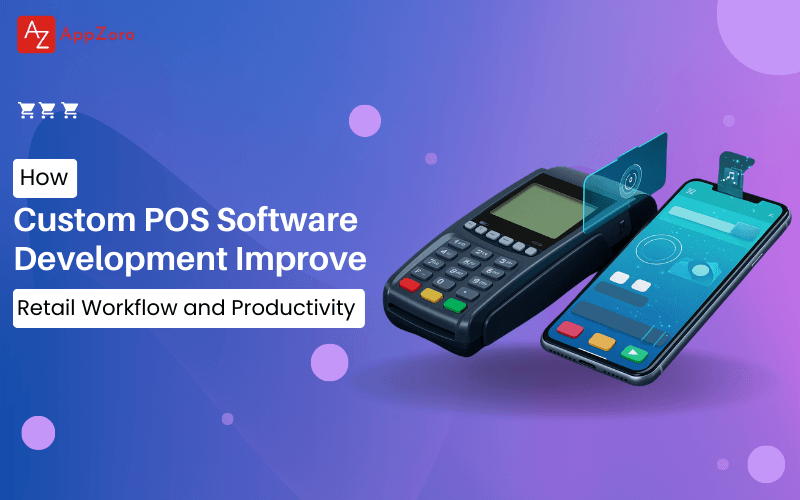
Retail problems rarely announce themselves loudly. They creep in quietly, the trouble starts right at the point of sale. The POS sits at the heart of a retail store. Every sale passes through it. Stock levels depend on it. Staff interact with it throughout the day. If something goes wrong here, the rest of the operation feels the strain almost immediately.
Many retailers rely on ready-made POS systems because they look convenient at first. Install it, train the staff, move on. But real stores do not follow neat templates. They handle a range of products, sudden promotions, returns, bundled offers, and customers who do not behave predictably. Generic systems struggle to keep up with that reality.
Checkout inefficiency does more than slow down lines. It affects how confident teams feel about their data. It creates confusion between departments. When a POS system cannot keep pace with daily operations, productivity drops across the board. Employees feel constrained. Decisions get delayed. Growth becomes harder to manage.
This article addresses retailers who recognize these problems but seek a clearer solution. We will outline how custom POS software development services help restore control, streamline workflows, and improve productivity across all levels. If you have ever felt that your POS system works against you, this blog guides you on how to develop POS software.
What Is Custom POS Software Development?
Custom POS software development focuses on building a system that reflects how your retail business operates. Instead of forcing your team to follow fixed steps designed for everyone, the software adapts to your rules, habits, and priorities.
When businesses start developing a POS software, they usually do so after hitting a ceiling with standard tools. Maybe the inventory logic feels too rigid. Maybe reporting misses key details. Or maybe staff waste time navigating screens that do not match their tasks.
A custom POS system changes that dynamic. It reflects your workflow rather than rewriting it.
Key elements often include:
Checkout processes shaped around product type and volume
Inventory tracking that mirrors real stock movement
Discount and pricing rules that match business reality
Reports built for decision making, not decoration
Integrations that remove duplicate work
The main difference between custom and generic POS systems lies in control. Generic systems aim to serve many industries at once, so they rely on fixed structures. Custom enterprise software development services serve a single business deeply, providing flexibility where it matters most.
Retailers should consider custom POS software development services when growth becomes uncomfortable. Signs include staff juggling spreadsheets, managers exporting data to make sense of it, or frequent workarounds just to get through the day.
A skilled POS software development company approaches these projects with context, not assumptions. They study daily operations, identify bottlenecks, and build tools that remove friction rather than add layers. Questions about POS software development costs often arise early. While custom systems require higher initial investment, they reduce ongoing inefficiencies, hidden fees, and operational slowdowns.
How Custom POS Software Improves Retail Workflow
Retail does not need more software. It needs better alignment between tools and people. Developing a POS software aligns with how businesses actually work by respecting how they operate. It simplifies checkout, clarifies inventory, empowers staff, and connects systems that once operated in isolation. Retail workflow improves when systems stop interrupting people and start supporting them. That is the real value of custom POS software development services.
Streamlined Checkout Processes
Checkout sets the tone for the entire shopping experience. When it drags, customers notice. When it moves naturally, it feels effortless.
Custom POS systems enable retailers to tailor checkout to their needs. A grocery store, a fashion outlet, and an electronics retailer all sell differently. Custom workflows respect those differences.
With tailored checkout logic, retailers can achieve:
Faster transactions built around common purchase patterns
Support for multiple payment types without screen hopping
Flexible discount rules that match real promotions
Minimal manual entry for staff
For example, a store that runs frequent bundle offers can apply discounts automatically instead of relying on staff to remember codes. That saves time and avoids mistakes. POS software development services focus on these practical wins, not flashy extras.
When checkout feels simple, staff stay focused and customers move on without frustration.
Smarter Inventory Management
Inventory errors rarely come from carelessness. They come from systems that fail to reflect reality. Custom POS software tracks stock as it moves, not hours later. When a sale happens, inventory updates immediately. When returns occur, the system responds just as fast.
Retailers gain better control through:
Real-time stock tracking across stores and warehouses
Automated alerts when items hit low levels
Clear insight into fast-moving and slow-moving products
A retailer managing multiple locations benefits even more. Instead of guessing where stock sits, managers see it clearly. Decisions around reordering become data-driven rather than reactive.
When businesses explore how to develop POS software for inventory-heavy operations, they often realize how much time generic systems waste. Custom logic fixes that gap.
Improved Employee Productivity
Employees work better when tools stay out of their way. Custom POS software respects that truth. With role-based access, staff see only what they need. Cashiers focus on sales. Supervisors manage overrides. Managers review performance. Each screen serves a purpose.
This structure leads to:
Shorter training time for new hires
Fewer errors during busy hours
Less reliance on supervisors for simple tasks
Routine work also benefits from automation. Daily reports, end-of-day reconciliation, and sales summaries can run automatically. Staff stop spending time pulling numbers and start using them.
Some retailers take this further by working with an AI/ML development company to spot sales trends or predict demand. When paired with a custom POS, those insights become practical, not theoretical.
Seamless Integration with Retail Systems
Retail rarely runs on a single system. Sales connect to finance. Inventory ties into procurement. Customer data feeds marketing. Custom POS software development services integrate cleanly with existing tools, including ERP, CRM, and accounting platforms. That integration eliminates double-entry and ensures data consistency.
Key benefits include:
One source of truth for online and in-store sales
Fewer manual updates between systems
Better coordination across departments
Retailers offering online sales also benefit when POS connects with ecommerce application development services. Orders sync across channels. Inventory stays accurate. Customers receive consistent service whether they shop online or in-store.
Strong ui/ux design and development services play a role here too. Clean interfaces help staff move between systems without confusion.
Impact of Custom POS on Retail Productivity
Productivity improves when systems reduce effort instead of adding steps. Custom POS software development company achieves this by aligning technology with daily work.
The results show up quickly.
Faster order processing reduces checkout lines
Fewer billing and inventory errors build trust in data
Better staff scheduling during peak hours
More time for real customer interaction
When staff spend less time fixing mistakes or navigating screens, they engage more with customers. That human connection often drives repeat business more than any promotion.
Cost discussions matter here. POS software development costs vary based on features and integrations, but retailers often recoup that investment through smoother operations and reduced overhead. Productivity gains compound over time.
Use Cases of Custom POS Software in Retail Industry
Custom POS software works best when it aligns with the unique needs of different retail models. The system operates more efficiently because it adapts to different operational processes, employee work patterns, and customer service requirements.
Multi-Store Retail Chains
Multi-store retail chains face the challenge of managing multiple locations while maintaining brand standards. The sales performance of each store varies because of different inventory levels and staff experience and operational capacity. The custom POS system enables headquarters to control operations through real-time performance tracking and standardized process enforcement across all locations while allowing each location to customize their pricing and promotional activities and inventory management procedures. The system allows businesses to maintain operational consistency while their individual outlets continue to operate without interruption.
Specialty and Boutique Stores
Boutique and specialty stores thrive on personalization and unique customer experiences. The custom software development solutions available in the market do not meet the specific operational requirements of these retailers. The development of custom POS software allows these stores to create pricing standards and loyalty systems and promotional offers that match their customer needs. Staff members use the system to identify returning customers and monitor their product preferences, then developing a POS software to strengthen customer relationships and drive business growth. The system transforms customer data into actionable marketing strategies that build personal connections with customers.
Omnichannel Retailers
Retailers operating both online and offline stores require systems that integrate seamlessly. Inventory issues, delayed order processing, and product double-selling occur when systems lack connectivity to other systems. The custom POS software development services enable real-time synchronization of all store operations, which include in-store purchases, online orders, and curbside pickup orders.
Restaurants and Quick-Service Retail
Restaurants and quick-service retailers require their operations to deliver results quickly and with precise performance. The standard POS system creates two problems for order processing: it either delays order processing or cannot send information to kitchen staff. The solution to this problem requires custom POS software development services to create an efficient ordering system that integrates with kitchen display systems and handles peak operational periods. Staff members can use automated end-of-day reporting with reconciliation capabilities to focus on delivering faster, better customer service.
Franchise Businesses
Franchises need to maintain brand consistency across all locations while allowing individual franchises to operate their businesses. Custom POS software enables franchise headquarters to enforce standardized pricing and reporting rules and compliance requirements while individual locations can create their own operational procedures. Preconfigured templates with workflows enable new franchise outlets to start operations quickly by reducing training time and providing consistent processes across all locations. The system establishes a foundation that enables expansion without creating obstacles to progress.
Key Features to Include in Custom POS Software
Working with the right POS software development company helps retailers build systems that scale with their business. While POS software development cost remains a key consideration, the long-term gains often outweigh the initial spend. When retailers choose systems designed for them, not everyone else, operations feel more controlled, staff work with confidence, and customers receive better service. That is what thoughtful technology should do. Here are the core elements that consistently deliver value.
Customizable Workflows and Interfaces
The operations each store implements create a unique operating system. Staff members complete their work tasks through custom workflows which eliminate the need for additional clicks during their execution. The system maintains clean interfaces which display only essential functions for specific job roles thus helping users work faster while reducing their training time.
Advanced Reporting and Analytics
The reports must provide answers to actual inquiries. The tailored point-of-sale systems deliver sales data analysis and staff performance assessment and inventory trend observation to managers without needing them to transfer data to different systems.
Inventory and Supplier Management
The inventory tracking system establishes clear guidelines which stop both overstocking and stock shortages. Retailers use supplier management tools ands start developing a POS software to establish purchasing plans which eliminate uncertainty.
Customer Profiles and Loyalty Programs
The custom profiles maintain essential data which extends beyond basic name and number information. The loyalty programs now offer a range of reward options that adapt to customer behaviour and preferences.
Security, Compliance, and Data Protection
The retail systems process confidential customer information throughout their daily operations. The system includes robust security measures that safeguard customer data, internal system access, and all payment transactions. The system turns compliance into an integrated process that works from the beginning, rather than making it an extra task.
Market Trends Shaping POS Software Development Services
Point-of-sale systems are no longer just cash registers. They have become the backbone of modern retail operations, shaping everything from inventory management to staff productivity. Over the past few years, the expectations for what a POS can do have shifted dramatically, and these shifts are guiding how to develop POS software evolves.
Retailers Moving Away from Generic POS Systems
The convenience of generic POS systems, which retailers can purchase without modification, appeared beneficial because they offered quick setup and extensive capabilities. Retailers have found that these systems fail to provide accurate support for their day-to-day operations. The system creates problems because stock tracking fails to match actual movement while promotions remain unworkable and workflows become restricted.
Businesses now require POS software development company that match their daily operational activities. Custom POS software development delivers both operational control and system flexibility which standard software tools fail to provide. The system should adapt to the way retailers operate while they should not need to change their working methods throughout their entire operational process. Developing a POS software instead of standard software packages has become more popular in the market.
POS as an Operational Control Layer
POS systems now fulfill multiple functions beyond basic transaction processing. Retailers expect it to give real-time visibility into inventory staff activity and sales trends which makes it the main control system for a business.
The POS interface enables a store manager to track peak sales periods and fast-selling products and staff productivity. Current custom software development solutions include operational features that enable instant decision-making without needing to wait for report delivery. The system functions as the link between customer-facing sales activities and internal business processes which ensures that all team members utilize identical verified information.
Cloud-First POS with Offline Resilience
Retailers are now using cloud-based POS systems as their standard solution because these systems enable them to perform easier updates and generate reports and control operations. The retail industry maintains continuous operational activities. Sales operations must continue running during any connection issues. Businesses require hybrid systems that deliver both cloud-based and offline operational support.
Stores maintain their ability to execute transactions during network failures and all records will automatically update when the system regains internet access. The system enables retailers to efficiently expand their operations by allowing them to deploy new business functions across sites without managing multiple independent systems.
Omnichannel POS Becoming a Standard Requirement
Consumers today treat online and in-store shopping as identical experiences. Retailers need to create a unified shopping experience accessible across multiple platforms. This trend has created growing demand for POS systems that enable businesses to manage in-store operations, online sales, and customer pickup.
Real-time inventory tracking ensures that a product sold online is immediately reflected in-store stock levels. Customer profiles are unified, ensuring loyalty rewards and purchase history are consistent across channels. The trend connects to e-commerce application development services, transforming the POS system into a complete omnichannel solution that links all customer touchpoints.
Data-Driven POS Decision Making
Modern POS software development company capture meaningful operational data, not just record transactions. The gathered insights enable businesses to decide their ideal pricing methods and staff requirements and product distribution strategies.
AI/ML development company now use predictive analytics developing a POS software that identify market trends, predict consumer demand, and prevent stock shortages.
Mobile POS and Flexible Checkout Models
Checkout no longer has to happen only at a fixed counter. Mobile POS systems, often tablet- or handheld-based, bring the register to the customer. This model speeds up service during busy periods, special events, or crowded stores.
Custom software development solutions can deliver solutions that enable staff to check out customers wherever it makes the most sense. This isn't just about convenience—it reduces lines, improves customer satisfaction, and lets staff focus on engagement rather than bottlenecks. UI/UX design and development services play a key role here, ensuring that mobile POS interfaces are intuitive and error-free.
Increased Focus on POS Security and Compliance
As POS systems handle more sensitive data than ever, security has become a top priority. Stronger payment security, fraud detection, and regulatory compliance shape how to develop POS software.
Retailers need software that can handle high transaction volumes without crashing and protect customer data from breaches. Custom POS software development services often emphasize security architecture, encryption standards, and audit capabilities to ensure systems are reliable and compliant, even under heavy use.
Why Partner With AppZoro for Developing a POS Software?
Choosing the right POS software development company is about more than just building software. It is about finding a team that understands how your store functions every day and designs technology that fits naturally into your operations. At AppZoro, we create POS systems that make retail work easier, faster, and smarter.
Deep Understanding of Retail Operations
AppZoro designs POS systems based on how stores actually operate. We study the challenges cashiers face at checkout and the struggles managers face behind the scenes. By focusing on these real-world problems, we remove friction from daily operations. Staff can complete transactions faster, manage inventory efficiently, and spend less time correcting errors.
Custom POS Software Built for Your Retail Model
Every store works differently, and AppZoro builds POS software that reflects your business. We tailor pricing rules, promotions, and inventory flows to match how your team works. We avoid adding unnecessary features or forcing staff into rigid workflows. The system grows with your business, handling new stores, increased customer demand, and changing operations without slowing your team down.
Strong Integration Across Retail Systems
Your POS should connect seamlessly with inventory, accounting, CRM, and ERP tools. Our enterprise software development services helps in developing a POS software that keep data unified and accurate. Staff no longer spend time manually updating information or reconciling discrepancies. When combined with ecommerce application development services, the system synchronizes online and offline sales, giving you a complete view of your business at all times.
POS Performance That Holds Up During Peak Sales
A slow POS frustrates staff and customers. Our POS software development company designs systems that handle high transaction volumes with fast response times. Offline capabilities keep stores selling even if the internet goes down. Staff can process orders quickly and stay confident during busy periods.
Security and Compliance as a Core Principle
AppZoro builds security into every POS system. Payment processing, customer data, and regulatory compliance follow industry standards. We also provide regular updates to address new security risks. Retailers gain a system that protects sensitive information and ensures customers feel safe when they shop.
Practical Development and Long-Term Support
We develop POS software in stages, allowing staff to provide feedback and refine the system along the way. AppZoro offers ongoing support to adapt the system as your business grows. We integrate advanced AI insights through an AI/ML development company and ensure that UI/UX design and development services keep the system intuitive and easy to use.
A Partner Focused on Long-Term Retail Growth
AppZoro does more than deliver software. We work as a partner to improve workflows, increase efficiency, and help you grow. We follow retail trends and continuously innovate to make sure your POS system meets evolving needs. Our custom POS software development services turns your POS into a tool for growth instead of a source of friction.
Conclusion
Custom POS software simplifies daily operations, speeds up checkout, keeps inventory accurate, and delivers insights that let you make smarter decisions before your competitors do. AppZoro offers custom POS software development services that match your business perfectly, connect seamlessly with your existing tools, and scale as you grow.
Partnering with AppZoro means you get a system that empowers your staff, boosts productivity, and elevates the customer experience. Every transaction, every order, and every report flows without friction. Your team can focus on engaging customers and driving growth while your POS works silently in the background.
The stores that thrive are the ones that act fast, adopt the right tools, and stay ahead of trends. Don't let outdated systems slow you down. With AppZoro, you get the technology to move faster, make smarter decisions, and outpace the competition. The opportunity to transform your retail operations with POS software development company is here—are you ready to take it?
Leave a Comment