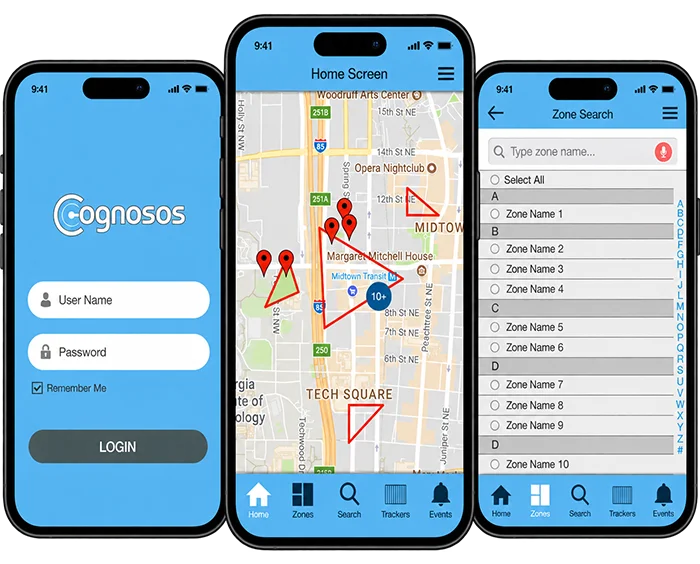








A contact database for the construction industry holding millions of professional and company records, kept current by the people in the trade.
Industry: Real Estate
- 93% Project Visibility
- 88% Workflow Accuracy
- 2X Construction Efficiency

Build intelligent software with machine learning development services designed to turn business data into predictions, recommendations, automation, and actionable insights.
Get Free Consultation250+ Products Delivered Worldwide
Our custom machine learning development services help businesses apply predictive models, intelligent automation, and data-driven decision-making to real products and workflows.

Develop machine learning models tailored to your business objectives, available datasets, and operational requirements. Build solutions designed to address specific challenges, recognize meaningful patterns, and support practical business applications.

Analyze historical and real-time data to identify trends, uncover patterns, and generate forecasts. Support better business planning, demand estimation, risk assessment, and operational decisions with data-driven insights.

Create recommendation engines that use available user behavior, preferences, and business data to suggest relevant products, content, services, or next actions. Deliver more relevant experiences aligned with customer needs and business objectives.

Develop computer vision applications that analyze images and video for classification, object detection, recognition, and visual inspection. Apply these capabilities to automate visual tasks, identify defects, and extract useful information from visual data.

Build NLP solutions that process, interpret, and analyze text, documents, and other language-based business data. Support applications such as document classification, information extraction, text analysis, and automated processing of written content.

Integrate machine learning models with existing applications, APIs, databases, dashboards, and business systems. Connect model outputs to operational workflows so predictions and analytical insights can support real-time applications and everyday business decisions.
Off-the-shelf models do not always fit specific business processes. Custom machine learning development services allow models and applications to be designed around your data, workflows, users, and operational objectives.
Develop predictive models that analyze historical and current data to support forecasting, risk assessment, demand planning, and more informed business decisions.
Build models that automatically categorize customers, documents, transactions, and operational data to improve data organization and reduce repetitive manual classification tasks.
Create recommendation engines that analyze user behavior, preferences, and business rules to suggest relevant products, services, content, or actions for individual users.
Use historical trends and relevant business data to forecast sales, inventory requirements, customer demand, staffing needs, and other operational priorities.
Identify unusual patterns and deviations across financial, customer, or operational data to help teams investigate potential risks, irregularities, and emerging issues.
Apply machine learning to repetitive workflows and data-driven tasks, helping systems recognize patterns, generate useful predictions, and support decisions with less manual intervention.
Explore how AI and machine learning development services can improve your products, workflows, and decision-making processes.
Book a Strategy Call
A contact database for the construction industry holding millions of professional and company records, kept current by the people in the trade.
Industry: Real Estate


An IoT asset tracking platform where dealerships locate any vehicle on the lot and run inventory checks without walking the rows manually.
Industry: Automotive


A credit repair platform people run themselves, with algorithms that read a report, flag inaccurate items, and walk users through disputing them.
Industry: FinTech


An FDIC insured banking app that collects daily step data, sends weekly reports, and feeds step averages into the systems pricing your rate.
Industry: Fitness


An accessible platform replacing a legacy catalog system, navigable by screen reader, keyboard or voice for braille and talking book readers.
Industry: Public Sector

They re-architected our platform to scale with our growth. We now release weekly instead of monthly, and performance has improved noticeably.

Their routing tool cut our manual dispatch work by about 40%. Our team adopted it quickly and it now runs our daily operations.


Our old process was slow and scattered across too many tools. The new platform put everything in one place, and our team picked it up without any training headaches.

AppZoro understood our vision and turned our fitness app idea into a practical product. Their communication, flexibility, and attention to detail really stood out.

Their student enrollment portal replaced our paper forms completely. Applications are processed faster and students get quick confirmations.

I had a good experience with Appzoro. Their mobile app development team is well-experienced and delivers everything on time. Overall good experience with them.
 Read Gracy louis's review on Google (opens in a new tab)


AppZoro Technologies is the best for mobile app development in Atlanta. Their developers team is very good.
Read Sofia hayat's review on Google (opens in a new tab)

Great experience with AppZoro Technologies. Highly recommended if you are looking for app developers in Atlanta.
Read Tiya Alves's review on Google (opens in a new tab)

Very happy with Appzoro! It is becoming a dominate leader in the industry. Great team and support!
Read Amit Sharma's review on Google (opens in a new tab)

Very Good, Trustworthy and Cost Effective service within timeline. I am really happy with AppZoro.
Read Sourav Chaterjee's review on Google (opens in a new tab)

Rated 4.7 out of 5 across verified client reviews.

Listed among leading custom software development companies in the United States.

Verified Atlanta software company, founded inside Atlanta Tech Village in 2016.

Ranked among the top app development agencies in the United States.

Listed among verified software development companies in the United States.

Patient apps, provider tools, wellness and activity tracking, built with privacy handling appropriate to health data.

Workout tracking, coaching and wearable sync, built around the retention problem every fitness product hits by week three.

Dispatch, live tracking, driver apps and fleet visibility. Convoy and Freedom Rideshare both run on this stack.

Payments, lending, credit and banking front ends, with security and audit requirements handled from architecture onward.

Listing search, MLS integration, virtual tours and agent tools that work as well in a car as at a desk.
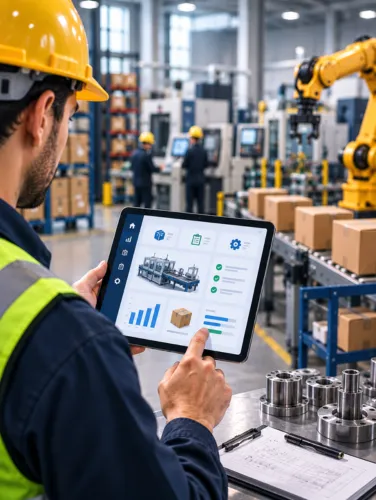
Floor-level apps for inventory, quality checks and machine data, built to work in plants where connectivity is not guaranteed.

Streaming platforms, fan engagement, booking tools and digital experiences, built to keep audiences engaged across every screen
Help small and medium-sized businesses use existing data to automate repetitive processes, understand customer behavior, and make better-informed operational and planning decisions.
Validate product ideas and introduce practical machine learning capabilities through focused MVPs, intelligent features, and integrations that support early product development and future growth.
Develop machine learning systems that support complex business operations, connect with a enterprise platforms, and turn large volumes of organizational data into actionable insights.
Build machine learning models around specific business objectives, available datasets, and operational requirements to support predictions, classifications, recommendations, and data-driven workflows.
From strategy and design to development, we handle everything your idea needs to become a real product.
Start Your Project TodayFrontend
 ReactJS
 Angular
 Vue JS
 TypeScript
 HTML5
 Figma
Backend
 Node.js
 Python
 PHP
 Java
 PostgreSQL
 MySQL
 REST
Microsoft
 .NET Core
 Azure
 GitHub
 GitHub Actions
Mobile
 Swift
 SwiftUI
 Kotlin
 Jetpack Compose
 Flutter
 React Native
 Android Studio
AI & ML
 OpenAI
 Anthropic Claude
 PyTorch
 Hugging Face
 AWS Bedrock
 Pinecone
 Milvus
Devops
 Docker
 Kubernetes
 Terraform
AWS
 Google Cloud
 Datadog

Define the business objectives, target outcomes, available datasets, success criteria, and technical requirements. Establish a clear project scope and identify the machine learning approach best suited to the intended use case.

Assess data quality, address inconsistencies, clean datasets, and identify relevant features for model training. Prepare structured, reliable data that supports effective learning and aligns with the project’s requirements.

Select suitable algorithms based on the business problem and available data, then train and refine models. Evaluate different approaches to improve predictive performance and meet defined business and technical requirements.

Evaluate model performance using relevant metrics, real-world scenarios, edge cases, and business expectations. Validate the model’s reliability and identify performance gaps before integrating it into the production environment.

Integrate the validated model into the production environment and connect it with relevant applications or workflows. Monitor performance over time and refine the model as incoming data, business needs, and operational requirements evolve.
Machine learning delivers greater value when integrated into your existing software, connecting applications and business systems with actionable predictions and insights.
Integrate machine learning models into web and mobile applications through APIs, enabling features such as predictions, recommendations, image processing, and intelligent automation within existing user experiences.
Connect ML models with CRM platforms, enterprise software, databases, and business dashboards. Make predictive scores, customer insights, and model outputs available within established workflows and operational systems.
Build structured data pipelines that support model training, inference, and ongoing updates. Connect relevant data sources and production systems to help maintain reliable data flows as business needs evolve.
Machine learning helps businesses turn data into practical insights, automate repetitive analytical tasks, and improve everyday decision-making. Its applications can support planning, customer experiences, and operational performance across different business functions.
When integrated into existing workflows, ML models help teams identify patterns, anticipate potential changes, and respond to business needs with greater clarity. These capabilities can be tailored to your data, objectives, and operational requirements.
Automate repetitive prediction and classification tasks to reduce manual effort and help teams make consistent, data-informed decisions across everyday business workflows.
Analyze historical data and emerging patterns to support demand forecasting, sales projections, inventory planning, and resource allocation based on business requirements.
Use customer behavior, preferences, and interaction data to deliver relevant recommendations, personalize experiences, and better understand changing customer needs.
Identify unusual patterns, highlight potential irregularities, and extract actionable signals from business data to help teams investigate issues and improve operational efficiency.
Explore how AI and machine learning development services can improve your products, workflows, and decision-making processes.
Talk to Our Experts TodayAlign machine learning initiatives with measurable business goals, operational priorities, and outcomes that support long-term growth.
Manage the complete machine learning lifecycle, from data preparation and model development to testing, deployment, and monitoring.
Design machine learning systems that accommodate growing datasets, increasing workloads, and evolving business requirements over time.
Build machine learning solutions tailored to your specific datasets, business workflows, technical requirements, and use cases.
Connect machine learning models with existing applications, APIs, databases, and business systems for seamless workflow integration.
Monitor model performance and refine algorithms as new data becomes available and business needs change.
AppZoro is a custom software and AI engineering company founded in 2016 and headquartered at Atlanta Tech Village. Over ten years we have delivered more than 250 products across 30+ industries with 50+ engineers, designers and QA specialists in house. Machine learning work sits inside that engineering practice rather than beside it, which matters because most ML projects fail at integration and monitoring, not at model training.
No. Most clients come to us with data sitting in production databases, spreadsheets and third party tools, and no one assigned to it. We handle assessment, cleaning, feature preparation and training, and we document the pipeline so your engineers can maintain it later. If you do have analysts or a data engineer, they usually join the discovery sessions and stay close to the feature work, since they know the quirks in your data better than anyone.
A focused model with clean existing data and a single integration point typically runs eight to fourteen weeks. A platform level build with multiple data sources, retraining pipelines and production monitoring usually runs four to nine months. Pricing follows three models: fixed scope for well specified work, a dedicated team at a monthly rate for evolving products, or engineers added to your existing team. Data preparation is quoted as its own line rather than buried in the build, because it is often the largest share of the effort.
Both are valid and we recommend against custom work where an API will do. Off the shelf models handle general language, speech and common vision tasks well. Custom machine learning development services make sense when the signal lives in your own data, when the decision is specific to your workflow, or when cost, latency or data residency rule out sending records to a third party. We make that call during discovery and show the comparison rather than defaulting to the larger build.
Accuracy targets are set against the business decision the model supports, not against a benchmark number. A fraud flag that misses a case costs something very different from a recommendation that lands badly, so we define the acceptable error profile with you up front and test against it. Validation covers relevant metrics, realistic scenarios and edge cases, and we report where the model is weak rather than reporting one headline figure.
Through APIs into your applications, and through direct integration with CRM platforms, databases, dashboards and internal tools. Predictions and scores surface inside the systems your teams already work in, so nobody has to open a separate interface to act on them. We build the data pipelines that feed training and inference at the same time, so the connection holds as data volumes grow.
You own all of it from the first commit. Models, training code, pipelines, documentation and data sit in your repository and your cloud account, with no licensing tail. After launch we monitor performance against live data, because models degrade as customer behaviour and operating conditions shift, and we retrain or adjust on an agreed cadence with a named contact and a quarterly review.
That is the normal starting point, not the exception. The first phase is a data assessment that checks volume, labelling, gaps and bias before anyone selects an algorithm. If the data cannot support the use case yet, we say so at that point and either narrow the problem to something the data can answer, or scope a collection and instrumentation phase first. Training a model on data that is not ready produces confident predictions that are quietly wrong, which is worse than no model.
Book your free consultation with a technical lead, not a salesperson.