

If you look at how people buy and sell today, one thing becomes obvious very quickly. Marketplaces are taking over a large part of digital commerce. Years ago, people often preferred buying directly from brands because they trusted official stores more than third party sellers. Today the situation looks different.
Let’s say a new marketplace launches for home cleaning services. At first, it may only have a few service providers. But as more cleaners join the platform, customers start noticing the wider selection. More customers then attract even more service providers. Over time the platform becomes more useful for everyone.
Several industry forecasts suggest that by 2030, online marketplaces could handle close to 70% of global online retail transactions. From a business perspective, marketplace platforms have a powerful advantage.
By the end of this guide, you should have a clear understanding of how marketplace platforms are built and what it takes to make marketplace app development successful.
What Is an Online Marketplace App?
Users of marketplace applications access their services throughout the day without considering how the underlying technology functions. The experience usually feels simple. The user experience starts when you launch the app and enter your desired item and then view the available products.
The system which operates behind the basic interface handles the control of multiple users together with their product listings and transaction activities. Online marketplace app development refers to building a digital platform where multiple sellers can offer products or services while buyers browse and purchase through a single interface.
The platform itself usually does not own the products. The platform functions as a space where people conduct their buying and selling activities. The digital marketplace operates like a busy city market because it lets vendors display their products. The vendors establish their stalls which allow them to showcase their products while they connect with their customers.
Types of Marketplace Apps Businesses Can Build
Not every marketplace works the same way. The structure often depends on who the buyers are and who the sellers are. Some marketplaces connect businesses with customers. Others connect companies with suppliers. Understanding these models helps businesses choose the right direction before starting development.
B2C Marketplace Apps
Business to consumer marketplaces connect companies with individual buyers.
Retail stores frequently use these platforms as their main selling method. Customers use a single platform to examine multiple products which different vendors provide.
The main advantage of this model is variety. A customer searching for running shoes discovers multiple options from various sellers which exist within the same location.
B2C platforms develop their systems to help users discover new products. The system needs advanced search filters together with recommendation engines and rapid checkout functions which establish their value.
B2B Marketplace App Development
B2B marketplaces operate at a different level. The platform enables business customers to make direct purchases from various enterprises.
These platforms mainly concentrate on conducting wholesale transactions while establishing supplier networks and executing procurement operations.
A restaurant chain uses B2B marketplaces to locate suppliers who provide them with ingredients and kitchen equipment and packaging materials. The platform enables businesses to compare different options without needing to reach out to each supplier individually.
B2B marketplace app development usually requires features that support large scale transactions.
C2C Marketplace Platforms
Consumer to consumer marketplaces work a little differently. These platforms allow individuals to buy and sell directly with each other.
You might see this model used for second hand products, collectibles, local services, or rental items.
Someone might sell an old camera they no longer use. Another person might rent out camping gear for a weekend trip. The platform simply connects both users.
However, C2C platforms face a unique challenge. People are dealing with strangers, so trust becomes extremely important.
Why Businesses Invest in Marketplace App Development
The marketplace model creates an ecosystem. Once both sides of the platform begin to grow, the entire system becomes more valuable. When the balance works well, the platform almost grows on its own.
Let’s look at the main reasons businesses invest in marketplace platforms.
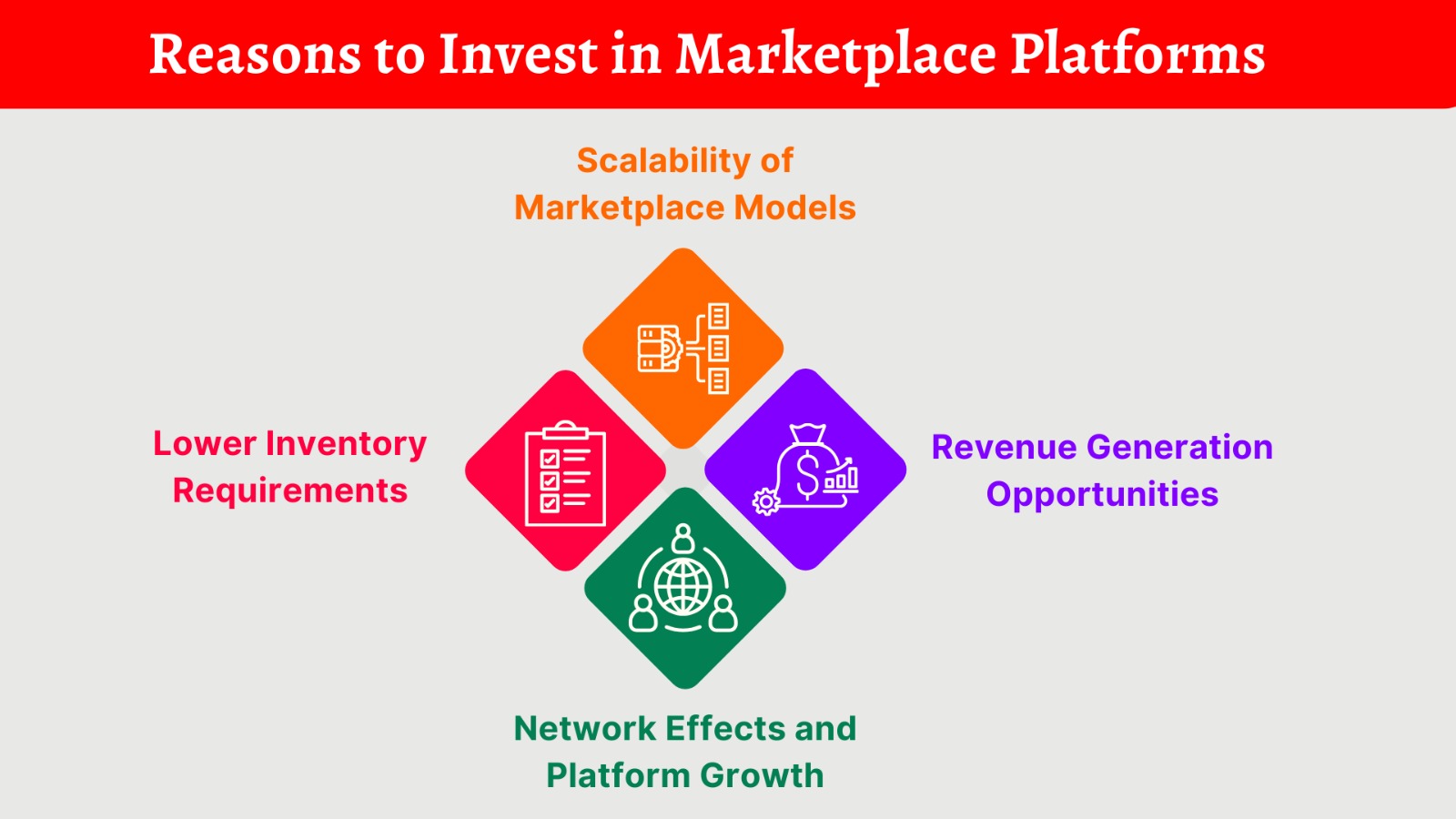
Scalability of Marketplace Models
One of the biggest advantages of a marketplace platform is scalability. Traditional online stores grow only when the business adds more products, inventory, or warehouses. That process can become expensive very quickly.
A marketplace works differently.
Think about a platform that focuses on service marketplace app development. Instead of hiring hundreds of professionals, the app allows independent service providers to join the platform and list their services. As more providers sign up, the platform grows without the company directly expanding its workforce.
This structure allows businesses to scale faster with fewer operational limits.
Revenue Generation Opportunities
Marketplace platforms also offer multiple revenue streams. That flexibility makes them attractive for startups as well as established companies.
Most platforms begin with a commission model. Every time a transaction happens, the platform collects a percentage of the sale.
But commissions are only one option. Many marketplaces also generate revenue through:
Listing fees for sellers who want to publish products or services
Subscription plans for premium seller accounts
Featured listings that increase product visibility
Advertising placements inside the app
For example, a platform built around car marketplace app development may charge dealers a monthly subscription to list vehicles while also taking a small percentage when a sale happens.
Network Effects and Platform Growth
The platform value increases through every new user who joins the system. More sellers bring more choices. More buyers create more demand.
A platform exists for freelance designers which will launch with an initial user base of designers and clients. At first, the platform will operate with only a limited number of designers and clients. Growth might feel slow.
The platform provides clients with increased designer options through every new designer who joins. The process starts with one client who brings others to the platform. The platform eventually establishes itself as the main destination for design work.
The same pattern exists in various industries which include transportation, hospitality, retail, and B2B marketplace app development.
Lower Inventory Requirements
Another practical advantage of marketplaces is that the platform owner usually does not hold inventory.
Running a traditional retail business often means managing warehouses, shipping logistics, and unsold products. These factors increase risk and operational complexity.
A marketplace reduces those responsibilities. Sellers manage their own inventory while the platform focuses on technology, user experience, and secure transactions.
Take an example from NFT marketplace app development. The platform does not store digital artwork itself. Instead, creators mint their assets on the blockchain and list them through the platform. The marketplace simply facilitates the transaction between the creator and the buyer.
This model reduces operational costs while still allowing the platform to generate revenue from each transaction.

Key Features of a Successful Marketplace App
Let’s walk through each category.
User Features
Buyers act as the essential component that drives the operation of every marketplace. People will leave a website to explore other options when its user experience becomes confusing and operates at slow speeds. The user interface and fundamental browsing elements demand precise execution.
User Registration and Profiles
User accounts function as the foundation for all marketplace operations. Registration enables users to establish their profiles while handling their personal data and monitoring their system usage.
Advanced Search and Filters
Marketplaces display thousands of product listings which create a need for users to find specific items. Users face difficulties discovering necessary items because the platform lacks effective search capabilities. Advanced filters enable buyers to limit their search results according to price, location, category, ratings, and available items.
Wishlist and Favorites
Many users browse marketplaces without making an immediate purchase. Users can save desirable products through wishlist functionality for future examination.
Order Tracking
Order tracking keeps buyers informed about delivery status, appointment times, or transaction progress. Upgrading the system to provide better customer updates will benefit our operations by decreasing support needs and establishing customer trust.
Ratings and Reviews
Marketplace platforms depend heavily on reviews to operate their systems. Buyers use customer feedback from previous transactions to assess seller reliability. Sellers who provide good service naturally rise to the top, while poor performers struggle to attract customers.
Seller Features
SSellers require different tools to perform their tasks. The platform should provide them with simple tools to handle their business operations which include listing management and order tracking and performance assessment.
Seller Onboarding
The onboarding process introduces new sellers to the platform. Account verification and profile establishment and marketplace policy agreement make up the standard process.
Product or Service Listing Management
Sellers on product marketplaces need to upload product images and create product descriptions and establish product prices. Service marketplace app development requires providers to list their available services along with their service schedules and the areas they serve.
Inventory Management
Sellers need to track product stock levels and make product availability updates while receiving notifications about product restocking needs. Sellers need these tools to prevent situations where they sell more products than they possess which results in order cancellations.
Order and Payout Management
Sellers need to see all their transaction details at all times. Through the dashboard system users can monitor their upcoming orders and completed sales while checking their unpaid amounts and their payment record.
Analytics Dashboard
Professional sellers use data analysis to enhance their business results. The analytics dashboard displays product view data and conversion rate information and top selling products and customer feedback data.
Admin Panel Features
The platform enables direct interactions between buyers and sellers while platform administrators handle the ecosystem operations from their hidden spaces. The platform requires a strong admin panel system which enables administrators to maintain order and deliver uninterrupted platform operations.
User Management
Administrators must be able to view, verify, or suspend user accounts when necessary. The control system needs to function at all times because platforms depend on it to handle their customer base which consists of multiple thousands of users.
Commission Management
The marketplace generates its income through commission-based transactions. The admin panel enables platform owners to establish commission rates which they can modify as required.
Dispute Handling
Not every transaction goes perfectly. Buyers sometimes receive damaged products while services fail to deliver what they promised. Administrators use dispute management tools to investigate complaints while maintaining contact with both sides until they reach an equitable solution.
Fraud Detection
Fraud detection systems track suspicious activities which include fake listings and irregular payment behavior together with duplicate user accounts. The platform benefits from early detection because it safeguards both users and its brand image.
Platform Analytics
The platform requires data analysis to evaluate its operational performance. The analytics tools provide essential metrics which show user expansion and transaction growth and seller performance and revenue development.
How to Develop a Marketplace App: Step by Step Process
At first glance, a marketplace app looks simple. Users search for products or services, compare options, and complete a transaction. In reality, the platform handles multiple systems at once such as listings, payments, user accounts, and communication.
That is why founders usually spend time learning how to develop a marketplace app before jumping into development. A structured approach helps reduce risk and keeps the project focused.
Here are the key steps involved in the process.
1. Market Research and Business Model Planning
Every strong marketplace starts with research. If the platform does not solve a clear problem, users will simply ignore it.
Instead of targeting everyone, successful platforms usually focus on a specific niche.
Study existing platforms in the same space. Look at:
Features they offer
Pricing and commission models
User reviews and complaints
This step also helps estimate the expected marketplace app development cost because it reveals how complex the platform needs to be. Understand both sides of the marketplace.
Ask simple questions
Who are the buyers
Who are the sellers
What problem does the platform solve
For example, B2B platforms may require bulk orders while consumer marketplaces may focus on easy browsing and reviews.
2. Define the Marketplace Model
The revenue model shapes how the platform operates.
Choosing the right structure early helps guide the entire online marketplace app development strategy. Common models include:
Commission Based Model
The platform earns a percentage from every successful transaction.
Subscription Model
Sellers pay a monthly or yearly fee to access the marketplace.
Listing Fee Model
Sellers pay to publish each listing. This model is common in real estate and vehicle marketplaces.
3. Create a Marketplace MVP
Many startups try to build a full platform immediately. That usually increases time and cost.
Instead, launch a Minimum Viable Product.
Test Product Market Fit
After launch, real users interact with the platform. Their feedback helps identify:
Missing features
User experience problems
Opportunities for improvement
This step allows teams to refine the platform before investing heavily.
4. UI and UX Design for Marketplace Apps
Design directly affects how users interact with the platform. If the interface feels confusing, people leave quickly.
Designers map how users move through the app. Strong UX design improves engagement and conversion rates.
Typical buyer journey
Search listings
Compare options
Read reviews
Complete purchase
Typical seller journey
Create listings
Manage orders
Track sales
Smooth checkout flow
5. Marketplace App Development
This stage turns the idea into a working product. Some businesses build internally, while others partner with a marketplace app development company.
Frontend Development
Backend Architecture
API Integrations
6. Payment Gateway Integration
Payments sit at the center of every marketplace platform. The system must handle transactions securely for multiple sellers.
Secure Transactions
Encryption and secure gateways protect financial data.
Escrow Systems
Payments stay temporarily locked until the transaction completes successfully.
Multi Vendor Payments
The platform automatically splits payments and sends earnings to individual sellers after deducting commissions.
7. Testing and Quality Assurance
Before launch, the platform must go through thorough testing.
Main testing types include:
Security Testing
Detects vulnerabilities that could expose sensitive data.
Performance Testing
Simulates high traffic to check how the system performs.
Usability Testing
Real users test the app to identify confusing workflows or design issues.
8. Launch and Deployment
Once testing is complete, the marketplace is ready to go live.
The mobile application must pass store guidelines related to security, privacy, and performance before publication.
Some platforms also integrate advanced technologies such as AI application development to improve recommendations and search accuracy. Teams that build AI powered app features can personalize product suggestions and detect suspicious activity more effectively.
Technologies Used in Online Marketplace App Development
Technology choices influence performance, scalability, and development speed. The exact stack depends on the project requirements, but several tools appear frequently in modern marketplace platforms.
Frontend Technologies
Frontend frameworks help developers build responsive and interactive mobile applications.
React Native allows developers to build cross platform apps using JavaScript. Many startups choose it because it supports both iOS and Android development with a single codebase.
Flutter, developed by Google, has also become popular because it delivers smooth performance and fast UI rendering.
Native languages like Swift for iOS and Kotlin for Android provide strong performance and deeper integration with device features.
Backend Technologies
The backend layer supports user management, transactions, messaging systems, and database operations.
Node.js is widely used for real time applications because it handles large numbers of simultaneous connections efficiently.
Django offers strong security features and a structured framework that suits complex platforms.
Ruby on Rails remains popular for startups because it enables rapid development.
Laravel provides a clean architecture and works well for scalable web platforms.
Database Solutions
Marketplace platforms handle large volumes of data including user profiles, listings, orders, and reviews.
PostgreSQL offers strong relational database capabilities and works well for structured data.
MongoDB provides flexible document based storage that adapts well to evolving applications.
Firebase offers real time database features that simplify synchronization between users.
Cloud Infrastructure
Cloud platforms provide the scalability required for growing marketplaces.
AWS offers a wide range of tools including storage, server management, and analytics.
Google Cloud supports powerful AI services, which can help teams build AI powered app features such as smart recommendations or fraud detection.
Microsoft Azure provides strong enterprise level infrastructure and integrates well with many business tools.
Cloud platforms allow developers to scale resources as the user base grows, which is essential for any marketplace platform.
Marketplace App Development Cost
One of the first questions founders ask before starting a project is simple. How much does it cost to develop a marketplace app?
The honest answer is that costs vary quite a bit. Two marketplace platforms can look similar on the surface but require very different levels of development effort. The price depends on the features you want, the technology stack, and the team building the product.
For example, a small local services platform might require a relatively simple system. On the other hand, a large platform supporting thousands of vendors, real time payments, and advanced analytics will need much deeper development work.
MVP Marketplace Platform
Estimated cost: $20,000 to $50,000
An MVP focuses on core functionality. It helps startups test their idea without investing heavily in advanced features.
Mid Level Marketplace Platform
Estimated cost: $50,000 to $120,000
This version includes more refined features such as advanced search, vendor dashboards, analytics tools, and improved security.
Advanced Marketplace Platform
Estimated cost: $120,000 and above
Large scale platforms often require complex backend architecture, AI based systems, and high performance infrastructure capable of supporting thousands of users simultaneously.
Factors That Affect Marketplace App Development Cost
1. App Complexity
Complexity is usually the biggest cost driver.
A basic marketplace platform might include only the core features. Users can register, sellers can list products or services, and transactions happen through a simple payment system.
However, modern platforms often go far beyond these basics.
Advanced marketplaces may include AI based recommendations, real time messaging, smart search, and fraud detection systems. Some companies even integrate blockchain features, especially in NFT marketplace app development where digital assets must be verified and securely transferred.
Companies working with an Artificial intelligence app development company sometimes integrate machine learning systems that analyze user behavior and improve recommendations over time.
2. Platform Choice
The platform you choose also affects development cost.
iOS Development
Apps built specifically for iPhones use Apple technologies such as Swift. Native development usually provides strong performance and smoother integration with Apple devices.
Android Development
Android apps rely on languages like Kotlin and support a wider range of devices. Because Android devices vary greatly, developers often spend extra time optimizing the app for different screen sizes and hardware.
Cross Platform Development
Many startups choose cross platform frameworks such as Flutter or React Native. These tools allow developers to build a single codebase that runs on both iOS and Android.
Cross platform development usually reduces cost and speeds up launch time, which makes it a practical choice for early stage marketplace products.
3. Development Team Location
Where the development team is located also influences the final cost.
For example:
North America development teams typically charge higher rates
European teams fall somewhere in the middle
Asian development teams often provide more cost efficient options
Many businesses work with a custom mobile app development company that offers global development teams. This approach balances cost, expertise, and project management.
4. Features and Integrations
The more integrations your marketplace requires, the higher the development cost will be.
Some common integrations include:
Payment gateways
Shipping providers
Notification systems
Analytics tools
Social media logins
Specialized platforms may require additional features. For example, service marketplace app development often includes scheduling systems and location based search. Meanwhile, car marketplace app development may require vehicle comparison tools, inspection reports, and financing integrations.
Challenges in Marketplace App Development
Businesses that want to develop a marketplace app often discover that success depends as much on strategy as it does on technology. Let’s look at some of the common hurdles teams face during online marketplace app development.
Building Supply and Demand at the Same Time
One of the toughest problems for a new marketplace is the chicken and egg situation. Buyers will not join if there are no sellers, and sellers hesitate to join if there are no buyers.
Many startups solve this by focusing on one side first. For example, a service platform might start by onboarding a group of trusted providers before launching the app publicly. Once services are available, customers feel more confident joining the platform.
A good marketplace app development company often recommends starting with a tight niche because it allows the platform to grow more naturally.
Payment Security
Payments sit at the center of every marketplace. When money moves between buyers and sellers, the system must protect both sides.
Security issues can damage a platform’s reputation quickly. If users feel uncertain about transactions, they may stop using the platform altogether.
To prevent this, marketplaces usually rely on secure payment gateways, encrypted transactions, and strict data protection standards.
Strong payment architecture increases development effort and can influence the overall marketplace app development cost, but it is essential for long term success.
Trust and Verification
Trust is another major factor in marketplace platforms. In many cases, users interact with people they have never met before. That is why modern platforms invest heavily in verification systems. These may include identity checks, document verification, review systems, and user ratings.
Even simple features such as profile photos and transaction history can improve trust between users.
Companies that offer marketplace app development services often emphasize trust building features early in the project because they directly influence user retention.
Scaling Infrastructure
Early stage marketplaces usually begin with a small user base. However, successful platforms can grow quickly. A system designed for a few thousand users may struggle when traffic suddenly increases.
Scaling infrastructure requires strong backend architecture and flexible cloud resources. Planning for scale from the beginning helps avoid expensive technical changes later in the Mobile app development process.
Future Innovations Shaping Marketplace App Development
Technology continues to reshape how digital platforms operate. Companies exploring the future of online marketplace app development are already experimenting with several exciting innovations.
AI Powered Recommendations
Artificial intelligence has become a powerful tool for digital platforms. Many marketplaces now use machine learning algorithms to analyze user behavior and recommend relevant products or services.
For example, if a user frequently browses home decor products, the platform can automatically suggest similar items. This improves the user experience and increases the chances of completing a purchase.
Businesses investing in AI application development often see better engagement because users discover products more easily.
Blockchain Marketplaces
Blockchain technology is beginning to influence digital marketplaces as well. Instead of relying on centralized systems, blockchain based platforms record transactions on distributed ledgers.
Although blockchain marketplaces are still evolving, many startups are exploring this space as part of their innovation strategy.
Voice Commerce
Voice technology is slowly entering the marketplace ecosystem. Smart assistants and voice enabled devices allow users to search for products, place orders, or book services using simple voice commands.
Imagine someone cooking in the kitchen and asking their device to order groceries without touching their phone. That type of convenience could reshape how users interact with marketplace platforms in the future.
AR Product Visualization
Augmented reality is another technology gaining attention in the marketplace world.
AR allows users to visualize products in real environments before buying them. Furniture marketplaces already use this technology to let customers see how a sofa might look in their living room.
Decentralized Marketplaces
Another interesting development is the rise of decentralized marketplaces. These platforms operate without a single controlling authority.
Instead, users interact directly through blockchain based systems and smart contracts. The idea is to create open marketplaces where transactions occur transparently and without intermediaries.

Why Choose AppZoro Marketplace App Development Services?
Building a marketplace platform is not just about writing code.That is why many businesses choose to work with an experienced development partner rather than handling everything internally.
AppZoro focuses on building reliable marketplace platforms across industries. Whether a company wants to launch a niche service platform, an automotive marketplace, or a complex B2B ecosystem, the team approaches each project with a structured development strategy.
Marketplace Consulting
Every successful platform begins with the right strategy. Marketplace consulting helps businesses refine their idea before development begins.
During this stage, the team works closely with founders and product managers to understand the target market, define the platform model, and identify the most important features.
For example, a company planning car marketplace app development may need vehicle verification systems, inspection reports, and advanced search filters. On the other hand, service marketplace app development usually requires scheduling systems, location based search, and service provider ratings.
MVP Development
Launching a full scale platform on day one is rarely necessary. In many cases, it is smarter to begin with a smaller version of the product and expand later. AppZoro helps businesses build MVP versions of their marketplace platforms so they can test the concept quickly.
An MVP usually includes:
User registration and profiles
Seller onboarding
Product or service listings
Basic search and filters
Secure payment integration
Full Cycle Development
Once the product concept is validated, the next step is full scale development. This stage covers the entire lifecycle of the platform.
A full cycle approach usually includes:
Product strategy and technical planning
UI and UX design
Backend architecture development
Mobile and web app development
API integrations and payment systems
Testing and deployment
Marketplace Modernization
Some businesses already operate marketplace platforms but struggle with outdated technology or poor performance.
In these cases, modernization becomes the priority. AppZoro helps companies upgrade existing platforms by improving the technology stack, redesigning user interfaces, and optimizing system performance.
For example, an older marketplace might migrate to a cloud based infrastructure or integrate smarter recommendation systems through collaboration with an Artificial intelligence app development company.
Maintenance and Support
Launching the platform is only the beginning. Marketplace apps require continuous monitoring, updates, and improvements. AppZoro provides long term maintenance and support services to ensure platforms remain stable as user activity grows.
Companies that rely on enterprise mobile app development services often require ongoing support to maintain complex systems and handle high user traffic.
Wrapping Up
Marketplace platforms have changed how digital businesses operate. Instead of selling products directly, companies now build ecosystems where buyers and sellers interact through a shared platform.
However, creating a successful marketplace requires careful planning and thoughtful execution. Building a marketplace requires expertise across several areas including mobile development, backend architecture, payment systems, and user experience design.
Working with an experienced custom mobile app development company like AppZoro allows businesses to move faster while avoiding common development challenges.
In the end, businesses that approach marketplace development with patience, strong technology, and a long term vision are the ones most likely to build platforms that grow into thriving digital ecosystems.