
Healthcare has always been data rich, but until recently much of that data remained underused. For more than fifty years hospitals maintained patient records together with diagnostic reports and clinical notes but their data remained inaccessible for analytical purposes. The current state of affairs presents a complete transformation. The worldwide healthcare system has undergone rapid digital transformation which introduces a new intelligence system based on artificial intelligence technology.
The conversation around AI in healthcare industry has moved beyond experimental labs.
Healthcare organizations conduct AI solution testing in which 75 percent of them participate. The global AI in healthcare market size is projected to exceed 180 billion dollars by 2030 according to industry research. Over the last five years venture capital funding for health artificial intelligence startups has expanded to reach billions in annual investments.
Hospitals that use AI diagnostic tools experience better detection results for both cancer and heart disease. Let’s find out more on this!
Basic Understanding of AI in the Healthcare Industry
The majority of healthcare leaders from ten years ago considered artificial intelligence to be a technology that would become available in the future. The technology has developed into a usable tool which hospitals now operate day-to-day.
The current situation presents a complete transformation from previous times.
AI technology has become a standard element of medical operations in healthcare organizations. AI solutions operate in hospitals and research facilities and telehealth services to address real-world challenges.
- Radiologists use AI systems to review medical scans faster.
- Pharmaceutical companies rely on AI to speed up drug research.
- Telemedicine platforms use AI symptom checkers to guide patients before consultations.
- Hospitals use AI systems to manage scheduling and reduce paperwork.
- The healthcare system receives silent benefits from these technological advancements.
Healthcare organizations have started to realize the importance of AI because they produce enormous quantities of information every single day. Hospitals manage multiple types of data which include patient records and diagnostic images and lab reports and wearable device data and research databases.
The process of handling all that data requires extreme effort because it needs to be done by people.
Hospitals are also using AI to reduce administrative tasks like appointment scheduling and documentation. The healthcare staff will have more time for patient care when systems handle these tasks through automation.
This is where AI and machine learning in healthcare make a real difference. These technologies help doctors analyze complex data and identify patterns much faster.
Over time, these improvements increase the impact of AI in healthcare industry operations by improving efficiency and reducing costs.
What is AI in Healthcare?
The definition of artificial intelligence describes computer systems that learn from data, which is the essence of this technology.
The traditional software system executes programmed functions according to its established programming rules.
AI operates through a different system of functions.
AI systems process extensive data sets to discover trends which they use to forecast future outcomes. With every additional data point they process, their ability to identify patterns improves.
The combination of AI and ML technologies helps doctors through computer-based systems in their decision-making process.
The concept requires explanation through a basic demonstration.
AI systems require thousands of chest X-ray images for training purposes. The system acquires knowledge about healthy lung patterns and early disease indicators through its learning process.
The AI system examines the new scan after its processing. The system uses its scanning abilities to find parts of the image which require special focus.
The doctor still makes the final diagnosis. The AI system assists doctors by providing fast access to important patterns.
The role of AI in healthcare industry have gained importance because they provide valuable assistance for hospital operations.
Traditional healthcare software systems function as patient data storage solutions. AI systems possess advanced capabilities which allow them to process data and produce valuable information that assists doctors in their decision-making.
Types of Healthcare Data That Power AI Systems
AI systems are only as capable as the data they learn from. Healthcare, fortunately, generates some of the richest and most varied data of any industry. Here is what those systems are actually working with:
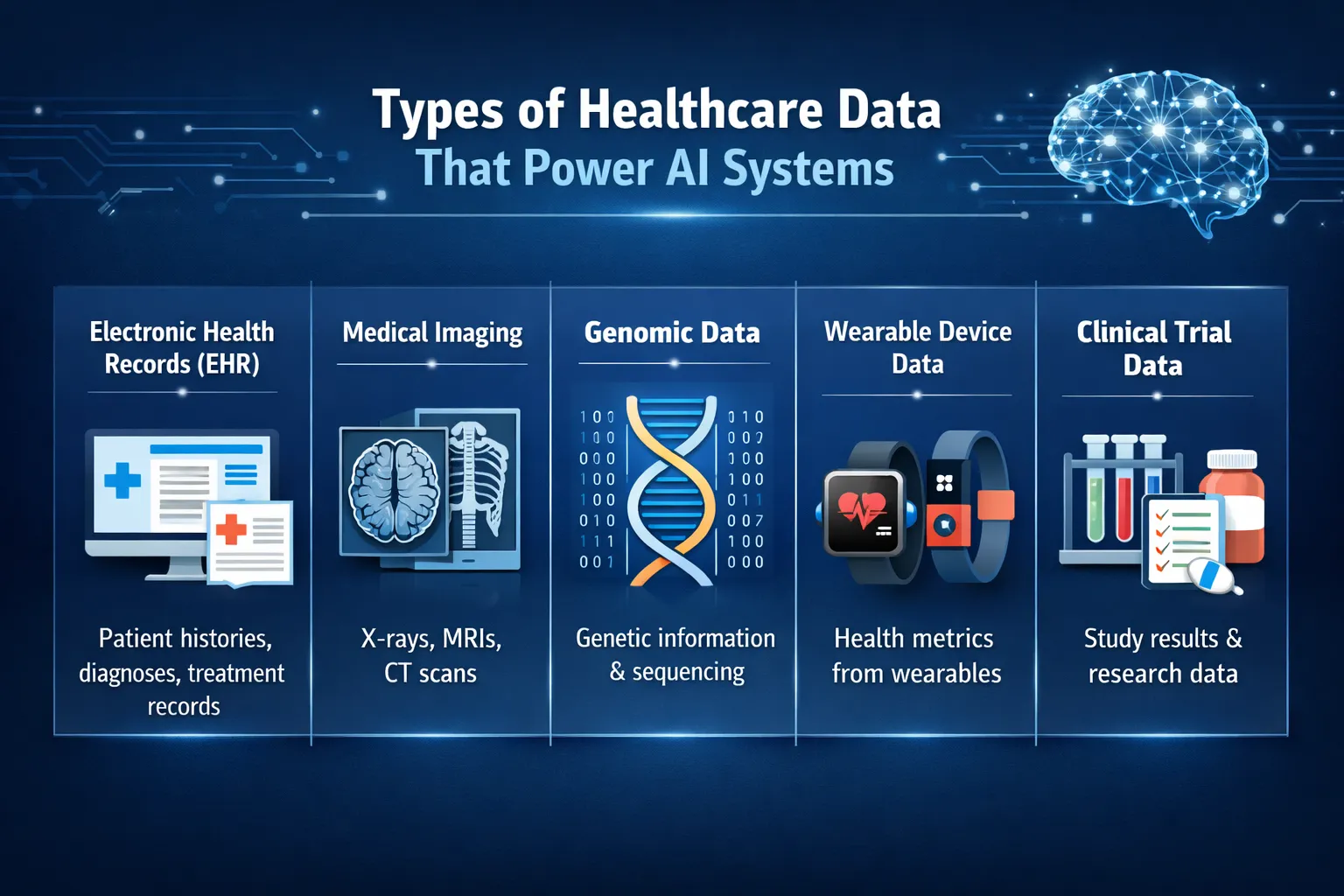
Electronic Health Records (EHR)
AI systems analyze these records to identify patterns in disease progression, treatment response, and clinical risk. The challenge is that EHR data is often messy, inconsistently structured, and spread across systems that do not communicate well with each other. A significant portion of real healthcare AI work involves cleaning and standardizing this data before it can be used effectively.
The most widely used data source for healthcare AI. EHR data includes:
- Patient demographics and medical history
- Diagnoses, medications, and allergies
- Lab results and vital signs over time
- Clinical notes written by physicians and nurses
- Treatment plans and care outcomes
Medical Imaging
This is where some of the most clinically validated AI in healthcare examples have emerged, with deep learning systems matching or exceeding specialist accuracy on specific diagnostic tasks in multiple published studies. Radiology, pathology, and dermatology generate vast libraries of visual data:
- X-rays for detecting fractures, infections, and tumors
- CT scans for detailed cross-sectional anatomy
- MRI scans for soft tissue and neurological assessment
- Pathology slides showing tissue samples at cellular level
- Retinal photographs for ophthalmological screening
Genomic Data
A single whole-genome sequence generates around 100 gigabytes of raw data. AI systems analyze this information to:
- Identify genetic markers associated with disease risk
- Predict how individual patients will respond to specific medications
- Guide precision oncology treatment selection
- Support rare disease diagnosis where clinical presentation alone is insufficient
Genomic AI is one of the most data-intensive and technically demanding areas in the field, but it is also where the potential for truly personalized medicine is most direct.
Wearable Device Data
AI in healthcare industry analyzing this real-time data can detect early signs of atrial fibrillation, predict deterioration in patients with chronic conditions, and provide longitudinal health monitoring that no clinic visit could replicate. Smartwatches, fitness trackers, and clinical-grade wearable sensors collect continuous streams of physiological data:
- Heart rate and heart rate variability
- Sleep patterns and quality metrics
- Blood oxygen saturation
- Physical activity and movement patterns
- ECG readings from consumer and clinical devices
Clinical Trial Data
Pharmaceutical companies generate highly structured, rigorously collected datasets during drug development.This data type is central to the AI innovations in healthcare pharmaceutical space, where the potential to compress drug development timelines from decades to years has major implications for patients waiting for treatments that do not yet exist.
AI tools working with clinical trial data:
- Identify patient subgroups that respond differently to treatments
- Predict adverse effects earlier in the development pipeline
- Accelerate trial design and patient recruitment
- Surface safety signals faster than traditional statistical methods
Let’s Understand the Evolution of AI in Healthcare Industry
Artificial intelligence did not suddenly appear in hospitals. The technology has developed slowly over several decades. As computers became more powerful and healthcare data became easier to collect, AI gradually moved from research experiments to real medical tools.
The idea was simple.
Medical experts shared their knowledge, and researchers converted that knowledge into computer rules.
For example:
- If a patient has certain symptoms
- and certain lab results
- then the system suggests a possible diagnosis
One famous example was the MYCIN system developed at Stanford University. It helped doctors identify bacterial infections and recommend antibiotics.
However, these early systems had limitations. They relied entirely on manually written rules. Medicine is constantly evolving, so updating thousands of rules became difficult. Even so, these experiments laid the foundation for modern AI innovations in healthcare.
Rise of Medical Imaging AI
The next major breakthrough happened when machine learning began working with medical images. Radiology departments generate massive numbers of scans every day. Doctors must analyze these images carefully to detect diseases.
Machine learning algorithms turned out to be very good at recognizing patterns in images. By studying thousands of medical scans, AI models learned to detect signs of conditions such as:
- tumors
- fractures
- lung infections
- internal bleeding
This development became one of the most important AI trends in healthcare, especially in diagnostic departments where large volumes of images must be analyzed. Healthcare platforms built by experienced AI & ML development company teams are now integrating these capabilities into modern clinical software.
Key Applications of AI Transforming Daily Healthcare Practices
Let’s look at some important ways AI is already being used in healthcare.
Medical Imaging Analysis
Medical imaging is one of the most common areas where AI is used today.
Each scan contains important medical details. Reviewing them carefully takes time and concentration.
AI systems help by analyzing these images quickly. They highlight areas that might show signs of disease so doctors can review them closely.
This acts like a second check for the doctor.
Some common AI in healthcare examples in imaging include:
- Detecting tumors in breast scans
- Identifying early stroke signs in brain scans
- Finding lung infections in chest scans
Predictive Healthcare Analytics
AI is also helping doctors predict health problems before they become serious.
Predictive systems study patient information such as:
- medical history
- lab test results
- lifestyle habits
- genetic data
By analyzing large datasets, AI can estimate the risk of certain diseases.
For example, an AI system may predict whether a patient has a higher chance of developing heart disease.
This helps doctors take early action. They may recommend lifestyle changes, medication, or additional tests.
Because of this, predictive tools are becoming one of the most useful enterprise AI solutions. They help shift healthcare from treating diseases to preventing them.
Drug Discovery and Development
Creating a new medicine usually takes many years of research and testing.
Scientists must analyze thousands of chemical compounds before finding one that works safely.
AI is helping speed up this process.
AI systems can quickly scan millions of chemical combinations and identify promising drug candidates. They also simulate how molecules behave inside the body.
This allows researchers to focus on the most promising options first.
Many pharmaceutical companies now use advanced AI products in healthcare to support drug discovery and reduce development time.
Clinical Decision Support Systems
Doctors often need to analyze a lot of patient information before making medical decisions.
Clinical decision support systems help by reviewing patient data and providing helpful insights.
These systems analyze things like:
- patient history
- symptoms
- test results
- previous case data
The AI system then suggests possible diagnoses or treatment options based on similar cases.
Doctors still make the final decision, but AI helps them review complex information more quickly.
Several well known examples of AI in healthcare industry come from these systems that assist doctors during diagnosis and treatment planning.
Administrative Automation
Healthcare professionals spend a large amount of time on administrative work.
This includes tasks such as:
- booking appointments
- updating patient records
- writing clinical notes
- handling insurance paperwork
AI tools can automate many of these processes.
This is another reason why many healthcare organizations are adopting AI apps in healthcare to improve daily operations.
AI Powered Patient Monitoring
Patient monitoring has improved a lot with modern technology.
Wearable devices and remote monitoring tools can track health data continuously. These devices collect information such as:
- heart rate
- blood pressure
- oxygen levels
- sleep patterns
AI systems analyze this data in real time.
If the system detects unusual patterns, it can alert doctors immediately. These systems help patients stay safer while allowing doctors to monitor health conditions even outside the hospital.
How AI Enhances Diagnostic Accuracy and Speed in Medicine
Diagnosis sits at the heart of healthcare. A correct diagnosis guides treatment decisions, determines patient outcomes, and often influences how quickly someone can recover. Yet even the most experienced doctors work under intense pressure. They must review complex medical data, interpret images, analyze lab results, and make decisions quickly.
This is where artificial intelligence begins to make a real difference.
Modern AI systems can process enormous datasets in seconds. They recognize patterns, detect subtle anomalies, and assist clinicians in ways that traditional software simply cannot. When used correctly, these tools strengthen medical decision making rather than replace it.
Understanding How AI helps in healthcare industry becomes clearer when we look at specific diagnostic areas where AI is already making a measurable impact.
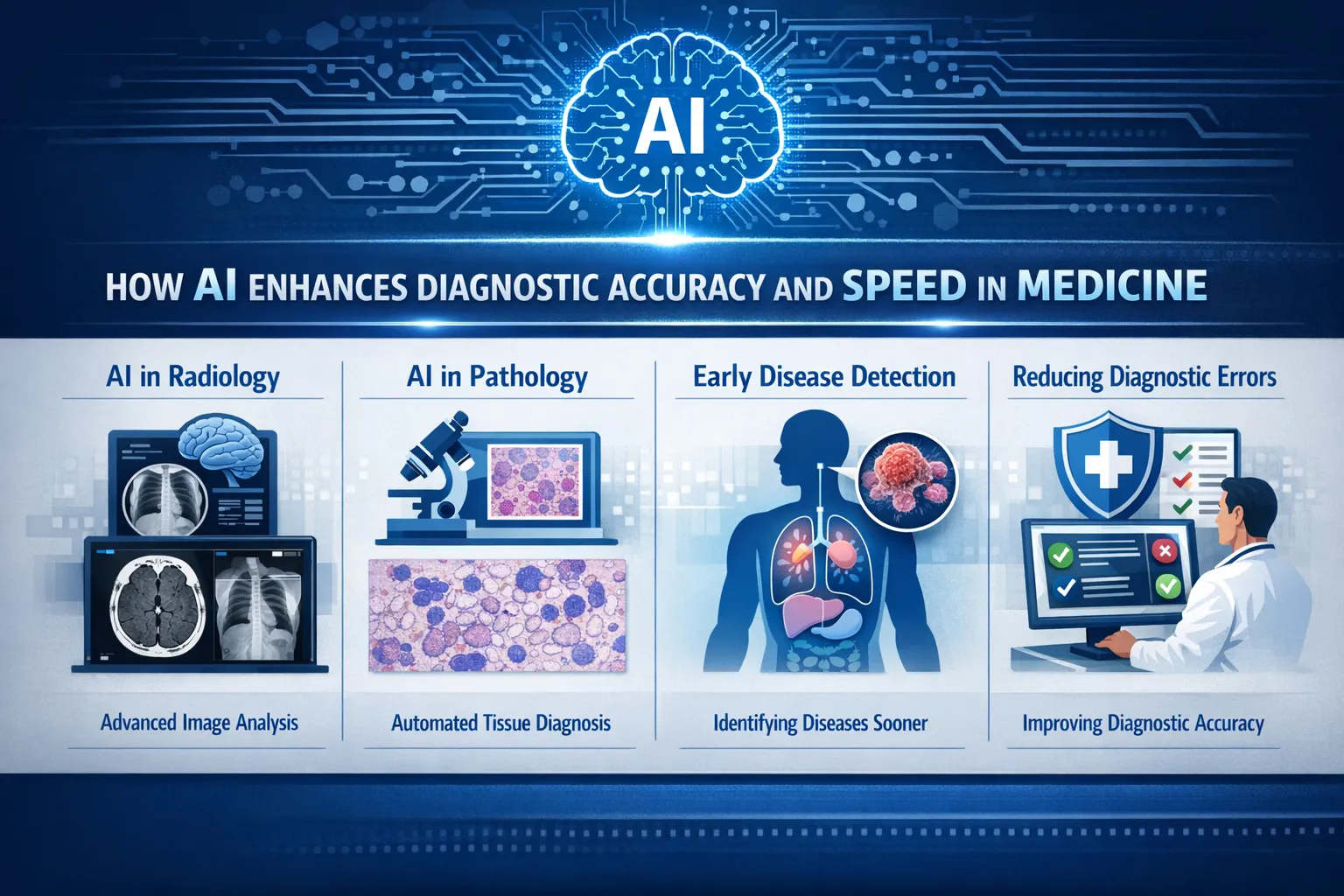
AI in Radiology
Radiology departments handle some of the most data intensive workloads in healthcare. A single hospital may produce thousands of imaging scans every day including X rays, CT scans, and MRIs.
Traditionally, radiologists must review each image manually. While they are highly trained specialists, the sheer volume of images increases the risk of fatigue and missed abnormalities.
AI systems equipped with computer vision technology analyze medical images automatically. These systems learn from massive image datasets and can recognize patterns associated with specific diseases.
For example, AI tools now assist radiologists by detecting
- Tumors in mammograms
- Fractures in bone X rays
- Early signs of lung disease in CT scans
In many hospitals, these systems flag suspicious areas before the radiologist reviews the scan. The doctor still makes the final decision, but the AI in healthcare industry acts as a helpful second reviewer.
Many of these advancements represent significant AI innovations in healthcare because they dramatically speed up image analysis while improving diagnostic accuracy.
AI in Pathology
Pathology involves examining tissue samples under a microscope to detect disease. Pathologists analyze biopsy samples to determine whether cancer cells are present and to identify disease progression.
Digital pathology has transformed this process.
Instead of examining slides only through microscopes, laboratories now scan tissue samples into high resolution digital images. AI algorithms analyze these images and identify microscopic patterns that may indicate cancer or other diseases.
For instance, AI can evaluate thousands of cells in a biopsy image and highlight those that appear abnormal. This process reduces the time required for analysis and helps pathologists focus their attention on the most important areas.
Several research institutions and artificial intelligence app development company teams are building diagnostic platforms that integrate AI directly into pathology workflows.
Early Disease Detection
One of the most valuable contributions of AI lies in detecting diseases earlier than traditional methods allow.
Early diagnosis often makes the difference between manageable treatment and severe complications. AI systems analyze large datasets to identify early warning signals that might otherwise remain unnoticed.
Cancer detection
AI models analyze mammograms and CT scans to detect early stage tumors. In some cases, these systems identify abnormalities before symptoms appear.
Neurological diseases
Researchers use AI to analyze brain scans and detect early signs of conditions such as Alzheimer’s disease. Early identification allows patients to begin treatment sooner.
Cardiovascular risk prediction
AI systems examine patient data including blood pressure, cholesterol levels, and lifestyle habits. These models estimate the likelihood of heart disease and help doctors intervene earlier.
These breakthroughs often emerge from advanced AI ML development solutions designed specifically for healthcare diagnostics.
Reducing Diagnostic Errors
Even with experienced clinicians, diagnostic errors still occur. Studies estimate that diagnostic mistakes affect millions of patients globally each year.
AI helps reduce these errors by recognizing patterns across enormous datasets.
Machine learning models can compare a patient’s data with thousands of previous cases. If a pattern resembles a known disease profile, the system alerts the physician to consider that possibility.
Another benefit involves real time clinical decision support. AI powered tools can analyze patient data during consultations and suggest additional tests or potential diagnoses.
Doctors still make the final call. However, these systems provide an extra layer of insight that strengthens decision making.
The broader lesson is simple. AI does not replace medical expertise. Instead, it enhances human judgment by providing deeper data analysis.
That combination of human experience and machine intelligence represents one of the most powerful AI innovations in healthcare today.
Optimizing Hospital Operations Through Intelligent AI Tools
While diagnosis often receives the most attention, hospital operations also present enormous opportunities for improvement. Healthcare facilities manage complex systems involving staff scheduling, patient flow, equipment availability, and administrative processes.
Without intelligent coordination, these systems quickly become inefficient.
Many hospitals now rely on modern AI solutions in healthcare to improve operational efficiency, reduce costs, and deliver better patient experiences.
Hospital Workflow Automation
Managing patient flow is one of the most challenging tasks for hospitals.
Patients arrive with varying medical needs, departments operate with limited resources, and emergency situations can disrupt even well planned schedules.
AI powered workflow systems analyze historical hospital data and optimize operations in several ways.
First, these tools improve scheduling. AI in healthcare industry predict peak patient hours and adjust appointment slots accordingly. This reduces waiting times and helps doctors manage their workloads more effectively.
Second, hospitals use AI to improve bed allocation. By analyzing patient discharge patterns and recovery timelines, AI models estimate when beds will become available. This helps hospitals admit patients more efficiently.
Third, AI platforms monitor resource utilization. They track medical equipment usage and ensure critical resources remain available when needed.
Several healthcare providers now deploy advanced AI products in healthcare to coordinate these operational processes.
Predictive Staffing
Staffing is another area where intelligent forecasting makes a significant difference.
Hospitals must ensure that enough doctors, nurses, and support staff are available at all times. At the same time, overstaffing increases operational costs.
AI models analyze historical admission data, seasonal illness patterns, and regional health trends to forecast patient inflow.
This approach uses Predictive AI in healthcare industry techniques to estimate demand before it occurs.
For example, hospitals can anticipate higher patient volumes during flu season or local outbreaks. Administrators can then adjust staffing schedules accordingly.
This type of forecasting relies heavily on AI predictive analytics in healthcare industry, which helps healthcare managers make data driven decisions about workforce planning.
AI Powered Supply Chain Management
Healthcare supply chains involve thousands of products including medications, surgical instruments, protective equipment, and diagnostic materials.
Managing these inventories manually can lead to shortages or overstocking.
AI driven supply chain platforms analyze purchasing patterns, consumption rates, and supplier delivery schedules. Based on this data, the system predicts when supplies will run low and automatically recommends reorders.
This capability ensures that hospitals always maintain adequate stock levels without unnecessary storage costs.
Pharmaceutical logistics also benefit from AI driven forecasting. Hospitals can anticipate demand for certain medications and adjust procurement strategies accordingly.
Intelligent Billing and Insurance Processing
Administrative tasks often consume a surprising portion of hospital resources.
Insurance claims, billing codes, payment verification, and compliance documentation require extensive manual effort. Errors in this process can delay reimbursements and increase administrative costs.
AI powered systems automate many of these tasks.
Natural language processing algorithms review clinical documentation and assign appropriate billing codes. Automated systems verify insurance eligibility and flag potential discrepancies before claims are submitted.
These tools reduce administrative workload and improve financial efficiency for healthcare organizations.
Leveraging AI in Telemedicine to Expand Access to Care
Telemedicine has already changed how patients connect with healthcare providers. Instead of waiting for in-person appointments, patients can consult doctors remotely through video platforms, mobile apps, or digital portals. The next stage of this transformation comes from artificial intelligence.
AI is helping telemedicine platforms move beyond simple video consultations. It allows healthcare providers to analyze patient data, automate routine assessments, and monitor patients continuously even when they are not physically present in a hospital.
In practical terms, modern AI apps in healthcare are turning telemedicine into a more intelligent and responsive system that can support both doctors and patients.
AI Powered Virtual Health Assistants
Virtual health assistants are becoming common in digital healthcare platforms. These assistants function as conversational tools that guide patients through basic health questions before they speak with a doctor.
Many telemedicine services now use AI driven symptom checkers. Patients describe their symptoms through a chat interface or voice assistant. The AI system compares those symptoms with large medical datasets and suggests possible conditions.
The system does not replace a physician. Instead, it helps categorize the urgency of the situation. This process is often called automated triage.
For example, a patient describing mild cold symptoms may receive advice for home care and monitoring. Meanwhile, someone reporting chest pain may be immediately advised to seek emergency care.
Several healthcare platforms build these tools using advanced AI ML development solutions designed specifically for medical data analysis.
Remote Patient Monitoring
One of the most powerful applications of telemedicine involves remote patient monitoring. Instead of visiting a hospital frequently, patients can wear connected devices that track health indicators throughout the day.
Common examples include
- Heart rate monitors
- Blood glucose sensors
- Sleep tracking devices
- Blood pressure monitors
These devices send real time health data to medical systems where AI algorithms analyze the information continuously.
If the system detects unusual patterns, such as irregular heart rhythms or sudden changes in blood pressure, it alerts healthcare providers immediately.
This approach allows doctors to respond much faster than traditional monitoring methods.
Hospitals and digital health providers increasingly integrate these capabilities into broader AI solutions in healthcare that support chronic disease management.
AI in Rural Healthcare
Telemedicine combined with AI can play an important role in rural healthcare systems.
Many rural areas face significant physician shortages. Patients often travel long distances to reach hospitals or specialists. In such environments, digital healthcare platforms become essential.
AI driven telemedicine systems allow patients to receive preliminary assessments, schedule remote consultations, and share diagnostic data with specialists located in major cities.
In some cases, small clinics rely on diagnostic tools developed by an artificial intelligence app development company to analyze medical images or patient data locally before sending results to larger hospitals.
This model improves accessibility and helps ensure that patients in remote areas receive timely medical attention.
Case Studies: Successful AI Implementations in Global Hospitals
While theoretical discussions about artificial intelligence can sound impressive, the real value becomes clear when we look at actual implementations. Hospitals around the world are already deploying AI systems to improve diagnosis, patient monitoring, and research.
These real world deployments provide strong AI in healthcare examples that show how technology can enhance clinical care.
AI in Medical Imaging Diagnostics
Radiology departments were among the first to adopt artificial intelligence tools.
Large hospitals often analyze thousands of imaging scans every day. Reviewing each scan carefully takes time, and subtle abnormalities can sometimes be difficult to detect.
AI imaging platforms now assist radiologists by analyzing scans and highlighting suspicious areas. For instance, AI systems trained on large datasets of lung scans can detect early signs of lung cancer or pneumonia.
Some hospitals have reported noticeable improvements in detection rates after introducing these systems. Radiologists still perform the final analysis, but AI helps them review scans faster and with greater confidence.
These deployments remain some of the most widely cited examples of AI in healthcare industry because they deliver measurable clinical benefits.
AI Driven ICU Monitoring Systems
Intensive Care Units manage some of the most critical patients in the healthcare system. These patients often require constant monitoring of vital signs including heart rate, oxygen levels, respiratory patterns, and blood pressure.
Traditionally, ICU staff monitor this data manually through medical devices and periodic observations.
AI driven monitoring systems now analyze this information continuously.
Machine learning models examine trends in patient data and detect early signs of deterioration. If the system notices unusual patterns that may indicate complications, it alerts medical staff immediately.
This early warning capability helps doctors intervene sooner, which can significantly improve patient outcomes.
Many hospitals consider these systems among the most valuable AI products in healthcare because they support life saving decision making in high risk environments.
AI for Predictive Healthcare Analytics
Predictive analytics has become another area where hospitals see clear results.
Healthcare providers often struggle with high patient readmission rates. When patients return to the hospital shortly after discharge, it increases costs and indicates that treatment or recovery plans may need improvement.
AI predictive models analyze patient records, treatment history, and lifestyle factors to estimate the likelihood of readmission.
If a patient appears to be at higher risk, healthcare teams can provide additional support such as follow up visits, medication monitoring, or remote health tracking.
Several hospital networks using predictive analytics platforms have reported reductions in readmission rates after implementing these systems.
These initiatives provide practical AI in healthcare examples where data analysis directly improves healthcare outcomes.
AI in Drug Discovery Programs
Artificial intelligence also plays an increasingly important role in pharmaceutical research.
Developing a new drug normally takes more than a decade of testing and enormous financial investment. AI systems help researchers identify promising drug candidates much earlier in the process.
Machine learning models analyze molecular structures and predict how certain compounds may interact with biological targets. Researchers can test thousands of potential molecules virtually before beginning laboratory experiments.
Several pharmaceutical companies have already accelerated research programs using advanced AI products in healthcare designed for molecular modeling and drug discovery.
In some cases, AI assisted research has shortened early drug discovery phases by several years.
Measuring the Impact of AI on Patient Outcomes and Healthcare Costs
Artificial intelligence promises a lot, but healthcare organizations rarely adopt new technology unless it produces measurable results. Hospitals operate under tight financial pressure while trying to deliver safe and effective patient care. For this reason, leaders often ask a simple question before investing in AI. Does it actually improve outcomes and reduce costs?
The growing impact of AI in healthcare industry operations suggests the answer is increasingly yes. When implemented thoughtfully, AI tools influence several critical areas including diagnosis, hospital efficiency, patient satisfaction, and workforce productivity.
Let’s break down where these improvements are happening.
Improved Clinical Outcomes
Better diagnosis remains one of the most visible benefits of AI. Machine learning models can process enormous medical datasets and identify patterns that help clinicians detect diseases earlier.
Faster diagnosis matters. When doctors identify conditions such as cancer, stroke, or heart disease early, patients typically respond better to treatment.
For example, AI systems trained on large imaging datasets can highlight suspicious areas in scans within seconds. Radiologists then review these insights before confirming a diagnosis. In many hospitals this process shortens the time required to interpret imaging results.
These improvements illustrate the expanding role of AI in healthcare industry decision making. AI tools do not replace physicians, but they provide another layer of analytical support that helps clinicians act faster.
AI also helps reduce medical errors. Hospitals generate massive amounts of patient data, and reviewing it manually can be overwhelming. AI systems organize and analyze this information in real time, helping clinicians catch potential issues earlier.
Cost Reduction Through Operational Efficiency
Healthcare costs continue to rise globally. Hospitals must manage expensive equipment, complex staffing schedules, and high patient volumes. AI driven analytics can improve operational efficiency in several ways.
First, AI systems help hospitals predict patient admissions and manage resources more effectively. Administrators can plan staffing levels and allocate beds based on predicted demand.
Second, predictive analytics reduces hospital readmissions. AI models analyze patient records and identify individuals who may need additional follow up care after discharge. By providing early intervention, hospitals can prevent complications that might otherwise lead to another hospital visit.
Organizations often partner with specialized technology providers or an experienced AI & ML development company to build these predictive systems. In many cases, hospitals also rely on custom platforms created through advanced Healthcare application development services tailored to clinical environments.
The result is a healthcare system that operates more efficiently while maintaining high quality care.
Better Patient Experience
Technology also affects how patients experience healthcare services.
Long waiting times and complex administrative procedures often frustrate patients. AI powered scheduling systems can optimize appointment management and reduce unnecessary delays.
Personalized treatment plans also contribute to better patient outcomes. AI algorithms analyze patient history, genetic information, and lifestyle factors to recommend treatments that fit individual needs.
These improvements create a more responsive healthcare experience where patients receive timely care and more precise treatment recommendations.
Healthcare Workforce Productivity
Doctors and nurses spend a surprising amount of time on administrative tasks. Documentation, billing, insurance claims, and appointment management all require significant effort.
AI driven automation tools reduce this workload by handling repetitive processes. Natural language processing systems can convert doctor conversations into structured clinical notes. Automated billing systems reduce paperwork and minimize coding errors.
When medical professionals spend less time on administrative work, they can focus more on patient care.
Taken together, these changes highlight the expanding impact of AI in healthcare industry systems. The technology improves both the clinical and operational sides of healthcare delivery.
Emerging Trends Shaping the Future of AI in Healthcare
Artificial intelligence is still evolving. The tools hospitals use today represent only the early stages of a much larger transformation. Researchers, startups, and healthcare organizations continue to explore new applications that could reshape medical care in the coming years.
Several important AI trends in healthcare are already beginning to influence the direction of the industry.
Generative AI in Healthcare
Generative AI models are opening new possibilities for clinical workflows and medical research.
These systems can analyze enormous volumes of medical literature and summarize research findings for doctors. They also assist with clinical documentation by converting conversations between doctors and patients into structured reports.
Automating documentation could save physicians several hours of administrative work each week.
Many experts believe generative models represent one of the most promising AI innovations in healthcare for improving efficiency across hospitals.
AI Powered Digital Twins
Digital twin technology creates virtual models of individual patients using real medical data.
These models simulate how a person’s body might respond to certain treatments or medications. Doctors can test different treatment options within the digital model before applying them in real life.
While still developing, this technology could eventually support highly personalized treatment planning.
AI Assisted Robotic Surgery
Robotic surgical systems already assist surgeons with precision movements. AI integration is making these systems even more advanced.
Machine learning algorithms analyze surgical data from thousands of procedures and help guide surgeons during complex operations. The technology can improve accuracy and reduce the likelihood of complications.
AI for Genomics and Precision Medicine
Genomic research generates massive datasets that traditional analysis methods struggle to process.
AI algorithms analyze genetic information and identify patterns linked to disease risk. These insights help researchers develop personalized treatment strategies based on an individual’s genetic profile.
This approach forms the foundation of precision medicine.
AI Powered Drug Discovery
AI in healthcare industry is accelerating pharmaceutical research by analyzing molecular structures and predicting how potential compounds may behave.
Drug discovery platforms powered by machine learning can evaluate millions of chemical combinations quickly. Researchers can identify promising candidates earlier in the development process.
This capability significantly shortens the time required to bring new medicines to market.
Edge AI for Medical Devices
Another emerging trend involves edge computing. Instead of sending data to centralized servers, edge AI systems process information directly on medical devices.
For example, wearable health monitors can analyze patient data in real time and detect abnormal patterns without needing constant cloud connectivity.
These devices improve response times and enable continuous health monitoring.
Challenges You May Face While Implementing AI in Healthcare
Despite the potential benefits, adopting artificial intelligence in healthcare is not always straightforward. Hospitals must address technical, financial, and organizational barriers before AI systems can operate effectively.
Understanding these AI in healthcare challenges is important for healthcare leaders planning long term technology strategies.
Data Quality Issues
AI systems rely heavily on data. The quality of that data directly affects the performance of machine learning models.
Unfortunately, healthcare data is often messy. Patient records may contain incomplete information, inconsistent formats, or missing details.
Electronic health records also include large amounts of unstructured data such as physician notes, medical reports, and diagnostic observations. Transforming this information into structured datasets suitable for analysis can be difficult.
These data limitations remain one of the most significant AI in healthcare challenges today.
Integration with Legacy Systems
Many hospitals operate on legacy IT infrastructure that was not designed for modern AI platforms.
Implementing AI Technologies into these systems requires careful planning and sometimes expensive upgrades. Healthcare organizations must ensure that new technologies communicate effectively with existing databases, electronic health records, and clinical software.
This challenge slows down AI adoption in many institutions.
High Implementation Costs
Developing and deploying AI platforms requires substantial investment. Hospitals must fund data infrastructure, computing resources, and specialized software development.
Training medical staff to use AI systems also adds to implementation costs.
While the long term benefits can justify the investment, the initial expense still creates hesitation for some healthcare organizations.
Lack of Skilled AI Professionals
Healthcare AI development requires highly specialized expertise. Engineers must understand both advanced algorithms and the complexities of medical data.
The demand for AI engineers, healthcare data scientists, and machine learning specialists continues to grow faster than the available workforce.
Because of this shortage, many healthcare organizations collaborate with technology partners that specialize in AI and ML in healthcare solutions.
Why Choose AppZoro for Cutting Edge AI in Healthcare Solutions
Healthcare organizations exploring artificial intelligence quickly realize that implementing AI is not simply about installing new software. It requires deep understanding of healthcare workflows, regulatory compliance, secure data infrastructure, and intelligent system design.
That is where experienced technology partners become valuable.
AppZoro focuses on building practical AI solutions in healthcare that help hospitals, healthcare startups, and medical organizations solve real operational and clinical problems. Instead of offering generic AI tools, the company develops tailored platforms designed specifically for the healthcare environment.
Deep Expertise in Healthcare AI
Healthcare technology requires both medical awareness and technical expertise. AppZoro combines these capabilities through experienced engineers, data scientists, and healthcare technology specialists.
As an established AI & ML development company, the team works with healthcare providers to understand operational challenges before designing intelligent solutions. This approach ensures that AI systems align with real clinical workflows rather than theoretical use cases.
Custom AI Healthcare Software Development
Every healthcare organization operates differently. A hospital managing emergency care will have very different requirements compared with a telemedicine startup or pharmaceutical research lab.
AppZoro builds custom AI products in healthcare tailored to the specific needs of each organization. These solutions may include
- Clinical decision support systems
- Patient monitoring platforms
- Medical imaging analytics tools
- Healthcare automation systems
By combining advanced engineering with domain expertise, the company delivers intelligent applications that integrate smoothly with existing systems.
Many healthcare companies rely on specialized Healthcare application development services to build these complex platforms from the ground up.
AI Driven Predictive Analytics
Predictive intelligence plays a growing role in healthcare decision making. Hospitals use data to anticipate patient demand, identify high risk cases, and improve treatment planning.
AppZoro develops advanced analytics platforms powered by AI predictive analytics in the healthcare industry. These systems analyze patient data, historical trends, and operational metrics to help healthcare organizations make proactive decisions.
For example, predictive models can
- Identify patients at risk of hospital readmission
- Forecast patient admission rates
- Detect early signs of disease progression
Solutions like these often rely on specialized AI ML development solutions built for large scale medical datasets.
HIPAA Compliant and Secure Healthcare Platforms
Healthcare data requires the highest levels of security. Hospitals must comply with strict regulations related to patient privacy and data protection.
AppZoro designs AI platforms that follow healthcare compliance standards such as HIPAA. Security measures include encrypted data handling, secure cloud infrastructure, and strict access controls.
These safeguards ensure that AI powered healthcare systems protect patient data while delivering advanced analytical capabilities.
Scalable Cloud Based AI Architecture
Healthcare data continues to grow rapidly. Modern hospitals generate enormous volumes of information from electronic health records, imaging systems, and connected medical devices.
AppZoro builds scalable cloud based architectures that allow AI systems to process large datasets efficiently. This infrastructure ensures that healthcare organizations can expand their AI capabilities without rebuilding their technology stack.
Many organizations partner with an experienced artificial intelligence app development company to create these scalable platforms.
Seamless Integration With Hospital Systems
New technologies must work with existing healthcare software rather than replace it entirely.
AppZoro integrates AI platforms with electronic health record systems, hospital management software, diagnostic tools, and telemedicine platforms. This integration ensures smooth data flow between systems and avoids disruptions to daily medical operations.
End to End AI Development Support
AppZoro provides full lifecycle support for healthcare AI projects. The process typically includes
- Consulting to identify high impact use cases
- Custom development of intelligent healthcare platforms
- Deployment within hospital infrastructure
- Ongoing optimization and model improvements
This end to end approach helps healthcare organizations adopt AI confidently while minimizing risk.
By combining deep technical expertise with healthcare domain knowledge, AppZoro helps organizations build intelligent systems that improve patient care and operational efficiency.
Conclusion
The growing impact of AI in healthcare industry operations can already be seen in faster diagnosis, improved treatment accuracy, and more efficient hospital management.
At the same time, the expanding role of AI in healthcare industry innovation continues to push medical research forward. AI driven drug discovery, genomic analysis, and personalized medicine are opening new possibilities for treating complex diseases.
Of course, adopting AI still involves challenges. Healthcare organizations must address data quality issues, integration with existing systems, and the need for specialized technical expertise.
Looking ahead, the future of AI in healthcare will likely involve even deeper collaboration between medical professionals and intelligent machines. AI will not replace doctors, but it will provide powerful tools that enhance their ability to diagnose, treat, and care for patients.
Healthcare organizations that begin investing in AI today will be better positioned to adapt to this rapidly evolving landscape.
If your organization is exploring intelligent healthcare technology, partnering with an experienced AI & ML development company such as AppZoro can help accelerate the journey. With the right technology strategy and expert support, healthcare providers can build systems that improve patient outcomes while operating more efficiently.
Frequently Asked Questions
What is AI in healthcare?
Artificial intelligence in healthcare refers to computer systems that analyze medical data and assist healthcare professionals in decision making. These systems use algorithms and machine learning to identify patterns in medical records, imaging scans, and patient data.
How is AI helping in the healthcare industry?
AI supports hospitals by improving diagnosis accuracy, automating administrative tasks, and enabling predictive insights. The growing impact of AI in healthcare industry systems includes faster diagnosis, improved patient monitoring, and more efficient hospital operations.
How is AI used in medical diagnosis?
AI systems analyze medical images, laboratory results, and patient histories to identify patterns associated with diseases. Doctors use these insights to detect conditions such as cancer, heart disease, and neurological disorders earlier.
What does AI do in healthcare?
AI helps healthcare organizations analyze large datasets, predict patient risks, optimize hospital workflows, and assist clinicians in medical decision making. These capabilities improve efficiency and enhance patient outcomes.
Is AI safe for healthcare?
When developed responsibly, AI can be safe and highly beneficial for healthcare. Modern AI platforms follow strict data privacy regulations and are tested carefully before deployment. Many organizations rely on experienced AI & ML development company teams to ensure safe implementation.
How does AI work in healthcare?
AI systems analyze medical data using machine learning algorithms. These algorithms learn patterns from historical datasets and apply those insights to new cases. Many hospitals implement these systems through specialized Healthcare application development services designed for medical environments.
Why should healthcare organizations choose AppZoro?
AppZoro develops advanced AI solutions in healthcare that help hospitals and healthcare startups build intelligent systems for diagnostics, automation, and predictive analytics.