
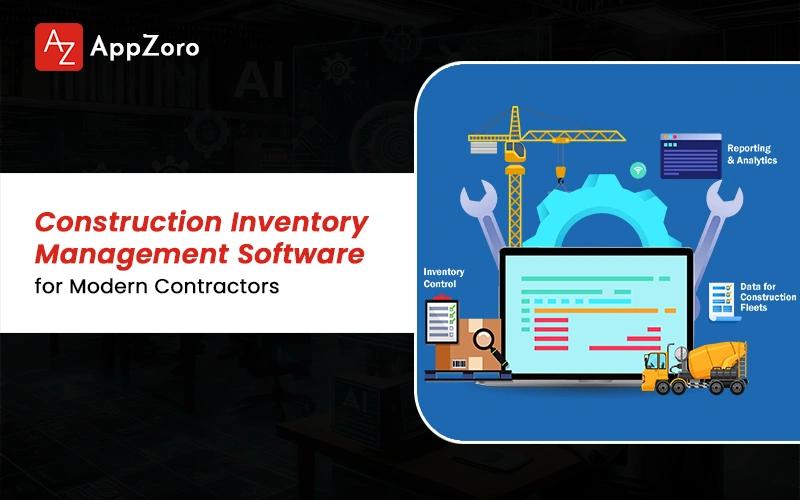
Quick Answer: Construction inventory management software is tracking materials, tools, heavy equipment, PPE and consumables across jobsites, warehouses and contractor crews on a daily basis. The best platforms are combining mobile field apps with offline capability, barcode and RFID scanning, tool check-out workflows, jobsite transfer tracking and integration with project costing systems. Dedicated tools include ToolWatch, ShareMyToolbox and Tenna, while broader construction management platforms like Procore, Sage 300 CRE and Viewpoint are including inventory modules. ROI is typically arriving in 6 to 14 months through theft reduction and improved cost accuracy across active projects.
Managing construction inventory can be stressful, dealing with missing tools, double-rented equipment, untracked material deliveries and surprise stockouts on the jobsite giving project managers headaches before every milestone. According to AGC and JBKnowledge surveys, construction firms are losing 1 to 3% of annual revenue to material waste, tool theft and inventory miscounts, which is $500K to $1.5 million in avoidable loss for a typical mid-sized GC. This guide to real estate software development services covers what to track, what features matter and choosing the right platform for your operation.
What Is Construction Inventory Management Software?
So, what is construction inventory management software actually doing in practice? Well, as a branch within the real estate software development guide, it is the platform tracking location, quantity, condition and ownership of every material, tool, piece of equipment and consumable across a contractor's operations including the warehouse, jobsites, vehicles and even subcontractor crews.
Inventory management software for construction industry use is genuinely different from general warehouse inventory software, because the assets are constantly moving between locations and field crews are needing proper mobile access from anywhere on the site.
But what is construction inventory management software actually doing across the operation? Let's break it down.
Tracks Asset Location In Real Time: The system is showing where each tool, machine or material lot is currently sitting at any given moment.
Manages Check-Out And Return Workflows: The platform is recording who has what, for which specific job and since when that asset was moved.
Reconciles Purchase Orders Against Deliveries: Materials received are being matched against ordered quantities versus what is actually being consumed.
Feeds Job Cost Reports: Inventory consumption is being translated directly into project cost accuracy on the back end of the system.
The 5 Asset Categories Construction Inventory Software Tracks
Construction inventory management software is tracking five distinct asset categories and each one is carrying different workflows, tracking requirements and ROI drivers. Let's walk through every category before any vendor evaluation is starting on the project.
Materials
This category is covering concrete, lumber, rebar, drywall, fixtures and paint, which are typically being tracked by lot or load and consumed within days of delivery. Key data includes PO reconciliation, jobsite delivery confirmation, waste tracking and bill-of-materials consumption.
Tools (Small Movable Assets)
This category is covering drills, levels, saws, hand tools, ladders and generators, sitting in the highest theft and loss risk category across the operation. Key features include barcode or RFID tagging, check-out and check-in workflows, individual responsibility and condition logging.
Heavy Equipment
This category is covering excavators, cranes, loaders, lifts and vehicles, which are often dual-tracked with telematics platforms like Samsara, Tenna and HCSS. Key features include location, hours metering, maintenance scheduling, operator certification and dispatch management.
PPE And Safety Gear
This category is covering hard hats, harnesses, respirators and fall protection equipment, which is compliance-driven across every construction site. Key features include certification dates, individual assignment and fit testing records tied to inventory management software for construction industry compliance audits.
Consumables And Small Parts
This category is covering fasteners, blades, fuel, lubricants and welding rods, typically bulk-tracked using par levels combined with automatic reorder triggers when stock drops below threshold.
Each one of these categories is needing different workflows and not every platform is handling all five equally well, so buyers should be weighting features by the actual mix of assets they are managing.
The Construction Jobsite Inventory Workflow — 5 Stages
Every inventory item inside a construction operation is moving through five distinct stages from procurement to final reconciliation and inventory management software for construction must support every single stage properly.
Stage 1: Procurement And Purchase Orders
The PO is being created directly from the bill of materials, the vendor is being selected and the expected delivery date is being logged. The software is automating the BOM-to-PO conversion and is handling the approval workflow with the right project managers.
Stage 2: Delivery And Receiving
Trucks are arriving, receiving documents are being signed, quantities are being verified and photos are being captured for any visible damage. The software is providing a mobile receiving app, barcode scanning at the dock and exception flagging for short or damaged shipments.
Stage 3: Storage And Location Assignment
Materials and tools are being assigned to a warehouse bin, a jobsite trailer or routed direct-to-installation. The software is handling location tagging, transfer logs and the running inventory of what is sitting where across the operation.
Stage 4: Consumption And Field Use
Tools are being checked out, materials are being installed and equipment is being dispatched to active workfaces. The software is providing the field mobile app, foreman assignment tracking and real-time consumption recording during the workday.
Stage 5: Reorder And Reconciliation
Par-level alerts are firing, automated reorder triggers are creating new POs and end-of-job reconciliation is matching what was consumed against what was ordered. The software is running the alert engine, procurement integration and cost reconciliation back into the project ledger.
The biggest gap most contractors are running is between Stage 2 and Stage 5, because materials are being delivered and consumed without proper inventory updates, so cost reports are lagging reality by weeks.
What's Essential in Construction Inventory Management Software And Key Features
What makes good inventory management software for construction is rarely the breadth of features being advertised, it is genuinely the field usability that is making or breaking the platform in production. The 8 features below are what's essential in construction inventory management software for most contractors and the key features of inventory management software for construction that are actually worth paying for are sitting in this must-have list.
Must-Have Features:
Mobile App With Offline Capability: Jobsites are lacking reliable connectivity in most regions, so offline-first sync is genuinely mandatory for field use.
Barcode And RFID Scanning: Field-grade scanning via phone camera or dedicated scanner is required for fast asset identification on the jobsite.
Tool Check-Out / Check-In Workflow: Individual accountability for every tool is the single biggest driver of theft and loss reduction across operations.
Multi-Location Inventory: The warehouse plus multiple active jobsites plus all the vehicles need to be tracked inside one unified system.
Jobsite-To-Jobsite Transfer Logging: Materials and tools are constantly shifting between active projects, so transfer logs are absolutely mandatory.
Purchase Order Reconciliation: Matching deliveries against orders is the basic accuracy check that most operations are missing today.
Project Cost Allocation: Inventory consumption is being tagged to specific job numbers for proper cost reporting back to the project manager.
Reorder Triggers And Par Levels: Automatic alerts are firing when stock drops below the configured threshold for any tracked item.
Advanced / Nice-To-Have:
Equipment Hour And Telematics Integration: For accurate heavy equipment costing tied to actual usage rather than calendar time alone.
Certified Operator And Compliance Tracking: For OSHA-regulated equipment and PPE assignments tied to individual certifications across the workforce.
Subcontractor Inventory Access: Subs are able to request items, check tools out and return them through their own access layer in the platform.
AI-Driven Waste And Theft Pattern Detection: An emerging category that is starting to show up in 2026 across the leading platforms.
Construction Inventory Management Software Benefits
The construction inventory management software benefits are clustering into three distinct categories: cost benefits, operational benefits and risk benefits. Understanding each one is making the ROI conversation much clearer when justifying the budget internally with finance and operations leadership.
Cost Benefits
15 To 30% Reduction In Tool Theft And Loss: This is consistently showing up across published industry case studies after proper deployment.
8 To 15% Reduction In Material Waste: Better tracking is leading to less over-ordering and far less waste at the end of every project.
5 To 10% Improvement In Project Cost Accuracy: Inventory data is feeding directly into the job costing reports across the operation.
Reduced Idle Equipment Spend: Real visibility is cutting the duplicate rental costs that often pile up during busy periods.
Operational Benefits
Faster Field Workflows: Foremen are finding tools faster and crews are stopping work less often during the active workday.
Real-Time Visibility Across Sites: Project managers are seeing status across jobsites without having to call sites for updates.
Automated Reordering: This is reducing both stockouts and the expensive rush deliveries that follow them on every project.
Better Subcontractor Coordination: Defined check-out responsibility is reducing the disputes that come up at the end of jobs.
Risk And Compliance Benefits
OSHA Compliance Tracking: PPE assignment and inspection records are being maintained automatically across the operation.
Audit Trail For Insurance: Documented tool ownership is supporting theft claims with proper supporting evidence.
Reduced Liability On Equipment Operation: Operator certifications are being tied directly to equipment dispatch authorizations across the fleet.
These benefits are compounding together and cost reduction combined with operational visibility is typically delivering ROI in 6 to 14 months.
Standalone Tools vs. Construction Management Software with Inventory Management
Contractors evaluating inventory management software for construction industry use are facing two paths: a dedicated inventory platform like ToolWatch, ShareMyToolbox or Tenna or a construction management software with inventory management module from Procore, Sage 300 CRE, Viewpoint Spectrum, CMiC or Trimble Construction One.
Approach | Strengths | Weaknesses | Best For |
Standalone Inventory Tool | Deep field workflows, mobile-first, faster to deploy | Requires integration to PM and accounting | Tool-heavy contractors, equipment rental, specialty trades |
CM Platform With Inventory Module | Single source of truth, native job cost flow | Inventory features often shallower than dedicated tools | Mid-large GCs already on Procore, Sage or Viewpoint |
The right choice depends on your specific contractor type and learning how to develop a real estate app for your needs.
Pick Standalone When: Tool inventory tracking and field usability are your primary operational pain points across the business.
Pick CM Platform Module When: Project cost integration matters more to you than feature depth on the inventory side.
Pick Hybrid When: You can use a dedicated tool platform that is integrating cleanly into your construction management software with inventory management backbone.
Most large GCs are ending up running hybrid, with a Procore or Sage backbone combined with a dedicated tool tracking layer running on top.
How Do I Choose Inventory Management Software for Construction?
The question of how do I choose inventory management software for construction comes down to seven specific selection criteria and scoring every vendor in the shortlist against each one is what is producing a defensible decision in the end.
Asset Category Fit: Is the platform handling your specific mix of materials, tools, equipment, PPE and consumables across the full operation?
Field Mobile Usability: Hand a phone to a working foreman and see if they can check a tool out in under 15 seconds.
Offline Capability: Will the platform actually work at a rural jobsite with no usable cell signal whatsoever during the workday?
Integration Footprint: Is the platform integrating with your accounting (Sage, QuickBooks, Foundation), your procurement and your construction management software with inventory management backbone like Procore or Viewpoint?
Scanning Hardware Compatibility: Phone camera scanning is fine for small teams, however dedicated scanners and RFID readers may be required at scale across larger operations.
Multi-Location And Transfer Logic: Real construction operations are moving inventory constantly between sites, so this is a non-negotiable capability.
Implementation And Support Track Record: Construction-specific references with similar fleet and tool sizing to your operation are critical for accurate evaluation.
Most selection failures for inventory management software for construction are tracing back to overweighting feature count and underweighting field usability. Bring foremen into the demo conversations, not just IT and procurement, because the foremen are the ones using it every day.
Leading Construction Inventory Management Platforms
The construction inventory management software market in 2026 is broadly grouped into four buckets, with each bucket serving a different size of contractor and a different mix of asset categories being managed.
Dedicated Tool And Equipment Tracking
ToolWatch is the enterprise standard for tool management, ShareMyToolbox is serving mid-market tool sharing operations, Tool Hawk is delivering mobile-first tool tracking and GearTrack is fitting small contractors well.
Heavy Equipment And Asset Tracking
Tenna is providing full equipment management, HCSS HeavyJob and Telematics is dominating among heavy civil contractors, Samsara is leading on vehicle and equipment telematics with inventory adjacency and Trackunit is strong across European operations.
Construction Management Platforms With Inventory Modules
Procore is the broad CM leader with growing inventory adjacency, Sage 300 CRE is the ERP backbone with strong inventory features, Viewpoint Spectrum and Vista from Trimble are enterprise standards, CMiC is winning at the enterprise tier, Trimble Construction One is the unified platform play and Buildertrend is leading on residential.
Materials And Procurement-Focused
GoCanvas is providing a forms and inventory hybrid approach, Kojo is leading on materials procurement with embedded inventory and Billy is the materials marketplace option with tracking baked in.
The best fit depends on size and asset mix, much like selecting title search software for your tech stack. Evaluate every platform with your foremen, not just with procurement and IT staff.
Implementation, Integration and Cost
Implementation of construction inventory management software is typically running 2 to 8 weeks for standalone tools and 4 to 16 weeks for full CM platform inventory modules and the main drivers of the timeline are the tag-and-catalog effort, the crew training and the integration setup work.
Key Integrations:
Accounting: QuickBooks, Sage 100/300, Foundation and Viewpoint Vista are the most common accounting integrations across contractors.
Project Management: Procore, Buildertrend and CoConstruct are the dominant PM platforms being integrated for job-level data flow.
Procurement: Kojo, Billy and direct vendor portals are being connected for the PO and reorder workflow.
Telematics: Samsara, Tenna, HCSS and Trackunit are being integrated for equipment hour and location data.
HR / Workforce: For operator certifications, PPE assignments and individual responsibility tracking across the field workforce.
Cost Ranges:
Platform Type | Pricing Model | Annual Cost |
Small contractor tool tracking | Per-user SaaS, $20 to $60/user/month | $5K to $25K |
Mid-market dedicated inventory platform | Tiered SaaS + per-asset fees | $15K to $80K |
Enterprise platform with inventory module | Bundled, often $50K+ for CM | Inventory module adds 15 to 30% |
Custom build | One-time + maintenance | $80K to $400K initial + ongoing |
Our real estate app development cost breakdown shows ROI typically arriving in 6 to 14 months, driven by theft reduction and material waste savings.
Conclusion
Construction inventory management software is no longer a luxury reserved for the largest GCs, it has become an operational baseline for any contractor that is serious about tracking five distinct asset categories across a five-stage workflow with proper field discipline. The build path is splitting between dedicated inventory tools and broader construction management platforms with inventory modules and most large GCs are ending up running hybrid stacks.
The benefits are clustering across cost, operations and risk and the ROI is typically delivering in 6 to 14 months. Bring your foremen into the demo conversations and weight field usability heavily over feature breadth.
Leave a Comment