Cost of Building a Fitness App Like Garmin Connect: Budget, Features and Risks

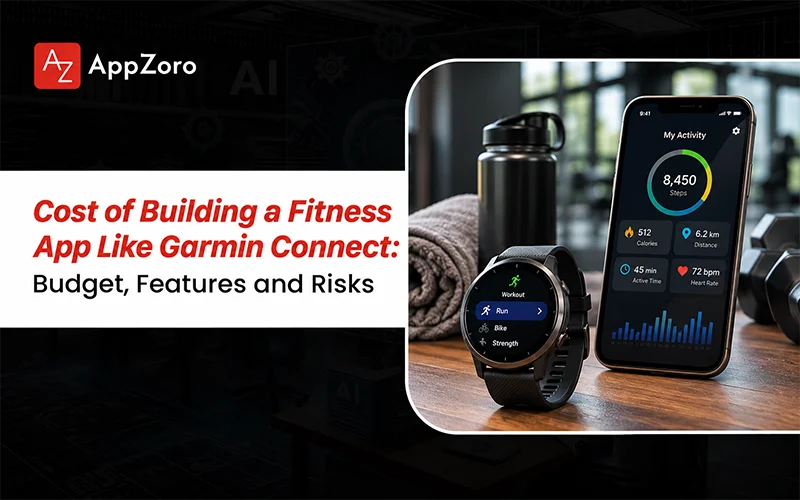
A runner finishes a Sunday long run, the watch buzzes, and by the time she’s walked home the phone shows a route map, a heart-rate curve, a recovery estimate and a suggestion for tomorrow. Nothing about that moment looks expensive. That’s the trap if you’re a founder typing “build your own fitness app” into a search bar, because the screen she’s holding is the end of a long chain: sensors, sync, cloud processing, analytics and a business model that has to pay for all of it.
Garmin itself shows how unsettled that last link is. On March 27, 2025 the company introduced Connect+, a paid tier at $6.99 a month or $69.99 a year, while keeping all existing Connect features free. Even the category leader is still working out how much of an app should cost the user, so you shouldn’t expect to have it figured out on day one. If your product leans closer to training than to devices, AppZoro’s fitness app development guide lays out the wider build picture first, and it’s worth a look before you go further.
So what should a budget conversation cover before anyone opens a design tool? Which version of Garmin Connect you actually mean, where your data comes from, and what keeps costing money after launch. Let’s break each of those down.
What Does a Health and Fitness App Like Garmin Connect Actually Mean?
Garmin Connect is a companion to Garmin’s own watches, bike computers and sensors, which is why copying it feature for feature is a different project from building a general fitness app. Most founders end up in one of three places:
| Build Type | What It Includes | Budget Consideration |
| Companion app for your own hardware | Device pairing, firmware sync, activity upload, dashboards | Hardware, firmware, certification and device testing sit on top of the app budget |
| Standalone hub reading phone health platforms | HealthKit and Health Connect data, GPS workouts, manual logging | Lowest integration cost, but limited to what the phone exposes |
| Multi-device aggregator | Several vendor APIs, deduplication, one unified timeline | Each vendor adds approvals, licence terms and upkeep |
Most startups want the second or third. The first is really a hardware company with an app attached, and you’ll find its budget looks nothing like the others.
Core Features of a Health and Fitness App Like Garmin Connect
Every version of this product runs on a small loop: capture activity, make sense of it, bring the user back tomorrow. These are the features that keep it turning, with the quiet decisions in the last column:
| Feature | User Need | Product Consideration |
| Activity tracking with GPS maps | Record runs, rides and swims | GPS accuracy, battery drain and offline recording |
| Health metrics (heart rate, sleep, steps, stress) | See how the body is doing day to day | Which metrics to show, and how to flag noisy readings |
| Training plans and readiness insights | Know what to do next | Rules first, AI later, and clear limits on health claims |
| Device sync | Data arrives without effort | Missing overnight data makes users stop trusting the app |
| Social features and challenges | Stay motivated | Moderation and privacy controls |
| Reports and exports | Spot trends over time | Show trends, not only daily totals |
Garmin’s own paid tier shows where premium features are heading: Connect+ adds an AI feature called Active Intelligence that sends personalised suggestions to the watch based on the day’s data, plus a performance dashboard. Features like these are optional extras, though, and each brings data, testing and privacy work your first release rarely needs. For the health side of the product, AppZoro’s guide to building a wellness app covers how those broader features are usually scoped.
Cost of Building a Fitness App Like Garmin Connect: Budget Tiers
Published numbers for fitness apps are all over the map, with AppZoro’s own guide noting estimates from $5,000 to over half a million dollars. That spread isn’t a mistake. A step counter and a full platform with live classes barely belong in the same sentence, and you shouldn’t price them alike. These tiers follow AppZoro’s fitness app development cost guide.
| Tier | Typical Scope | Typical Cost | Typical Timeline |
| Lean MVP | One platform, 3 to 5 core features, phone health data | $25,000 to $60,000 | 3 to 4 months |
| Full first version | iOS and Android, richer tracking, accounts, subscriptions | $80,000 to $200,000 | 6 to 9 months |
| Wearable-integrated app | Real-time sync and a defined device list | $120,000 to $250,000 | Varies with the device list |
| Platform | Social features, live classes, enterprise clients | $200,000 and up | 9 months or more |
None of these include manufacturing a watch. If you’re planning your own device, hardware design, firmware and regulatory certification need their own budget and their own team. And these are planning ranges, not quotes, so your real figure will move with the assumptions underneath it.
Fitness App Development Cost Breakdown: Where the Money Goes
A useful fitness app development cost breakdown splits the budget by phase and by feature, because a single headline number hides everything that matters. Across a mid-tier build, discovery usually takes 5% to 10% of the budget, design 10% to 15%, development 40% to 50%, testing 10% to 15%, and launch and infrastructure 5% to 10%, with maintenance adding 15% to 25% a year after that.
Feature by feature, the pattern looks like this:
| Feature | Typical Cost |
| Authentication, profiles and onboarding | $4,000 to $10,000 |
| Workout library with progress tracking | $10,000 to $25,000 |
| Each wearable integration | $5,000 to $20,000 |
| Chat, coaching and community | $15,000 to $40,000 |
| Live video | $25,000 to $80,000 |
| Payments and subscriptions | $5,000 to $15,000 |
Two other levers matter. Cross-platform builds with React Native or Flutter typically cost $60,000 to $150,000 for a mid-tier product, against roughly $90,000 to $220,000 for native iOS and Android together. And team location changes the hourly rate, from about $120 to $200 in North America down to $25 to $60 in India and Southeast Asia, though a cheap rate often hides rework that you’ll only see months later.
Garmin Data Access: The Integration Cost That Can Change Overnight
Pulling data from Garmin devices into your own app runs through the Garmin Connect Developer Program, which offers Health, Activity, Women’s Health, Training and Courses APIs. On paper the economics look kind: there are no licensing or maintenance fees, though access is for business use only and some metrics may require a licence fee or a minimum device order.
The catch is approval. According to reporting from September 2026, Garmin appears to have stopped processing new applications in spring, the application form has disappeared from its developer site, and Garmin has told developers privately that it’s working on a significant redesign of the program, without a date for reopening. Existing partners keep working, and Connect IQ, the separate program for apps that run on the watches themselves, remains open. Garmin hasn’t publicly confirmed the freeze, so treat the details as reported, not official, and check the current status before you plan around it.
For your budget, that means three things. Don’t build a product whose only data source is a Garmin API you haven’t been approved for. Plan fallback routes such as HealthKit and Health Connect on the phone, other vendors’ APIs, or user-uploaded activity files. And keep integration estimates flexible, because an approval delay can cost more than the code. AppZoro’s wearable app development guide goes through the technical trade-offs of each route.
How a Premium Tier Changes the Economics
Garmin’s approach is worth studying if you’re weighing a freemium model. Core Connect features stay free, and Connect+ charges $6.99 a month or $69.99 a year for extras. That keeps the user base wide while asking the most engaged users to pay.
A premium tier isn’t the only route. Garmin’s own Health API is pitched at corporate wellness, population health and patient monitoring, which points to business-to-business revenue for products built around wellness programs. Subscriptions, hardware bundles, coaching add-ons and employer contracts can sit side by side, though each one changes the features you’ll need to build first. For products moving toward employer or health-plan customers, AppZoro’s wellness app development services show how that work is scoped.
Hidden Costs and Data Privacy
The build is rarely the biggest bill, and that surprises most first-time founders. Cloud infrastructure for a fitness app can run from a few hundred to a few thousand dollars a month depending on traffic and video use. Third-party APIs for maps, payments, push notifications and analytics bill separately. App store fees run $99 a year for Apple and a one-time $25 for Google, plus platform commissions on subscription revenue. Support tooling and compliance work come on top.
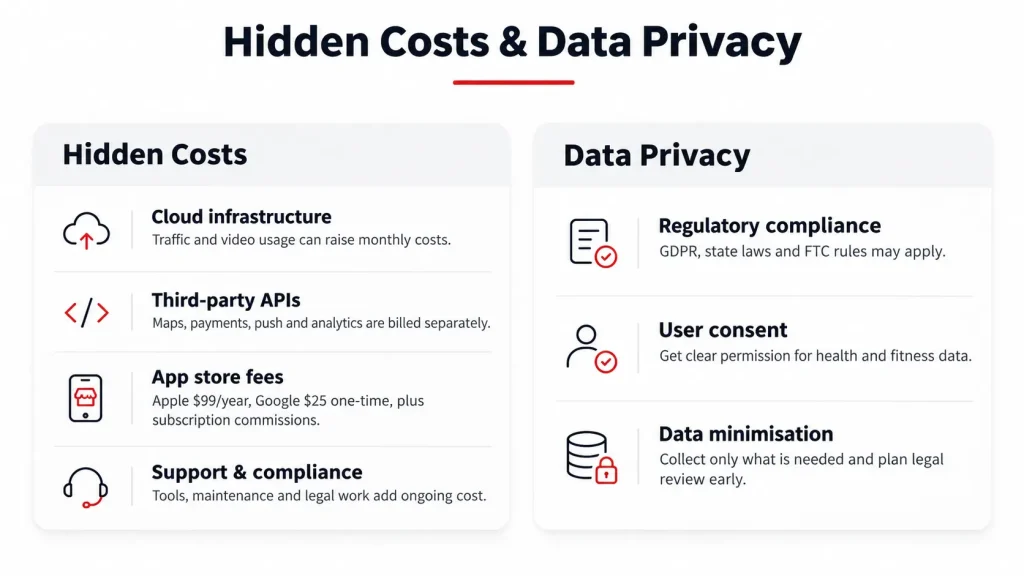
Health data brings its own obligations. GDPR, US state laws such as Washington’s My Health My Data Act and the FTC’s health breach rules can all apply to apps that handle health and fitness data, depending on where you operate and who you serve. Garmin’s developer platform even lets users grant access to activity or health data without granting access to women’s health data. Consent, data minimisation and legal review belong in your plan from the first sprint, and none of that amounts to a compliance guarantee.
How to Build Your Own Fitness App Without Overspending
- Pick one build type. Decide between companion, standalone hub or aggregator before asking for quotes.
- Start with phone health data. HealthKit and Health Connect already hold much of what users generate, and reading them costs far less than building device support.
- Launch one platform and five features. A lean MVP validates demand before the bigger budget is committed.
- Choose cross-platform unless a feature demands native. Heavy sensor or real-time watch work is the usual exception.
- Ask every vendor for written assumptions. Scope, platforms, integrations, support and maintenance should all be on the page.
- Track outcomes, not features. Weekly active users and completed workouts say more than a long feature list.
For the fuller picture on design, testing and launch, AppZoro’s guide on how to develop a fitness app is a good companion to this one.
Conclusion
The cost of building a fitness app like Garmin Connect isn’t one number. It depends on whether the plan includes hardware, which data sources the product trusts, how live the sync has to be and how seriously maintenance is budgeted. The strongest plans start small, don’t hang on a single vendor’s approval and treat the first year after launch as part of the project, which is how you’ll avoid most surprises.
If a fitness product is on your roadmap, AppZoro’s fitness app development team can help turn the scope into a quote that compares cleanly with others.
Frequently Asked Questions
How much does it cost to build a fitness app like Garmin Connect?
A phone-based app with a full first version typically costs $80,000 to $200,000, and a wearable-integrated product with real-time sync runs $120,000 to $250,000. Hardware and firmware are extra.
What does a fitness app development cost breakdown look like?
Development usually takes 40% to 50% of the budget, design 10% to 15%, testing 10% to 15%, discovery 5% to 10% and launch 5% to 10%, with maintenance adding 15% to 25% a year.
Can you build your own fitness app that syncs with Garmin devices?
Possibly, through the Garmin Connect Developer Program, but reports from September 2026 say new applications have been paused. Plan fallbacks such as HealthKit, Health Connect and file imports.
How long does it take to build a health and fitness app?
An MVP usually takes three to four months and a full first version six to nine months. Wearable-heavy products can take longer.
How can health and fitness app development cost be kept down?
Launch on one platform with a small feature set, use cross-platform development, read phone health data before building device support, and fix scope before requesting quotes.
 Profile of Sam Agarwal